Hey everyone, if you’ve ever ordered a custom part from a CNC milling service, you might’ve thought the hard part’s done once the machine cuts your design from a block of metal or plastic. But here’s the thing—9 times out of 10, that rough, fresh-milled part needs a little TLC to work right, look good, and actually hold up to whatever you throw at it. That’s what post-processing is, and it’s way more than just “sanding down edges” for our CNC milling service team. Let’s break this down like we’re chatting over a coffee, no jargon overload, just the real deal we do every day. CNC Milling Services
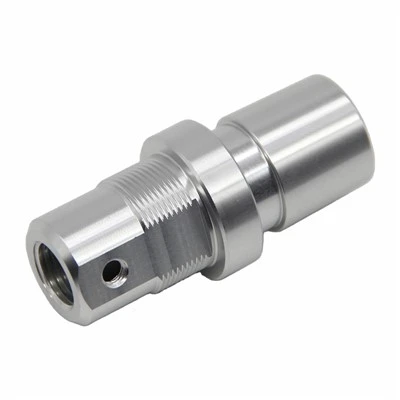
First, let’s set the scene: when a CNC mill finishes a part, what you get is a piece that’s technically functional, but it has rough spots, burrs from the tooling, maybe tiny tool marks left behind, and sometimes sharp edges that would cut a finger if you grabbed it. That raw part is like a cake right out of the pan—tasty, but not decorated or prepared for serving yet. Post-processing is all the extra steps we take after milling to turn that raw cut into a finished part that meets your specs. Why does it matter? Because a part that’s “good enough” for a prototype might not be good enough for a final product that goes on a drone, a medical device, or a aerospace component. I’ve seen it first-hand: a client came to us a while back with a part they had milled elsewhere, missing that post-processing step, and it failed during testing because the burrs caught on other components, causing a jam. Oops. So yeah, it’s non-negotiable for most projects.
Now, let’s talk about the common post-processing steps we do, and when you’d need each one, because not every part needs the same treatment. Let’s start with the basics: deburring. Burrs are those tiny, sharp metal or plastic shavings that form when the mill’s tool cuts through material. They’re super easy to miss if you’re just glancing at a part, but they’re a big deal—for moving parts, they can cause friction; for parts that touch skin, they’re a safety hazard. How do we deburr? We’ve got a few methods: for small, intricate parts with tight crevices, we use vibratory tumbling—load the parts into a tub with small ceramic or plastic media, add a little compound, and let the vibrations knock the burrs off over a few hours. For bigger, sturdier parts, sometimes we use manual deburring with files or sanders, or even media blasting if we need to hit hard-to-reach spots. We recently did a run of 500 small aluminum brackets for a bike manufacturer, and vibratory tumbling worked perfect—kept costs low, and all those tiny burrs on the mounting holes were gone without us having to touch each one by hand.
Next up, surface finishing. This is where you can really customize how your part looks and performs. If you need a super smooth surface for something like a medical implant or a part that seals tightly, we do things like polishing. For metal parts, we can do mechanical polishing (buffing wheels) or even electropolishing, which is a process that dissolves a tiny layer of the metal surface to remove tool marks and make it uniform. Electropolishing is great for stainless steel parts because it also removes any tiny cracks or imperfections that could cause corrosion later. We also do surface texturing if you want a part that’s not smooth—like a matte finish for a consumer product to hide fingerprints, or a rough texture for a grip handle on a tool. Wait, and don’t forget coating! A lot of our clients want their parts to be more durable or rust-resistant, so we apply things like powder coating, anodizing (for aluminum), or even chemical plating for parts that go in harsh environments. Anodizing is super popular right now because it’s an aluminum oxide layer that’s way harder than the metal itself, and you can dye it any color—we did a set of custom aluminum phone cases last quarter, and the anodized finish came out way better than any paint would’ve, no chips even after dropping them a few times.
Then there are the more specialized post-processing steps, depending on your industry. For aerospace clients, we do things like passivation for stainless steel parts—this is a chemical process that removes free iron from the surface, preventing rust in high-altitude, humid environments. For medical parts, sometimes we do sterilization validation checks after post-processing, making sure the surface is clean enough for autoclaving. And if you need holes that are extra precise, we do reaming (enlarging and smoothing drilled holes) or tapping (cutting threads into holes) so you can bolt the part to other components. I remember a client who made custom robot joints—they had us mill the main housings, then tap all the mounting holes, and after that, the joints went together so smoothly, no wiggling at all. That’s the difference post-processing makes.
Wait, let’s clear up a common myth: some people think post-processing is just a “nice to have,” but for CNC milling, it’s often required to meet your design specs. If you send us a drawing that says “edge radius no bigger than 0.5mm,” we can’t just mill that on the machine—we have to deburr and radius the edges after, because the mill’s tool can’t do that tiny, consistent radius. Also, the quality of your post-processing can make a prototype look like a final product, which saves you time and money when you’re moving to full production. We had a startup a little while back, they were making a wearable tech device, they sent us raw milled parts and asked if we could do a quick polish and powder coat—those prototypes looked so good, they actually used them in their investor pitch instead of 3D printed ones, and it made a huge difference. Investors love seeing a part that’s polished, not rough, right off the bat.
Now, let’s talk about how to work with our CNC milling service to make sure post-processing goes smoothly. First, be specific about your needs in your quote request. If you need a certain finish, or deburring for safety, mention it upfront. That way, we can factor the time and cost into your quote, and we don’t have any surprises later. Also, if you’re not sure what you need, just ask us—we’re not here to upsell you on extra steps you don’t need, we’re here to get your part working. For example, if you’re making a part that’s only going to be used inside a machine, you might not need anodizing, just deburring. But if it’s going to be outdoors, anodizing is worth the extra cost to make it last. Another tip: if you have a lot of parts, let us know so we can use mass post-processing methods (like vibratory tumbling) which are way cheaper than doing each part manually. We saved a client thousands last year by suggesting vibratory tumbling for a run of 1000 small plastic parts instead of manual deburring—same result, way lower cost.
Wait, I should also mention that post-processing isn’t perfect, and sometimes you have to adjust your design a little to make it easier. For example, if you have a part with really tiny, narrow grooves, media blasting might not reach those spots, so maybe we can adjust the groove width to make post-processing easier, or suggest a different method. We’re used to this—our team works with designers all the time to tweak designs so milling and post-processing go without a hitch, no headaches.
Let me wrap this up a little. At the end of the day, post-processing for CNC milling isn’t just a final step—it’s where a raw cut becomes a useful, durable, and high-quality part. Whether you’re making a prototype, a small run of custom parts, or a full production lot, skipping or skimping on post-processing can lead to parts that fail, look unprofessional, or don’t meet safety standards. That’s why our team spends as much time on post-processing as we do on the milling itself—we care about getting the part right for you.
If you’re working on a project right now, whether it’s a small prototype or a big production run, and you want to make sure your parts are finished perfectly, just reach out to our team. We can walk you through what post-processing steps make sense for your design, give you a transparent quote, and make sure every detail is handled so your parts come out exactly how you need them. Don’t leave your parts to the raw milled stage—let’s get them to the finish line together.
Vacuum Casting Services References
- Modern CNC Milling and Post-Processing: A Practical Guide, Machining Design Press, 2022
- Surface Finishing for Metal and Plastic Components, Society of Manufacturing Engineers, 2021
- Deburring Techniques for Precision Machining, Journal of Machining Processes, Vol. 45, 2020
- Aerospace and Medical Machining Standards, International Organization for Standardization, 2019
Shenzhen Multi-Wins Precision Technology Co., Ltd.
As one of the most professional CNC milling manufacturers and suppliers in China, we have world-leading production equipment and strong manufacturing capabilities. Please feel free to buy customized CNC milling made in China here from our factory. Also, quotation is available.
Address: 1 Phase, Yi’an City Central Garden, Longfei Avenue, Longgang District, Shenzhen, GD, China. 518100
E-mail: info@multi-wins.com
WebSite: https://www.multi-wins.com/
