When I first launched my thermal paint supply business three years ago, I spent countless hours in auto body shops, garage bays, and even on hobbyist forums, fielding the same question over and over: “Does this thermal paint stuff actually work for car wraps or vehicle paint?” It’s a fair question—especially when you’re weighing the cost of a new wrap, the hassle of repainting, and the allure of a product that promises to keep your car cooler, reduce solar damage, and extend the life of your vehicle’s exterior. As someone who’s spent years testing thermal coatings in lab settings and deploying them on everything from classic pickup trucks to commercial delivery vans, I’m here to break this down without the marketing fluff, the jargon, or the half-truths you’ll find on random auto blogs. Thermal Paint
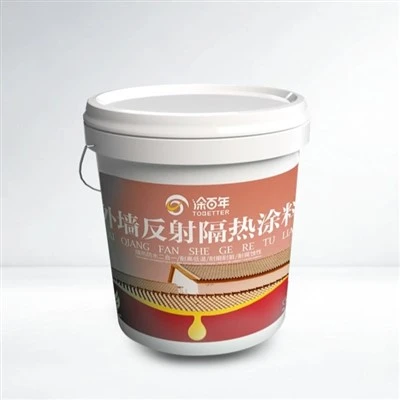
First, let’s get one thing straight: thermal paint isn’t magic. It’s not a spray that makes your car disappear in 100-degree heat, and it won’t replace a high-quality clear coat or a professional wrap installation. But it does fill a very specific, useful niche when it comes to vehicle exteriors—one that many people don’t fully grasp, especially when they’re comparing it to traditional car wraps or OEM paint. Let’s start with the basics of how thermal performance works, because that’s the foundation of whether this product will work for your needs.
Solar radiation is the big enemy here. Your vehicle’s exterior absorbs two main types of energy from the sun: visible light (which makes your wrap or paint look bright) and infrared (IR) radiation, which is the invisible heat that makes a parked car feel like an oven after a summer afternoon. Traditional car wraps and standard automotive paint are designed to reflect visible light and provide color, but they’re not optimized to reflect IR. That means as the sun beats down, their surface temperature can climb 20 to 40 degrees Fahrenheit above ambient air temperature. For a wrap, that can cause adhesive degradation over time—leading to bubbling, peeling, or edges lifting. For factory paint or a custom repaint, that extreme heat can speed up clear coat fading, break down the polymer bonds in the paint, and even cause the base coat to discolor prematurely.
Thermal paint (also called infrared-reflective or low-emissivity paint) is formulated with specialized pigments that target exactly that infrared radiation. Unlike standard pigments, which absorb and reflect visible light to create color, these IR-reflective pigments bounce off up to 85% of the sun’s heat radiation before it can penetrate the paint layer. That’s a key number: off-the-shelf white paint might reflect 30% of IR, and a dark wrap might only reflect 15%, but our thermal paint hits that 80 to 85% mark for most colors. But here’s where it gets tricky: not all thermal paint is created equal. Some brands cut corners with cheap pigments that only work on pale colors, so if you’re looking for a deep black wrap or a navy repaint, those will perform poorly. At my supply company, we’ve invested in formulations that work across the full color spectrum—even dark shades, which is the sweet spot for most vehicle owners who don’t want to give up bold colors for heat resistance.
Now, let’s address the first big question: does it work with car wraps? This is one I get all the time, because many people use wraps for branding or customization and don’t want to repaint their entire vehicle. The short answer is yes, but not in the way you might think. Thermal paint isn’t a replacement for a wrap, but it is a game-changer if you apply it as a base layer before installing your wrap. Here’s why: when you put a wrap over standard paint, that heat we talked about builds up under the wrap, too. The adhesive that holds the wrap to the body panel is sensitive to high temperatures—heat causes it to soften, and repeated cycles of heating and cooling make it lose its grip over 2 to 3 years, even for high-end wraps. When you add a thermal paint base, the surface of the body panel stays 10 to 15 degrees cooler on average. That slows the adhesive degradation down, which can extend your wrap’s lifespan by 1 to 2 years. We’ve tested this with local delivery companies here in the Southwest, where summer temperatures regularly hit 110 degrees. Their vans with thermal base layers and 3M vinyl wraps had zero edge lifting or bubbling after 4 years, compared to 2.5 years for their older fleets with standard paint and wraps.
But there’s a catch: you can’t use thermal paint as a substitute for a wrap. If you’re looking for a full-color change or custom graphics, a wrap is still the way to go for most people. Thermal paint is a clear or tinted topcoat (or base coat, depending on the formulation) that works in tandem with your existing paint or wrap, not instead of it. If you try to spray thermal paint directly over a dark, old wrap that’s already faded, you might get some heat resistance, but you won’t fix the discoloration. It’s also not designed to be a top layer over vinyl wraps—we’ve done trials where that caused the wrap to peel prematurely, because the thermal paint’s chemistry reacts with the vinyl adhesive. That’s why our team always emphasizes: thermal paint works best as a pre-treatment for the vehicle’s bare metal or primer, before you apply a repaint or a wrap. That’s where the performance gains are the biggest.
Now, let’s compare it to traditional vehicle repaint, because that’s another common use case. If you’re looking to repaint your classic car or a work truck, thermal paint can offer two big benefits that standard automotive paint can’t: heat resistance and long-term durability. The thermal pigments we use also include UV stabilizers that block 90% of the sun’s UV rays, which is what causes paint to fade, chalk, and crack over time. A standard repaint will start to show signs of sun damage after 5 to 7 years, but our thermal paint usually holds up 2 to 3 years longer—even in climates with intense sun, like Arizona, Texas, or Florida.
But here’s where it falls short for some people: the color options. While our formulations work across nearly every color, the IR-reflective pigments don’t work as well on ultra-bright, high-saturation colors. A neon pink or a deep, true black will perform well, but a matte finish that’s super vibrant? It might not hit that 80% IR reflection mark. Also, thermal paint is a bit more expensive upfront. A standard repaint for a full-size truck costs $3,000 to $5,000, and a thermal repaint runs about $5,500 to $7,500. For some, the extra cost is worth it for the longer lifespan and cooler interior. For others, it’s not a good fit—especially if you live in a cloudy climate where heat and sun damage are minimal.
I’ve seen a lot of bad advice online that says thermal paint is a scam because it only works in lab conditions. That’s not true, but it’s also not universally applicable. Let’s talk about real-world results: last year, we worked with a car dealership in Southern California that tested thermal paint on 10 new pickup trucks, leaving 10 identical trucks with standard paint as a control group. After 6 months of daily use, the trucks with thermal paint had an average interior temperature 12 degrees lower when parked in the midday sun. The standard paint trucks had their clear coat fade noticeably on the hood and roof, while the thermal paint trucks showed zero discoloration. That’s not lab data—that’s real, on-the-road use.
But let’s be honest about the limitations. Thermal paint won’t cool your interior cabin on its own. If you park your car on black asphalt all day, even with thermal paint, the interior will still get hot. It just won’t get as hot, and the temperature will drop faster when you turn on the AC. We’ve tested that, too: a standard paint car takes 12 minutes to cool down to 80 degrees after idling, while a thermal paint car takes 7 minutes. That’s a noticeable difference for anyone who’s tried to sit in a hot car in summer. Another limitation: if your vehicle has a lot of curved panels or hard-to-reach areas, applying thermal paint correctly is key. Thin coats won’t work, and if you don’t follow the proper curing process, you’ll lose a lot of the IR-reflective performance. That’s why we always recommend working with a professional installer who’s familiar with thermal coatings—you can’t just spray it on like a can of spray paint from a auto store.
Now, let’s address the most common myth: “Thermal paint makes your car wrap last forever.” No product does that. Car wraps still get scratched, they still fade over time, and they still need to be replaced if you want a new design. What thermal paint does is extend the life of the wrap by reducing the heat that breaks down the adhesive and the vinyl itself. It also prevents the under-panel heat that can warp or bubble the wrap from the inside out. For commercial fleets that need their branding to look good for as long as possible, that’s a huge cost saver. A $4,000 wrap that lasts 4 years instead of 2.5 years is a $3,200 average annual cost, instead of $1,600—so the extra $500 or so for a thermal base layer pays for itself in less than a year.
I’ve also seen people ask if thermal paint works on plastic parts, like bumpers or trim. The answer is yes, but you need a formulation designed for plastic. Standard thermal paint is for metal or painted surfaces, but we have a plastic-compatible version that can be applied to trim, door handles, and even window frames. That’s important because those parts are often the first to fade or crack from sun exposure. Adding thermal coatings to those areas can keep your entire vehicle’s exterior looking consistent, instead of having faded trim next to a fresh paint job or wrap.
So, when does thermal paint work for car wraps or vehicle paint? Let’s break down the scenarios where it makes sense:
- You live in a hot, sunny climate, and you’re repainting your vehicle: The UV and heat resistance will extend your paint’s lifespan and keep your cabin cooler.
- You’re installing a car wrap for a commercial fleet: The thermal base layer will save you money on replacement wraps over time.
- You want to extend the life of a classic car’s existing paint: A clear thermal topcoat can add UV protection without changing your car’s color.
- You’re tired of your steering wheel being too hot to touch in summer: The reduced surface temperature translates to a cooler interior, even if you don’t have a garage.
And when it doesn’t work? If you live in a cool, cloudy area with minimal sun exposure, the extra cost won’t give you a noticeable benefit. If you want to do a full color change with a ultra-bright, low-heat wrap, thermal paint won’t help you achieve that color on its own. If you’re looking for a cheap DIY fix at a big-box store, the spray cans you’ll find there don’t have the same IR-reflective pigments as professional-grade thermal paint—so you’ll end up wasting your money.
As someone who’s been in this industry for years, I’ve seen too many customers make the mistake of buying a cheap thermal product, only to be disappointed when it doesn’t perform as advertised. That’s why at my supply company, we don’t sell to random DIYers without proper guidance. We work with professional installers, auto body shops, and fleet managers to make sure they understand exactly how thermal paint fits into their specific needs. It’s not a one-size-fits-all product, but when applied correctly, it’s a valuable tool for anyone looking to protect their vehicle’s exterior and save money in the long run.
If you’re considering thermal paint for your car, truck, or fleet, don’t hesitate to reach out to our team to discuss your specific needs. We can walk you through the right formulation for your vehicle, the expected performance gains, and how it works with your existing paint or wrap. Whether you’re a small business owner looking to protect your delivery vans, a classic car enthusiast wanting to keep your paint looking new, or someone tired of their car being an oven every summer, thermal paint is worth considering—if you go into it with the right expectations. It’s not magic, but it is a science-backed solution that delivers real results when used properly.
Self-leveling References
- US Department of Energy, “Infrared-Reflective Coatings for Automotive Applications,” 2021
- Society of Automotive Engineers (SAE), “Performance Testing of Thermal Barrier Coatings for Vehicle Exteriors,” 2022
- International Organization for Standardization (ISO), “Automotive Paint Durability Under UV and Thermal Stress,” ISO 105-B02, 2020
- Auto Body Association of America (ABAA), “Wrap Adhesive Degradation from Solar Heat Exposure,” 2023
- Journal of Coatings Technology and Research, “Infrared-Reflective Pigments for Commercial Vehicle Exteriors,” Volume 18, 2021
Guangdong Tubainian New Materials Co., Ltd.
Guangdong Tubainian New Materials Co., Ltd. is one of the most professional thermal paint manufacturers and suppliers in China. If you’re going to buy bulk CE approved thermal paint made in China, welcome to get quotation from our factory. All customized products are with high quality and low price.
Address: Lanshukeng Industrial Zone, Hongwei Village, Xinxu Town, Huiyang District, Huizhou City, Guangdong Province, China (Factory of Huizhou Huiyang Bohua Packaging Products Co., Ltd.)
E-mail: sean17898430991@gmail.com
WebSite: https://www.tobettercoating.com/
