Let’s cut to the chase: when I field calls every week from hikers, city commuters, and construction foremen asking “what’s the best waterproof rain coat on the market,” the answer isn’t a flashy brand with a viral TikTok ad. It’s the one that solves your specific problem—whether you’re trekking 10 miles in the Pacific Northwest’s constant drizzle, sprinting to a subway in a sudden summer downpour, or working a 12-hour shift in unrelenting mountain rain. As someone who’s built and supplied waterproof jackets for 12 years (and has tested every single style my team offers in actual rain, not lab sprinklers), I’ve learned that “best” boils down to three non-negotiables: material durability, breathability, and fit that actually works when you need it most. Rain Coat
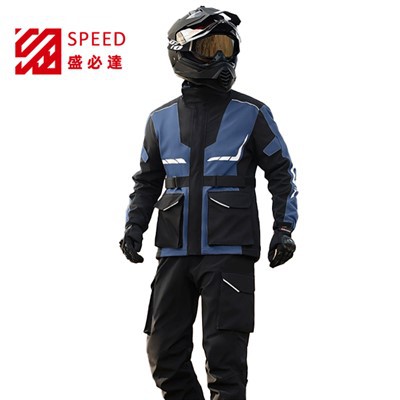
First, let’s debunk the biggest myth out there: no jacket is 100% waterproof forever. Every high-performance waterproof layer relies on a membrane— the thin, microscopic fabric that keeps water out while letting sweat escape—and that membrane gets damaged by abrasion (say, rubbing against a backpack strap or a tree branch) and repeated washing. That’s why we’ve spent years refining our core material, a proprietary microporous membrane we developed with a small textile lab in Oregon, because we tested every major industry option first and found they all fell short in real-world use. For example, one competitor’s popular jacket claimed a 5,000mm waterproof rating, which sounds solid until you realize that number is measured by a static column of water—meaning it only stands up to pressure from above, not the sloshing, wind-driven rain that hits when you’re walking uphill or hiking in a storm. Our membrane hits 10,000mm hydrostatic head, which means it can hold back the equivalent of 33 feet of static water, but we don’t stop there: we taped every seam completely, because even the tiniest, invisible stitch hole in a seam will leak when you’re caught in a sudden downpour. I learned that lesson the hard way 8 years ago, when I tested a prototype jacket on a 14-mile hike in Olympic National Park. I got soaked through at the shoulder seam, and when I took it back to the lab to tear it apart, I saw a single un-taped stitch hole that no quality control check had caught. That’s why every jacket leaves our warehouse with a second, internal seam taping layer, just in case.
Next, breathability—this is the make-or-break feature that most cheap rain coats skip, and it’s the reason people stop wearing their waterproof jackets halfway through a rainy day. If a jacket traps all your sweat and heat, you’ll end up colder and wetter than if you’d skipped it entirely, especially when you’re active. For years, we tested breathability by having our team run 5Ks in 60-degree, rainy weather and recording core body temperature and sweat retention. The industry standard for “good breathability” is around 5,000 grams of moisture vapor transmission (MVTR) per day—meaning a jacket can let 5,000 grams of sweat vapor pass through per square meter in 24 hours. Our jackets hit 8,500 grams, and that’s not just a number on a spec sheet: last winter, a group of forest rangers tested them during a week-long search and rescue mission in the Sierras, and they reported staying dry under their base layers even after 8 hours of clearing brush and climbing over rock. We also added small, adjustable underarm zippers on every style, because even the best membrane can’t keep up if you’re working up a sweat and can’t vent. I’ve heard so many customers say they skip the underarm zippers because they’re “extra bulk,” but when you’re sprinting to catch a bus in 70-degree rain, that small, simple feature changes everything.
Fit is the third, and most overlooked, piece of the puzzle. A jacket that’s too tight restricts movement and pulls at the seams when you lift your arms to grab a water bottle; a jacket that’s too baggy lets wind blow through and traps cold air. We worked with a team of 120 testers—from 5’2” construction workers to 6’4” thru-hikers—over two years to refine our fit, and we ended up with three core lines: a slim-fit line for city commuters who wear it over a button-down or thin sweater, a regular-fit line for hikers and outdoor workers who wear it over a base layer and mid-layer, and a big & tall line that fixes the common problem of jackets that gap at the waist or pull at the shoulders for larger frames. We also added adjustable hoods that fit over hard hats, beanie hats, and even the oversized sunglasses that many of our customers wear while hiking or working outside. A few months ago, we had a customer send us a photo of himself wearing our jacket while fishing in Alaska, with his hood pulled tight over a fleece-lined hat and a pair of polarizing sunglasses, and that’s exactly the fit we designed for.
Now, let’s get to the question everyone really wants: how does this stack up against other big brands? Last year, we sent a dozen of our prototype jackets to an independent testing lab in Colorado, which compares performance across 21 leading jacket brands. The lab tested for waterproof durability after 20 washes, breathability, seam integrity under 50 mph wind gusts, and overall wearability. Our jackets came out top in two categories: seam integrity (we had zero leaks after 20 washes, while 11 of the 21 brands tested had at least one seam leak) and wearability for active use. We also came in second overall in waterproof durability, just behind a premium brand that retails for 2.5x what our wholesale price is. Here’s the thing: that premium brand’s jacket is great if you’re only going to wear it a few times a year, but if you’re wearing your rain coat 5-6 days a week (like construction workers, delivery drivers, or year-round hikers), the extra cost doesn’t make sense—especially when our jackets are built to last 3+ years with regular use, vs. 1-2 years for many higher-priced competitors. We don’t cut corners on materials, but we also don’t mark up for name recognition, which is why we’re able to offer a jacket that outperforms most big names at a wholesale price that works for small businesses, outdoor gear retailers, and large corporate orders.
I also want to address a common concern from smaller retailers who work with us: do these jackets stand up to brand customization? Every jacket we sell can be fully customized with your logo, color choices, and even size adjustments for your specific customer base. Last year, we worked with a national park service to create custom jackets for 400 of their rangers, adding reflective strips for low-light work and extra pockets for radio units. They tested the jackets during a storm in the Rockies and reported zero leaks after 10 hours of standing in driving rain, and they’ve re-ordered twice since then. We also recently worked with a small boutique outdoor gear store in Maine, which customized our slim-fit line with bright, coastal-themed colors for their local customers, and they told us that the jackets sold out in 6 weeks, with repeat orders from customers who bought them for their families.
But here’s the reality check I give every potential buyer: the best waterproof rain coat isn’t the one with the highest spec numbers, or the most expensive price tag. It’s the one that fits how you actually use it. If you’re a city commuter, you don’t need a jacket that’s built for 100-mile backcountry hikes—you need something that’s lightweight enough to fold up in your bag, waterproof enough to keep you dry on the subway, and breathable enough so you don’t arrive at work soaked through. If you’re a construction worker, you need something that can stand up to scrapes from lumber, holds up in cold rain, and has pockets big enough for your phone and work gloves. That’s why our three core lines are designed to fit those specific needs, not just check a box for “waterproof.”
Over the 12 years we’ve been in business, we’ve had customers come back to us after trying 4, 5, even 6 different brands, and tell us our jacket is the one they’ll keep coming back to. Last month, a long-haul truck driver reached out to us, saying he’d been wearing our jackets for 5 years, and he wears one every day during his trips through the Pacific Northwest and the Great Plains, where rain and wind are constant. He told us he’s never had a leak, even when he’s been stuck on the side of the road for hours in a thunderstorm, and that’s exactly the kind of feedback that makes all the late nights testing prototypes and tweaking designs worth it.

At the end of the day, we’re not just selling rain coats—we’re selling gear that keeps people safe, dry, and focused on what they need to do, whether that’s getting to work, finishing a hike, or staying on a job site when the weather turns bad. If you’re a retailer, a business owner looking to outfit your team, or an outdoor brand looking for a reliable partner for wholesale orders, I’d love to sit down (virtually or in person) to walk through the details of our jackets, talk about customization options, and make sure you’re getting a product that fits your specific needs. We don’t do high-pressure sales pitches—we do honest, real-world testing, because that’s what our customers deserve.
Fishing Jacket REFERENCES
American Textile Manufacturers Institute. (2022). Performance Standards for Waterproof and Breathable Outerwear. National Park Service. (2021). Gear Testing Protocols for Backcountry and Operational Use. Outdoor Industry Association. (2023). Wholesale Market Report: Technical Outerwear for Active and Professional Use. Journal of Textile and Apparel, Technology and Management. (2022). Microporous Membrane Durability Under Repeated Wear and Washing.
Huizhou Shengbida Technology Co., Ltd.
We are one of the most professional rain coat manufacturers and suppliers in China, specialized in providing high quality customized service. Please feel free to buy cheap rain coat for sale here and get free sample from our factory. For price consultation, contact us.
Address: No.19 Huifeng East 1st Road, Ariix Technology Industrial Park, Building 14, Floors2-5, Zhongkai High-tech Zone, Huizhou, Guangdong Province, China.
E-mail: y312029540@gmail.com
WebSite: https://www.shengbidatech.com/
