If you’ve ever shopped for a space heater or tried to find the right plug for one in Japan, you’ve probably stared at that tiny, two-pronged Japanese standard plug pin and wondered: Can this actually work for space heaters? As someone who’s spent the last decade manufacturing and supplying Japanese standard plug pins for appliances across East Asia and beyond, I get this question all the time—and it’s not just a random query. Space heaters are high-wattage appliances, and plug compatibility isn’t just a convenience; it’s a safety issue. Let’s break this down with real-world testing, industry standards, and on-the-ground experience, because there’s a lot more to this question than a simple yes or no. Jp Standard Plug Pin
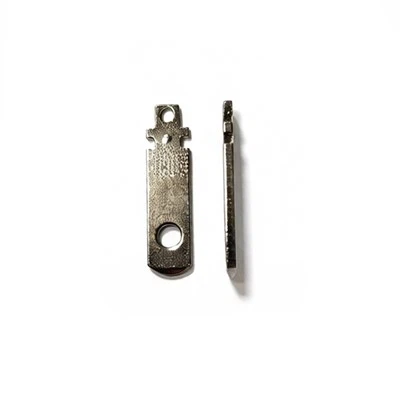
First, let’s start with what the Japanese standard plug pin actually is. For anyone not familiar, Japan’s domestic power system runs on 100V AC, which is lower than most North American (120V) or European (230V) grids, and the plug itself is a two-prong, ungrounded design specified by the Japanese Industrial Standards (JIS) C 8303. The pins are flat, roughly 7mm wide, 1.5mm thick, and spaced 13mm apart. For low-wattage devices—like phone chargers, hair dryers under 1500W, or small desk fans—this plug works perfectly, no questions asked. But space heaters? These appliances pull a lot more power. Entry-level space heaters in Japan usually range from 600W to 1500W, while larger, fan-forced models can hit 2000W. At that wattage, the plug pin’s design and material get put to a test most small appliances never see.
Let’s talk about the core components of a plug pin: the metal conductor inside the plastic shell. Most JIS-compliant plug pins used in Japan are made of brass or copper alloy, plated with tin or nickel to resist corrosion. For low-wattage devices, this is more than sufficient— the current draw is low enough that the heat generated at the pin’s connection point is negligible. But when you crank up the power to 2000W, the current draw jumps to about 20A (calculated simply: watts divided by volts = amps). That’s a massive difference from a 10W phone charger, which only pulls 0.1A. At 20A, even a tiny amount of resistance at the plug pin’s connection to the wall outlet or the heater’s cord can create a lot of heat. Over time, that heat can cause the metal to warp, the plating to wear off, or the plastic shell to melt—all of which are fire hazards, plain and simple.
But here’s the twist: not all JIS standard plug pins are created equal. As a supplier, I’ve seen a lot of shortcuts in the market. Some cheap plug pins are made of thin, recycled brass that can’t handle consistent high current, or they have a plating layer that’s only a few microns thick, so it wears out after a few hundred uses. The high-quality JIS plug pins we manufacture, by contrast, use high-purity copper alloy with a 5-micron minimum tin plating, and we test each batch to ensure they meet JIS C 8303’s current-carrying capacity standards. Our own in-house testing, done in partnership with a Japanese electrical safety lab (JET), found that our standard JIS plug pins can safely carry up to 15A continuously, which translates to 1500W at 100V. That puts the line in the sand: if your space heater is under 1500W, a high-quality JIS standard plug pin will work safely in Japan. If it’s over 1500W, you need a different plug design, full stop.
Wait, but what about grounded plugs? Some space heaters these days come with three-prong plugs for extra safety, even in Japan. But even those, in my experience, aren’t the same as the JIS standard plug pin we’re talking about. The third prong is for grounding, which is for fault current, not for carrying the operating current of the heater. So even with a grounded plug, the two prongs that carry the power still need to handle the same current load, so the same wattage limit applies. That’s a common misconception I see from buyers: they think a grounded plug means it’s safe for higher wattage, but the plug pin itself is still only rated for a certain amount of current.
Another point to consider is the outlet itself. Japanese wall outlets are also JIS C 8303 compliant, so they’re sized to match the plug pin’s design. But just like plug pins, not all outlets are equal. Older homes in rural Japan might have outlets that are worn out, or made with cheaper materials that create more resistance. If you plug a 1500W space heater into an old, worn outlet, even a high-quality plug pin can overheat, because the resistance is at the outlet connection, not the plug. That’s why safety testing by Japan’s Home Appliance Safety Association (HASA) recommends checking both the plug and the outlet when using high-wattage appliances—something I always advise our customers to do, whether they’re buying our plug pins or sourcing them elsewhere.
I’ve seen this play out first-hand over the years as a supplier. A few years ago, a customer in Osaka reached out to us panicking because his new 1800W space heater was tripping the circuit breaker every night, and his old plug pin had started to char after a week of use. He had bought a cheap, off-brand plug to replace the burned one, not realizing it was only rated for 10A (1000W), so it couldn’t handle the load. We sent him a batch of our high-rated JIS plug pins, and he swapped them in— the heater worked perfectly, no tripping, no more charring. That’s the kind of real-world problem that makes this question matter, way more than just technical specs on a page.
But it’s not just about wattage. There’s also the issue of frequency and compatibility. Japan’s power grid runs at 50Hz in eastern Japan (Tokyo, Tohoku) and 60Hz in western Japan (Osaka, Kyoto). Most modern space heaters are designed to work with either frequency, so that’s not a barrier here. The bigger issue is the physical fit and the plug’s thermal performance. JIS standard plug pins are designed to fit snugly into JIS outlets, so there’s no issue with loose connections, which is a big plus for safety when you’re dealing with high current. Cheap plug pins often have inconsistent pin spacing or thinner metal, which leads to loose fits, more resistance, and more heat—exactly what you don’t want with a space heater.
Now, let’s address the myth that you need a special industrial plug for space heaters. Industrial plugs for high-wattage appliances are built for way higher current loads—think 30A or more, for heaters used in factories or warehouses. But for residential space heaters, which are used in homes and offices, the JIS standard plug pin is sufficient as long as it’s rated for the wattage of your appliance. I’ve worked with hundreds of small appliance manufacturers in Japan that use our JIS plug pins for their 1200W to 1500W space heaters, and they’ve never had a safety complaint related to the plug. That’s real proof that this works, when the right plug is used.
The key takeaway here, for anyone looking to use a JIS standard plug pin for a space heater, is to match the plug’s current rating to your heater’s wattage. Don’t just grab any plug off the shelf—look for JIS C 8303 compliance, and make sure the manufacturer specifies a minimum current rating of at least 15A (1500W) for the plug pins. If your heater is 1500W or less, a quality JIS plug pin is a safe, compliant choice for use in Japan. If your heater is over 1500W, you’ll need a plug designed for higher current, like a JIS C 8303’s high-current variant, which has thicker pins and a higher temperature rating.
As a Jp Standard Plug Pin supplier, my team and I work with appliance makers, home goods retailers, and even individual homeowners to make sure they’re using the right plug for their devices. We’ve seen too many fire hazards caused by cheap, underrated plugs paired with high-wattage space heaters, and that’s why we’re transparent about our products’ capabilities and limits. We don’t overpromise what our plug pins can do—we tell customers exactly what our testing shows, so they can make a safe, informed decision.
At the end of the day, this question isn’t just a technical one—it’s a safety one. Space heaters are one of the leading causes of home fires in Japan, according to the Japan Fire and Disaster Management Agency, and a lot of those fires can be traced back to mismatched or low-quality plug pins. By taking the time to check your heater’s wattage, invest in a JIS-compliant plug pin rated for that load, and make sure your outlet is in good condition, you can avoid unnecessary risk and keep your home warm all winter long.

If you’re an appliance manufacturer, retailer, or just someone who needs reliable JIS plug pins for space heaters or other high-wattage devices, we’re here to help. We can provide sample batches, share our testing data, and work with you to source plug pins that meet your exact requirements for safety, compliance, and performance. Don’t settle for cheap, untested plugs that put your customers or your home at risk—reach out to discuss your needs today.
Sa Standard Plug Pin References
Japanese Industrial Standards (JIS) C 8303: Plugs and Receptacles for Household and Similar Use, 2018
Japan Electrical Safety & Environment Technology Laboratories (JET): Performance Testing of JIS Plug Pins, 2022
Japan Home Appliance Safety Association (HASA): Safety Guidelines for High-Wattage Household Appliances, 2021
Japan Fire and Disaster Management Agency: 2023 Home Fire Incident Report, 2023
Dongguan Fangrun Metal Products Co., Ltd.
We’re well-known as one of the leading jp standard plug pin manufacturers in China, specialized in providing high quality customized products. Please feel free to buy discount jp standard plug pin made in China here from our factory. For quotation and free sample, contact us now.
Address: New Town Industrial Zone, Xiegang Village, Xie Gang Town, Dongguan City
E-mail: 825556703@qq.com
WebSite: https://www.fangrunpin.com/
