Hey everyone, Combiner Box

If you’ve ever dabbled in solar setup—whether you’re an installer, a project manager, or even someone just looking to get your head around how solar panels connect—you’ve probably stumbled on the question: how many panels can I actually cram into one combiner string? As a combiner box supplier who’s talked to hundreds of folks out there working on small residential roofs and big commercial arrays, I can tell you this isn’t a one-size-fits-all answer. A lot of people guess it’s just “as many as possible to save money,” but skip the tiny (super important) details that can make or break a system. Let’s break this down like we’re chatting over a coffee, no confusing jargon unless I explain it.
First, let’s get on the same page: what even is a combiner string? If you’re new here, a combiner string is the group of solar panels that all connect together before feeding into your inverter—this is where your combiner box comes in, right? It gathers all that DC power from your panels so it doesn’t go straight into the inverter (which would be bad, like plugging a fridge into a car outlet bad). So the “max number per string” is the hard limit of how many panels you can link in series in that group, without blowing things up or killing your system’s efficiency.
Now, why does this matter more than just counting panels? Let’s talk voltage. Solar panels produce DC power, and when you link them in series, their voltages add up. Inverters are built to handle a maximum DC input voltage—miss that, and you’re looking at fried parts, warranty claims, or even a whole downtime of your array. But wait, there’s a trick here: that maximum voltage isn’t just a random number on the inverter spec sheet. It also changes with temperature. Cold weather makes a solar panel’s voltage jump way higher than its rated voltage (we call this “VOC,” open-circuit voltage). So if your inverter’s max is, say, 1000V DC, you can’t just plug in panels that hit 1050V when it’s freezing outside. That’s a common mistake I see new installers make—they forget that winter cold cranks up that voltage.
Let’s use a real example. Suppose you’re using a standard residential panel that has a VOC of 40V at 25°C (room temp). On a cold day, that VOC can climb to almost 45V. Now, if your inverter’s cold-weather max is 1000V, divide 1000 by 45, and you get ~22 panels. But if you only go by the 25°C VOC (40V), that same math gives 25 panels. Big difference! The 25-panel group would hit 1125V when cold—way over the inverter’s limit. That’s why our team always tells customers to prioritize cold-temperature voltage, not just the rated number. It’s not just a rule we make up; it’s from testing dozens of systems in places like Minnesota or Alberta where winter temps drop way below zero.
Next up: current. Wait, you might be thinking “voltage is the big one, right?” But current plays a role too, especially if you’re using string combiner boxes (the ones we sell, for the record) for larger arrays. When panels are in series, their current stays the same. If you have a panel that produces 10A at its maximum power point (MPP), every panel in that series string will also produce 10A. But if one panel gets shaded—say, a tree branch covers a corner of it—that panel’s current drops, and the whole string’s current has to drop to match it. If you have too many panels in a string, that shading can cause hot spots on the shaded panel, which not only cuts your energy output but can damage the panel over time. We’ve had installers come to us after their 30-panel strings were underperforming, and half the issue was hot spots from too many panels crammed in—each shaded panel was costing them 5-10% of the string’s power. That’s a huge hit to ROI, right? For small residential systems, we usually recommend 16-20 panels per string, but for commercial arrays where shading is less likely, you can push 22-24. It’s a balance, not a hard line.
Then there’s your combiner box itself. Wait, this is where our expertise comes in—we don’t just sell boxes; we make sure they’re rated to handle the string limits you’re using. A lot of people forget that the combiner box’s own specs matter too. For example, if your string is producing 800V and 15A, your combiner box needs to be rated for that max voltage and current, plus some overhead. If you have a combiner box that’s only rated for 750V, you can’t run a string that hits 800V in cold weather, no matter how many panels you want. That’s why we always ask customers to send us their inverter specs and panel specs before we recommend a string count—we don’t want them buying a box that doesn’t fit their system. We’ve had a few customers who tried to skimp on a cheaper combiner box that couldn’t handle their string voltage, and it ended up arcing inside the box—no fun, and totally avoidable.
What about different panel types? Not all solar panels are the same, obviously. Monocrystalline panels usually have higher VOC than polycrystalline panels, thin-film panels have lower. So if you’re using thin-film, you can usually fit more panels per string because their cold-temperature voltage isn’t as high. For example, a thin-film panel might have a VOC of 30V at 25°C, and 35V in cold weather. Using the same 1000V max inverter, that’s ~28 panels, versus the 22 for monocrystalline. We’ve worked with a lot of agricultural solar projects that use thin-film because their arrays are spread out, and adding a few more panels per string saves on combiner boxes and wiring runs. That’s a smart move, but only if you check the voltage and current first.
Wait, let’s talk about string inverters vs. microinverters, because that changes things too. If you’re using microinverters (each panel has its own tiny inverter), the “max per string” is basically 1—each panel is its own string. But if you’re using a string inverter (which is what combiner boxes are for), then it’s the number we’ve been talking about. Most residential systems use string inverters, so that’s the sweet spot we focus on. But for people going hybrid or off-grid, the rules are a bit different too—off-grid inverters often have lower max DC voltage, so you can’t cram as many panels. I’ve seen some off-grid installers try to put 30 panels per string, only to find their inverter can’t handle the cold voltage, and they have to re-wire half their array. That’s a costly mistake, and we always warn folks about it before they place an order for combiner boxes.
Another thing: code requirements. I know, nobody loves code rules, but they’re there for a reason. The NEC (National Electrical Code) in the US, for example, has rules about maximum voltage for DC systems over 50V, which applies to almost all solar systems. You can’t just ignore that—violating code can void your system’s insurance, or get you fined during an inspection. We always make sure our customers know the code limits for their area, because if you go over, even if your system “works,” it’s not up to standard. For example, in some parts of Canada, the max DC voltage for solar systems is 600V for residential, so you can’t use a 1000V inverter there—your max string count would be way lower. That’s why we ask for location details when customers reach out; it changes the whole recommendation.
Let’s address a common myth: more panels = cheaper. It makes sense on paper, right? More panels per string means fewer combiner boxes, less wiring, less labor. But that only works if you don’t hit those voltage or current limits. Let’s do the math: if a combiner box costs $150, and you can run 20 panels per string vs. 25, you need 25% more combiner boxes. That’s $375 extra, plus more wiring. But if you go over the voltage limit, you might have to replace an inverter that costs $1000, plus repair labor. So it’s a trade-off—saving a little on boxes now can cost way more later. We had a commercial customer last year who tried to push 28 panels per string on a 1000V inverter in Colorado, where winter temps hit -20°F. The string hit 1200V, fried two inverters, and cost them $4,000 in repairs plus a week of lost energy. They came back to us afterward, and we worked with them to reconfigure the strings to 22 panels each, and they’ve had zero issues since. That’s the kind of story we hear all the time, which is why we don’t just sell boxes—we help people get the string count right the first time.
Now, what’s the takeaway here? There’s no universal “max number,” but the sweet spot for most residential string inverter systems is 16-20 panels, and 20-24 for commercial arrays with mild climates and minimal shading. The key numbers to check are: 1) your inverter’s cold-temperature max DC voltage, 2) your panel’s VOC at that cold temp, 3) your combiner box’s voltage and current rating, and 4) local code rules. Shading is a wild card too—if your array has a lot of partial shade, go on the lower end of that range to avoid hot spots.
At the end of the day, we’re combiner box suppliers who’ve been in this game for years, and we’ve seen what works and what doesn’t. The worst thing we can do is sell a customer a combiner box that doesn’t fit their system, or watch their array fail because they crammed too many panels into a string. That’s why we take the time to ask questions, not just count orders. If you’re planning a solar setup, whether it’s a small 5kW residential system or a big 1MW commercial array, don’t guess the string count. Reach out, and we can walk you through your options, make sure you get the right combiner boxes, and avoid those costly mistakes. We’re here to help, not just make a sale—after all, our customers’ success is our success.
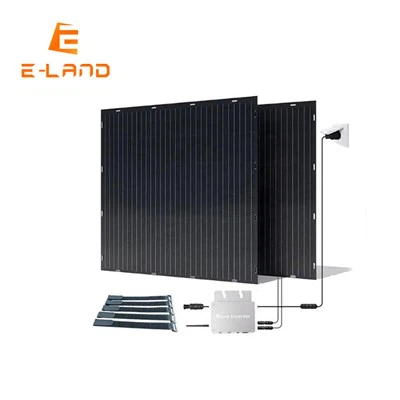
If you’re ready to get this right the first time, don’t hesitate to reach out to us to chat through your project details, get a custom recommendation, and grab the combiner boxes that fit your needs. We’re always here to answer questions, no sales pitch pressure—just people who know solar, and want to help you build a system that works.
Bluetti Power Station References
- National Electrical Code (NEC) 2023, Article 694 (Solar Photovoltaic Systems)
- Sandia National Laboratories, “Temperature Effects on Photovoltaic Module Voltage and Current” (2021)
- Solar Energy Industries Association (SEIA), “String Design Best Practices for Solar Installers” (2022)
- Underwriters Laboratories (UL) 1703, Standard for Safety for Flat-Plate Photovoltaic Modules and Panels
Hangzhou Huakun New Energy Equipment Co., Ltd.
As one of the most professional combiner box manufacturers and suppliers in China, we’re featured by quality products and good service. Please rest assured to wholesale bulk durable combiner box made in China here from our factory. We also accept customized orders.
Address: International Export Office, Huaxin Development Building B, Wener Road No.328, Westlake District, Hangzhou, China
E-mail: linda@hzhuakun.com
WebSite: http://www.hk-newenergy.net/
