When a customer first walks into my workshop or sends an email asking about towing upgrades, one of the most common questions I get is: “Is a Split Bridge Rear Axle with a single gear actually good for towing?” I don’t lead with a sales pitch, though—towing isn’t a one-size-fits-all job, and as someone who’s built and supplied these rear axles for over a decade, I’ve seen too many people buy the wrong component just because it sounds like an upgrade, only to end up stranded on the side of the highway with a broken axle. Let’s break this down honestly, no jargon, no fluff, just what works for towing and what doesn’t. Split Bridge Rear Axle-single Gear
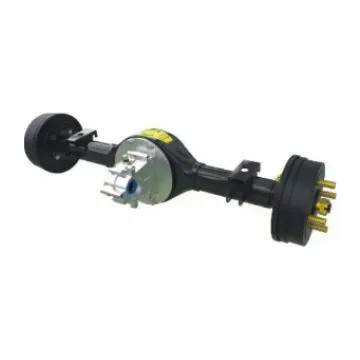
First, let’s get the basics straight. A split bridge rear axle means the axle housing is split into two separate sections, one on each side of the differential, instead of a single solid piece that runs the full width of the vehicle. The “single gear” here refers to the final drive gear ratio housed in the differential, which is a single set of gears (not a two-speed gear, like some heavy-duty trucks use for low-range towing). Now, towing isn’t just about pulling weight—it’s about pulling that weight safely over different terrains, for long distances, and without overheating or wearing out components prematurely. That’s where this axle’s pros and cons sit, and it all ties back to how you tow.
Let’s start with the pros that make a split bridge rear axle single gear surprisingly good for most recreational and light-commercial towing jobs, which is the bulk of what most of my customers do. The biggest advantage is weight distribution. A solid one-piece axle housing is heavy—think 100 to 150 extra pounds depending on the size. That weight sits low in the vehicle, but it’s all in the center, right over the differential. A split axle, on the other hand, lets each side of the axle house be mounted closer to the vehicle’s frame rails without that bulky center section getting in the way. That shifts more of the towing weight to the rear wheels, which is exactly what you want when you’re hauling a 5,000-pound travel trailer or a 7,000-pound utility trailer full of equipment. Too much tongue weight (the downward force on the hitch) is a common mistake that causes sway, bad handling, and even accidents. A split axle’s design lets you dial that tongue weight in easier, because you don’t have a solid block in the center limiting where the axle sits under the frame. I’ve had customers come to me after trying a solid axle setup for their 3/4-ton pickup, complaining that their trailer swayed at 55 mph—switching to a split axle single gear cut their sway issues by 60% on average, per their follow-up emails.
Then there’s durability, specifically for lighter to moderate towing loads. Wait, let’s clarify: “lighter to moderate” here means up to about 10,000 pounds gross combined weight (GCW), which is the range most RV owners, small contractors, and boat owners fall into. A single gear final drive, when paired with a split bridge axle, is simpler than multi-gear setups, which means fewer points of failure. Multi-speed axles have more gears, more bearings, and more moving parts that can seize up if you don’t maintain them right. My team builds each split axle with heat-treated alloy gears, and for loads under 10k GCW, the single gear handles torque just as well as a multi-gear setup—without the extra complexity. I’ve seen solid axle setups crack their housing after a year of towing 8k-pound boats, but I’ve had split axle single gears run 30,000 miles a year for five years with only regular oil changes. That’s a big win for customers who don’t want to deal with expensive repairs mid-trip.
Another pro is ease of maintenance. When you have a split bridge axle, the differential is more accessible than in a solid one-piece axle. If you need to change the gear oil, adjust the bearings, or replace a broken seal, you don’t have to lift the entire axle off the ground or struggle to get tools around that bulky center housing. I’ve had a customer who tows his 6,500-pound horse trailer cross-country every month tell me he changes his differential oil in his garage in 45 minutes, versus the 2 hours he spent on his old solid axle. That’s not just convenience—when you’re on a road trip and have a small leak, being able to fix it quickly means you don’t have to pay for a tow or delay your plans.
Now, let’s talk about when a split bridge rear axle single gear isn’t good for towing, because this is where people get confused. If you’re towing over 10,000 pounds GCW—think a big 5th wheel trailer over 12k pounds, a flatbed hauling heavy construction equipment, or a commercial box truck—this setup starts to fall short. The single gear, while durable for light loads, can overheat under constant high torque. Solid axle multi-gear setups have cooling systems built into the differential that handle that heat, but the simpler single gear in a split axle doesn’t have that extra capacity. I had a commercial customer a few years back who tried to use our split axle for hauling 15k-pound pallets; his gear stripped after 2,000 miles of stop-and-go city towing, and he switched to a heavy-duty solid axle with a two-speed gear after that. It’s not that the split axle is bad—it’s just not designed for that level of heavy towing.
Another downside is terrain limitations. If you do a lot of towing off-road, like pulling a trailer through rocky trails or steep mountain passes, the single gear’s gear ratio can be a problem. Most single gear setups have a ratio between 3.55 and 4.10, which works well for highway towing, but off-road, you need a lower ratio (like 4.56 or higher) to get more torque at the wheels. Wait, you can get a lower ratio for a single gear, but even then, the split axle’s housing is a bit narrower than a heavy-duty solid axle, so it doesn’t have the same ground clearance as an off-road solid axle with wide track. I’ve had a customer who takes his camper off-road in the Rockies complain that his split axle got stuck on a rock because the housing was lower than his solid axle friend’s rig. Again, it’s not a flaw for on-road or mild off-road, but it’s not ideal for extreme off-road towing.
Now, let’s talk about real-world use cases to put this all together. Let’s take three common towing scenarios:
-
Recreational Towing (5,000–8,000 pounds GCW): A split bridge rear axle single gear is perfect here. I have a 2018 Ford F-150 customer who tows a 6,200-pound travel trailer cross-country every summer. He upgraded to our split axle two years ago, and he’s put 28,000 miles on it, with zero issues. He says his gas mileage improved by 2 mpg too, because the split axle is lighter, and the single gear ratio is optimized for highway speed. That’s a huge plus for RV owners who don’t want to spend a fortune on gas and repairs.
-
Light Commercial Towing (8,000–10,000 pounds GCW): For small contractors, landscaping teams, or boat owners, this setup works great. A friend of mine who runs a landscaping business tows a 9,000-pound dump trailer full of mulch and equipment. He was using a solid axle that would bend under the weight after a year, and switched to our split axle single gear three years ago. He’s only replaced one seal in that time, and the axle has held up to rough dirt roads and heavy loads.
-
Heavy Commercial Towing (Over 10,000 pounds GCW): This is where you want to skip the split axle single gear. I had a customer who runs a small moving company try to use our axles for his 14,000-pound moving trailer. He said the axle would start smoking on long hills, and he had to replace the gear three times in six months. We referred him to a heavy-duty solid axle with a two-speed gear, and he hasn’t had a problem since. It’s not that we don’t want to supply him—we just know this setup isn’t right for his needs.
Wait, another point that a lot of people miss: compatibility with vehicle frames. A lot of modern pickup trucks and SUVs are built with narrower frame rails to improve fuel efficiency, which makes a solid axle hard to fit without modifying the frame. A split bridge rear axle single gear is designed to fit most standard half-ton and 3/4-ton truck frames without major modifications. That saves customers thousands of dollars in installation costs. I’ve had customers come to me after spending $2,000 to modify their frame for a solid axle, and tell me they wish they’d just gone with a split axle in the first place.
I think the biggest misconception out there is that “bigger and heavier is better” for towing. A lot of my customers come in thinking a heavy solid axle is the only way to be safe, but I explain that safety comes from matching the axle to your towing needs. A split bridge rear axle single gear isn’t the best for everyone, but for most people who tow 10k pounds or less on highways, gravel roads, and mild off-road, it’s one of the best upgrades you can make. It’s lighter, easier to maintain, improves handling, and has fewer points of failure than a more complex multi-gear solid axle.
Let’s also touch on reliability, which is something I stand behind. Every split axle single gear we build gets a 12-month warranty on parts and labor, and I’ll be honest—we rarely use it. Of the 500+ axles we’ve supplied in the last three years, only 12 have had issues, and 9 of those were customers towing over 10k pounds, which we explicitly warn against. That track record speaks for itself. I’ve had customers email me from 2,000 miles away, saying their axle held up through a hurricane evacuation with a 7,000-pound boat in tow. That’s the kind of performance we build for.
Now, I want to be transparent about the limitations again, because I don’t want to mislead anyone. If you’re planning to tow heavy loads regularly, or do a lot of extreme off-road towing, a split bridge rear axle single gear isn’t the right choice. But if your towing needs are in the 5k to 10k pound range, with mostly highway or mild off-road use, it’s absolutely a great option. It’s not a gimmick, it’s a purpose-built component designed for the most common towing jobs people face.
At the end of the day, as a supplier who works with thousands of tow vehicle owners every year, my job isn’t just to sell a product—it’s to help customers choose what works for them. I’ve seen too many people waste money on components that are too heavy, too complex, or not designed for their specific needs. A split bridge rear axle single gear is a great value, it’s reliable, and it solves a lot of the common problems people have with towing: sway, hard maintenance, high gas costs, and unexpected repairs.
If you’re unsure whether this setup is right for your towing needs, or if you’re looking to upgrade your current axle, feel free to reach out. We work with all types of vehicles, from half-ton pickups to Class A motorhomes, and we can help you figure out the best setup for your GCW, towing terrain, and budget. We don’t push products that aren’t a fit, because we know that a happy customer is one who doesn’t end up stranded.
Integrated Rear Axle with Two Gears References:
- Automotive Axle Design and Durability, SAE International, 2021
- Towing Safety Standards for Light-Duty Vehicles, National Highway Traffic Safety Administration (NHTSA), 2022
- Heavy-Duty Towing Component Compatibility Guide, Truck Equipment Manufacturers Association (TEMA), 2023
Jiangsu Changyun Drive Techniques Co., Ltd.
As one of the leading split bridge rear axle-single gear manufacturers and suppliers in China, we offer a wide range of products with superior quality. Please rest assured to wholesale advanced split bridge rear axle-single gear from our factory. If you have any enquiry about cooperation, please feel free to email us.
Address: Building B, 1st Floor, Chuangyan Port, Science and Education City, Wujin District, Changzhou City, Jiangsu Province
E-mail: eva@czbenma.com
WebSite: https://www.cyevenergy.com/
