Hey everyone, if you’ve ever needed industrial reverse osmosis (RO) gear for your manufacturing plant, water treatment facility, or food and beverage operation, you’ve probably stumbled on the terms low-pressure and high-pressure RO. As someone who’s been selling industrial RO equipment for years, I get how confusing it can be to tell these two apart—especially when every supplier’s specs sound like jargon. Today, I’m breaking down the real differences, what matters for your business, and how to pick the right one without wasting cash on stuff you don’t need. Industrial RO Equipment
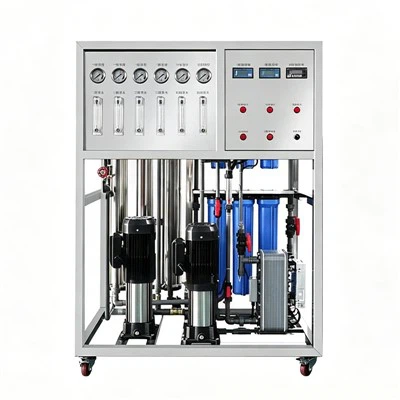
First, let’s keep it simple: both low-pressure and high-pressure RO use a semipermeable membrane to push water through, stripping out contaminants like salts, bacteria, and heavy metals. The big difference? The PSI (pounds per square inch) we run those membranes at. Low-pressure RO systems typically operate between 80 and 150 PSI, while high-pressure models clock in at 200 PSI and up—sometimes even hitting 800 PSI for tough jobs. That pressure gap isn’t just a number; it ripples through every part of the equipment, your energy bills, maintenance, and what the system can actually clean.
Let’s start with low-pressure RO, since it’s way more common for smaller, less demanding applications. We use low-pressure systems a lot for things like purifying water for food processing (think softening water for soda or beer brewing, where you just need to get rid of hardness and light contaminants, not full desalination), or even some municipal small-scale water treatment plants that don’t handle super salty water. The lower PSI means the membranes we use here are thinner and more delicate—they can’t handle the force needed to push through high-solute water like seawater or brackish water that’s extra salty. So their job is mostly low-effort, low-stakes filtration.
From a supplier’s side, low-pressure RO systems are way cheaper to build, too. The pumps are smaller, the piping is lighter, and the whole setup doesn’t need heavy-duty parts to withstand that 200+ PSI. That’s a win for buyers on a tight budget, or who don’t need to process water with high dissolved solids (TDS). But there’s a catch here: low-pressure membranes have a harder time rejecting certain contaminants, like monovalent ions (sodium, chloride) that make up salt. So if your feed water has a TDS level over, say, 1,000 ppm, low-pressure RO won’t get you to the clean water you need—you’ll end up with too much salt left in the product, which can mess up your process or not meet regulatory standards.
Now, high-pressure RO—this is the heavy hitter. We sell these for jobs where low-pressure just won’t cut it: desalinating seawater for coastal municipalities, treating brackish water with TDS over 5,000 ppm, or even industrial processes that need near-pure water, like pharmaceutical manufacturing or semiconductor production. High-pressure systems use thick, robust membranes made to handle that 200-800 PSI force, which is what makes them so good at pushing out salt and other small contaminants. The higher pressure means you get way more pure water per unit, and a higher rejection rate for TDS—sometimes up to 99% for seawater high-pressure RO.
But let’s be real, high-pressure RO isn’t for everyone. For one thing, the energy costs are way higher. That pump has to work way harder to hit 500 PSI, so your electricity bills will jump a lot. Also, the equipment itself is more expensive upfront—stronger pumps, thicker piping, reinforced membrane housings, and even pressure regulators to keep the system safe. Maintenance is another headache: those membranes take a beating at high pressure, so you’ll need to replace them more often, and any small leak or part failure is way riskier because the pressure is so high. We’ve had customers come to us after buying a cheap high-pressure system online that blew a pipe because it wasn’t rated for the PSI—cost them thousands in downtime.
Wait, there’s a middle ground I should mention: medium-pressure RO. Some folks call that 150-200 PSI, which is for brackish water treatment. It’s not as intense as high-pressure, but way better than low-pressure. We use medium-pressure a lot for agricultural water treatment, where TDS is around 1,000-5,000 ppm, and you don’t need full seawater desalination. It strikes a balance between cost, energy use, and performance—way more popular than pure high-pressure for mid-sized operations.
Now, let’s talk about use cases, because that’s where most buyers mess up. A craft brewery owner I worked with last year bought a cheap low-pressure RO system thinking it would work for their brewing water. Turns out, their local water had high TDS (around 1,200 ppm) from groundwater, so the low-pressure system only got them down to 800 ppm—way too high for beer, which needs TDS under 100 to get a clean flavor. They had to upgrade to a medium-pressure system a few months later, which cost them extra downtime and cash. That’s the kind of mistake I hate seeing—buying the wrong RO because you didn’t check your feed water specs.
Another example: a coastal desalination plant. They can’t use low-pressure RO—seawater has TDS around 35,000 ppm, so you need that 800 PSI to push through all that salt. If they tried low-pressure, they’d only get a tiny amount of water, and most of it would still be salty. So high-pressure is non-negotiable there. For a food processing plant in the middle of the country, though, their water is probably freshwater with low TDS, so low or medium pressure is totally fine.
What about membrane life? That’s a big one for total cost of ownership. Low-pressure membranes usually last 3-5 years, whereas high-pressure membranes might only last 2-4, because the constant high pressure wears them out faster. That’s an important number when you’re budgeting—those membrane replacements aren’t cheap, so if you’re running a high-pressure system, you need to factor that in. Also, fouling is a thing—if your water has a lot of sediment or bacteria, low-pressure membranes are more prone to clogging, but high-pressure membranes can handle some fouling better because of the higher pressure flushing, though not if it’s too bad.
Energy efficiency is another angle. A lot of people think high-pressure is way less efficient, but modern high-pressure RO systems with energy recovery devices (ERDs) can cut energy use by 50% or more. Those devices capture the pressure from the concentrated waste water and use it to help push the feed water, so you don’t have to run the pump as hard. Low-pressure systems don’t usually need ERDs because their pressure is so low, so that’s another cost difference.
Now, as a supplier, I get asked all the time: “Which one should I pick?” My answer always starts with a water test. You have to know your feed water’s TDS level, contaminants, and flow rate. If your TDS is under 1,000 ppm, low-pressure is probably enough—it’s cheaper to buy, run, and maintain. If it’s between 1,000 and 5,000 ppm, medium-pressure is the sweet spot. If it’s over 5,000 ppm (seawater, heavy brackish), high-pressure is the only way to go.
Wait, also, space and setup. Low-pressure systems are smaller, easier to install, and can fit in tighter spaces. High-pressure systems need more room for the heavy pumps and ERDs, and you have to make sure the floor can handle the weight, plus proper plumbing for the high pressure. If you’re retrofitting an existing facility, space might be a factor that pushes you toward low or medium pressure.
I’ve seen so many buyers go for the cheapest option, only to regret it. Last quarter, a manufacturer reached out to us with a low-pressure system they bought that kept failing because their water had some dissolved solids that the membrane couldn’t handle. They spent $15k on the cheap system, then another $12k to upgrade to a medium-pressure one, plus $8k in lost production downtime. That’s way more than if they’d just bought the right system in the first place.
On the flip side, some folks overbuy—they get a high-pressure system for a job that only needs low-pressure, paying way more upfront and in energy costs. A small beverage company I worked with did that; they bought a high-pressure RO for their 5,000 gallon a day water needs, but their TDS was only 800 ppm, so they were wasting $200 a month in extra energy. We helped them switch to a low-pressure system, and they saved $2,400 a year immediately.
So, to wrap up the key differences, let’s list them out clearly, in plain terms:
- PSI: Low = 80-150, Medium = 150-200, High = 200-800
- TDS Rejection: Low ~90%, Medium ~95%, High ~99%+
- Cost (Upfront): Low < Medium < High
- Energy Use: Low < Medium < High (with ERDs, High gets closer to Medium)
- Membrane Life: Low (3-5y) > Medium (2-4y) > High (2-3y)
- Best For: Low = freshwater, food processing, small-scale; Medium = brackish water, agriculture, mid-sized facilities; High = seawater desalination, heavy industrial/ pharmaceutical needs.
Now, if you’re in the market for an industrial RO system, don’t just guess. Get a water test done first. Then, tell a supplier all the details: your feed water TDS, desired water output, end use (what are you using the pure water for?), and your budget for both upfront cost and ongoing maintenance/energy.
As someone who’s been in this industry for over a decade, I’ve helped tons of companies pick the right system, avoid that costly mistake of over or underbuying. If you’re looking to source an industrial RO equipment solution, reach out to discuss your needs, no pressure, no sales pitch—just straight talk about what will work for your operations.
SWRO & BWRO Equipment References
- Water Research Foundation. (2020). Industrial Reverse Osmosis Membrane Performance and Maintenance.
- American Water Works Association. (2018). Desalination Technology: Principles and Applications.
- International Desalination Association. (2021). High-Pressure vs. Low-Pressure RO System Specifications for Municipal and Industrial Use.
- EPA. (2019). Industrial Water Treatment: Reverse Osmosis System Design Guidelines.
Shandong Yanuo Environmental Protection Equipment Co., Ltd.
We’re well-known as one of the leading industrial ro equipment manufacturers and suppliers in China, featured by quality products and good price. Please rest assured to buy bulk industrial ro equipment made in China here from our factory. Customized orders are welcome.
Address: North Side of the Road, 1,000 Meters West of the Intersection of Fenghuangshan West Road and Provincial Highway S102, Wangfu Subdistrict, Qingzhou City, Weifang City, Shandong Province.
E-mail: ynhb.499973983@gmail.com
WebSite: https://www.zkyaruo.com/
