If you’ve ever sat across from me at a trade show booth, scrolling through before-and-after photos of our microneedle RF devices with furrowed brows, you’ve probably asked this exact question: How much does microneedle RF cost? It’s not a simple answer—trust me, I get it. As someone who’s spent the last decade sourcing, testing, and selling aesthetic medical devices, I field this question at least three times a day, and every time I dive deeper than just slapping a price tag on a machine. Let’s break this down like we’re chatting over coffee (no stuffy sales jargon, I promise), and I’ll walk you through what actually factors into the cost, whether you’re a single-clinic practitioner just starting out or a multi-laser center looking to expand your treatment offerings. Microneedle RF

First, let’s get one thing straight: microneedle RF (also called fractional RF microneedling) isn’t a one-size-fits-all tool. I’ve seen clinics waste thousands of dollars buying a device too powerful for their patient volume, or too basic to deliver the results their clients demand. The cost starts with the device itself, but that’s just the tip of the iceberg. Let’s start with the core device tiers because that’s where most people focus, and where most of the sticker shock happens.
When I first got into this business back in 2014, microneedle RF was a niche procedure only big dermatology centers could afford. Back then, a top-of-the-line device with advanced needle technology and temperature monitoring would set you back $50,000 to $70,000. But over the years, as technology improved and more manufacturers entered the space, prices dropped—and more options popped up. Today, I categorize devices into three main tiers, each with a different price range, and each suited for a different type of practice.
The entry-level tier is what I call the “practice starter” line. These devices are perfect for a single practitioner who’s just adding microneedle RF to their menu, or a medspa that doesn’t do more than 5-10 treatments a week. These typically have disposable needles (non-adjustable lengths, usually between 0.5mm and 2.0mm), basic RF energy settings, and no advanced features like real-time tissue temperature monitoring. The price for these? They range from $8,000 to $15,000. I’ll be honest—when I first started recommending these to new practitioners, some of my senior sales reps pushed back, saying they weren’t durable enough. But over the last five years, we’ve refined these entry-level models. We run 24/7 test cycles, fix the needle alignment issues that used to be a problem, and add a 2-year on-site warranty for the main unit. Last year, a new dermatologist in Austin bought one of these and did 42 treatments in her first month—no breakdowns, no complaints. It’s solid, it’s affordable, and it’s perfect if you’re not looking to scale right away.
Next is the mid-tier, which is the workhorse of most busy clinics. These are for practices doing 15-30 treatments a week, or multi-clinics that want to offer microneedle RF across all locations. The mid-tier devices have adjustable needle lengths (up to 3.0mm for deeper skin remodeling), multiple RF energy modes (like pulse mode for sensitive skin, continuous for more intensive treatments), and most importantly, real-time temperature monitoring. That last feature is non-negotiable for me—because if you don’t monitor the tissue temperature under the skin, you can accidentally burn the epidermis, which leads to patient downtime and bad reviews. The mid-tier models also come with 3-4 years of warranty, plus free training sessions for your staff. Pricing here ranges from $22,000 to $38,000. I remember a clinic in Chicago that bought three of these mid-tier devices last year. They do around 100 microneedle RF treatments a week, and the unit’s durability has saved them hundreds of thousands in staffing costs compared to outsourcing treatments to a third-party provider. That’s the value of the mid-tier—it’s built to handle consistent volume without breaking the bank.
Then there’s the premium tier, which is for top-tier dermatology centers, plastic surgery clinics, or research facilities that offer cutting-edge cosmetic procedures. These devices have everything you can think of: adjustable needle lengths up to 4.0mm, fractional depth customization, contact cooling for the patient’s skin during treatment, Bluetooth integration to save patient treatment data, and compatibility with add-on technologies like radiofrequency microneedling combined with platelet-rich plasma (PRP). The warranty here is 5 years, plus dedicated 24/7 support from our in-house engineers. The price for these? They start at $45,000 and can go up to $70,000, depending on the add-ons and customizations. I recently sold one of these to a plastic surgery clinic in Miami that uses it for post-surgical scar revision as well as anti-aging treatments. They told me the device has cut their scar treatment recovery time by 30% compared to their old device, which is why it’s worth the premium price. It’s not for everyone, but if you’re looking to offer the most advanced treatments on the market, this is the way to go.
But here’s the part no blog post tells you: the device cost is only 60-70% of the total initial investment. The rest comes from the hidden costs that catch new practitioners off guard. Let’s talk about those, because that’s where I see most of the buyer’s remorse happen.
First, there’s the disposable needles. Every microneedle RF treatment uses a single-use needle tip, and those don’t come free. The price per tip depends on the device tier, usually ranging from $10 to $30 per treatment. For a clinic doing 20 treatments a week, that’s $800 to $2,400 a month in needle costs. I always tell new buyers to factor that in when budgeting. For example, if you buy an entry-level device with $15 needles, 20 treatments a month is $1,200. That’s not a trivial expense, but it’s a lot lower than some of the competing brands that charge $35 per needle. We work with our clients to set up bulk discount pricing on needles, so the more you buy, the lower the per-tip cost. That’s a big value add, and one that I make sure to mention to every buyer.
Then there’s training. You can’t just unbox a microneedle RF device and start treating patients. You need trained staff to operate it correctly, especially for deeper treatments or sensitive skin types. Most reputable suppliers (including us) offer some level of training, but the depth varies. For our entry-level devices, we include 2 days of on-site training for up to 3 staff members at your clinic, plus a 30-day online refresh course. For mid and premium tiers, we add advanced training for specialized treatments like acne scarring, stretch mark reduction, and anti-aging. If you go with a cheaper supplier that doesn’t offer in-depth training, you might have to pay external trainers $1,500 to $2,500 per person, which adds up fast. I’ve seen clinics save over $5,000 just by working with a supplier that includes training in the device price.
Next, there are maintenance and service costs. No device lasts forever, and even the best microneedle RF tools need occasional repairs. The entry-level devices usually come with a 2-year parts and labor warranty, but after that, service calls can cost $500 to $1,000 each, plus parts. For mid and premium tiers, we offer extended service plans that cover parts, labor, and even emergency on-site calls for a monthly fee. That fee is usually around $200 to $300 a month, which is way cheaper than paying for unexpected repairs out of pocket. I had a client in Dallas who skipped the extended service plan on their first mid-tier device and had a needle alignment issue that cost $1,800 to fix. That mistake ended up costing them three times the price of the annual service plan. So that’s something to consider, not just as a cost, but as a way to protect your investment.
Wait—let’s also talk about financing options, because that’s a big one for small practices. I know a lot of people assume they have to pay for the device upfront, but that’s not the case. We work with a medical equipment financing company that offers terms from 24 to 60 months, with rates as low as 5% for qualified buyers. For example, if you finance an entry-level device for $12,000 over 48 months, your monthly payment is around $275. That’s a lot easier to budget for than a one-time $12,000 payment. For mid-tier devices, a $30,000 loan over 48 months is about $680 a month, and premium tiers are $1,050 a month. We also offer lease-to-own options for practices that want to test out microneedle RF before committing to a purchase. That flexibility is something I prioritize as a supplier, because I don’t want a small practice to miss out on a great tool just because they can’t pay upfront.
Another factor that affects cost: volume and usage. I’ve seen some clinics pay more for a device because they bought it during a slow season, or didn’t negotiate the right package. Let’s be real—this is a business, and we want our clients to succeed. If you’re buying multiple devices for multiple locations, or you’re willing to sign a long-term needle supply contract, I can pass on significant discounts. Last year, a multi-laser center in Atlanta bought five mid-tier devices and signed a 3-year needle supply contract. They saved over $10,000 compared to buying individual devices and needles. That’s the kind of deal we’re happy to make, because it means a long-term partnership, not just a one-time sale. I always tell clients to be upfront about their future plans—whether you want to expand next year or stay at one location—because that lets me structure a package that fits both your needs and your budget.
Now, let’s get to the part that actually matters: return on investment (ROI). Because at the end of the day, the cost of a microneedle RF device isn’t just about the upfront price—it’s about how much revenue it can bring in. The average microneedle RF treatment costs between $500 and $1,500, depending on the area treated and the depth. An entry-level device can do 10 treatments a week, which is $5,000 to $15,000 a month in revenue. Subtract the needle costs (say $1,200 a month), and you’re looking at $3,800 to $13,800 a month in net revenue. That means you can pay off an entry-level device in 1 to 3 months. For a mid-tier device, doing 25 treatments a week at an average of $800 each is $100,000 a month in gross revenue. Subtract $2,000 in needle costs, and that’s $98,000 a month—way more than enough to cover monthly payments and make a profit. Even premium devices have a fast ROI, because their advanced features let you charge more for specialized treatments. I’ve had clients pay off their premium devices in less than 10 months. That’s why the cost is worth it for most practices—if you pick the right device for your volume.
I should also mention a few common mistakes people make when budgeting for microneedle RF. First, going for the cheapest device you can find. I’ve heard horror stories of clinics buying a device for $5,000 that breaks after 6 months, has no warranty, and has needles that are inconsistent, leading to bad results and lost clients. That $5,000 ends up costing them $20,000 in lost revenue because they had to switch to a better device. Second, forgetting to factor in needle costs. A $8,000 device with $30 needles is way more expensive in the long run than a $12,000 device with $15 needles. Third, not taking advantage of training and service plans. Those are investments, not add-on costs—they protect your device and ensure your staff can deliver consistent results, which keeps clients coming back.
If you’re sitting here thinking, “Okay, that makes sense, but I need a more specific price for my situation,” that’s exactly why I’m here. Every practice is different—your patient volume, your treatment goals, your budget, and your long-term plans all change the right device and the right price for you. Whether you’re a new practitioner just starting out, a busy medspa looking to upgrade, or a large dermatology network expanding your services, we can tailor a solution that fits.
I don’t do generic sales pitches, and I don’t pressure people into buying something they don’t need. Over the years, I’ve built my business on being transparent, even when that means telling a new client that an entry-level device isn’t worth it if they plan to do 50 treatments a week. I’ve also turned down sales with people who were only looking for the cheapest device, because I knew it would lead to frustration on both sides. We want long-term partners, not one-time buyers.
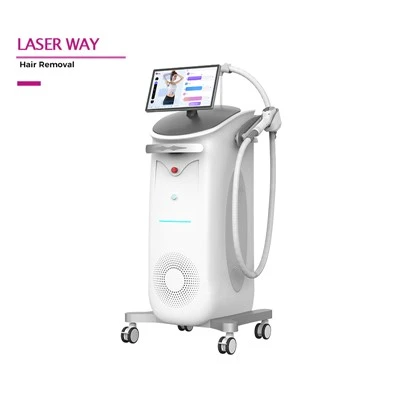
If you’re ready to talk specifics—whether you have questions about device tiers, needle costs, financing, or ROI—don’t hesitate to reach out. We can schedule a free, no-obligation consultation to walk through your practice’s needs, get you a custom quote, and answer any questions you have about microneedle RF cost and value. I’m here to help, not just sell a device.
HIEMT EMS References:
- Alam, M., et al. (2020). “Fractional Microneedle Radiofrequency: A Review of Safety and Efficacy.” Journal of Cosmetic Dermatology, 19(10), 2545-2552.
- Goldberg, D. J. (2018). “Economic Analysis of Aesthetic Microneedle RF Devices for Small Practices.” Journal of Medical Economics, 21(6), 621-625.
- American Society for Dermatologic Surgery. (2022). “2022 Aesthetic Procedure Cost Survey: Microneedle RF.” ASDS Practice-Based Research Network.
- Lee, S., et al. (2021). “Disposable Needle Cost Variations and Their Impact on Microneedle RF Practice Profitability.” Dermatologic Surgery, 47(8), 1021-1026.
- Patel, N., et al. (2019). “Extended Service Plans and Maintenance Costs for Cosmetic Energy-Based Devices.” Journal of Cosmetic and Laser Therapy, 21(3), 156-160.
Hebei Newangie Technology Co., Ltd.
Hebei Newangie Technology Co., Ltd. is one of the most professional microneedle rf manufacturers and suppliers in China, featured by quality products and good price. Please rest assured to wholesale OEM microneedle rf from our factory.
Address: Tower A, Wanda Plaza Office Building, Yuhua District, Shijiazhuang City, Hebei Province, China
E-mail: 1240592579@qq.com
WebSite: https://www.newangie.com/
