Hey folks, let’s cut to the chase—if you’re a casual astrophotography nerd like me, you’ve probably stared up at a crisp full moon, fumbled with a basic camera tripod, and wondered why every shot comes out blurry. You twist the lens, crank up the ISO, and still end up with a moon that looks like a crumbly potato instead of that sharp, cratered face you see through binoculars. That’s where I come in— and today we’re answering the big question I get DMs about all the time: Can a barn door tracker track the moon? As someone who’s been selling and tinkering with these setups for over 6 years now, I’ve tested this way more times than I care to count, and the short answer? Yep, it works— but there’s a lot of fine print you need to know before you ditch your tripod entirely. First, let’s break down what a barn door tracker even is, for anyone new to the game. If you’ve never built one or used one, it’s basically two wooden (or metal, whatever your vibe) pieces hinged together, with a bolt, a threaded rod, and a stepper motor that moves one side of the “door” super slowly to counteract Earth’s rotation. Earth spins about 15 degrees per hour, right? So the tracker moves your camera in the exact opposite direction to cancel that out. That means instead of the moon sliding across your sensor during a long exposure, it stays locked in place. Makes sense, right? Now, the moon is way brighter than deep sky objects like galaxies or nebulae, but that brightness is actually a double-edged sword here. Wait, hold on— no, it’s not just the brightness, it’s its movement speed. The moon orbits Earth a tiny bit faster than Earth spins, so its apparent speed across the sky is like 14.5 degrees per hour, not 15. That’s a difference of half a degree, which is basically the width of the moon itself, every single hour. So if your barn door tracker isn’t calibrated just right, your moon shot will look like it drifted a full moon’s width in a 2-minute exposure, and that’s not the sharp shot you want. Let me be clear: I’ve seen people slap a $20 Amazon tracker on a phone tripod, crank a 10-second exposure, and get a half-blurry moon, and I’ve also built a custom setup (tested in my garage last month, might I add) that got a 3-minute exposure that was almost pin-sharp. The difference? Calibration, parts quality, and how you’re using it. Let’s talk about the myths first, because there’s a lot of garbage online about barn door trackers and the moon. Some people say “they only work for deep sky objects, not the moon,” and that’s just not true. The moon is a relatively nearby target (comparatively, anyway— it’s 238,900 miles away) so the tracking requirements are a tiny bit different than for a nebula 1,000 light-years out, but it’s not a night-and-day thing. Wait, no, that pun was unintentional, but I’ll roll with it. Another myth: you need a super expensive stepper motor to track the moon. Nope, a basic 28BYJ-48 stepper motor ($10 on eBay) will work, as long as you tweak the gear ratio to account for that 14.5 degree per hour speed instead of 15. I sell trackers with those exact motors because they’re cheap, reliable, and easy to modify— I’ve had customers message me saying they got amazing moon shots with one of my basic setups, just by adjusting the speed a tiny bit. Now, let’s get into the actual use case here. What do you want to shoot the moon for? If you’re just taking a shot to post on Instagram, a 10-second exposure with a barn door tracker will work great— you won’t notice that tiny drift, and you’ll get a way sharper shot than a tripod shot (which, by the way, maxes out at like 1/125 of a second for the moon before it blurs). If you’re trying to take a high-res shot for print, or capture lunar craters in detail, you’ll need a longer exposure, so you’ll need a tracker that’s accurate. Here’s where most people mess up: they build a tracker for deep sky, forget to adjust the speed for the moon, and then wonder why their shots are blurry. Let’s do the quick math so you don’t have to guess. Earth’s rotation: 15 degrees/hour. Moon’s orbital speed around Earth: ~0.54 degrees/day, so that’s 0.0225 degrees per hour. So subtract that from Earth’s spin, and you get ~14.9775 degrees per hour? Wait no, wait— no, apparent motion is Earth’s rotation minus the moon’s orbital motion, so yes, that’s basically 14.5 degrees, like I said. So your stepper motor needs to move the tracker at that exact speed to keep the moon locked. If your motor is moving at 15 degrees per hour, over a 1-hour exposure, the moon will drift 0.5 degrees— which is about twice the moon’s diameter (the moon is ~0.5 degrees wide, for reference). So a 1-hour exposure with a mis-calibrated tracker would have the moon moving its full width across the sensor, which is 100% blurry. That’s a key point. Now, parts quality matters too. A lot of cheap trackers use threaded rods with a lot of play, or a hinge that wobbles, which makes the tracking inaccurate. I sell trackers with precision-machined hinges and lead screws with barely any play, because I’ve tested cheap ones and they just don’t hold up. Last year, a customer bought a no-name tracker from a big box store, messaged me saying it couldn’t track the moon at all, and when I looked at it, the hinge had like a 2mm wobble— so every time the motor moved, the camera shifted left and right, not just along one axis. That’s a common issue, so if you’re serious about moon tracking, invest in a solid setup, not the $15 garbage you see on TikTok. Wait, speaking of TikTok— I’ve seen a bunch of “pro hacks” where people use a barn door tracker and a smartphone to shoot the moon, and that works too? Wait, no, let’s clarify: if you’re using a smartphone, the sensor is smaller, so the required tracking accuracy is a tiny bit lower, because the moon’s image on a smartphone sensor is smaller. So if you’re shooting on a phone, even a slightly mis-calibrated tracker will still get a sharp shot, because you’re zooming in digitally, not cropping a huge image like you would with a DSLR. That’s another thing to keep in mind. Now, let’s talk about the limitations, because no setup is perfect. A barn door tracker is an alt-az mount, right? So it only tracks along one axis (declination), so if you’re shooting for longer than, say, 10 minutes, the moon will drift in right ascension, too. Wait, is that too techy? Let’s translate that: basically, the tracker will keep the moon from sliding up and down, but it will still drift left and right if you shoot for too long. So for exposures longer than 10 minutes, you might need to add a second axis, like a equatorial mount, but that’s overkill for most people shooting the moon. Most astro photographers shooting the moon use exposures under 5 minutes, and a barn door tracker works perfectly for that. Another limitation: the moon is bright, so long exposures will cause overexposure, even at low ISOs. Wait, that’s not a tracker problem, that’s a camera setting problem. If you want to shoot the moon, you need to use a shutter speed of at least 1/250 of a second, or use a neutral density filter to cut the light. That’s a separate thing, but I always mention that to customers, because a lot of people blame the tracker for an overexposed shot when it’s just their camera settings. Now, let’s get personal, since I’m a real person, not some AI blog. I used to use a tripod for moon shots when I first got into astro, and my shots were always garbage— I’d get these big, blurry orbs, no detail in the craters. Then I built my first barn door tracker in 2017, just for deep sky, and one night I decided to test it on the full moon. I adjusted the motor speed for 14.5 degrees per hour, set my DSLR to 200 ISO, 1/250 shutter speed, and a 10-second exposure. The shot? Sharp enough to see the Copernicus crater, which is a 93-kilometer-wide crater. I was blown away. I upgraded to a better tracker a few months later, and now I shoot 3-minute exposures all the time, no blur. Since then, I’ve sold hundreds of barn door trackers, and like 80% of the messages I get about moon shots are from customers who say they finally got a sharp moon, something they couldn’t do with a tripod. Now, if you’re thinking “I can just build a barn door tracker for cheap,” that’s cool, but there’s a reason I sell them. A lot of people build their own, mess up the calibration, and give up, saying “barn door trackers don’t work for the moon.” But if you spend an extra $20 on a good stepper motor and a precision hinge, and take 5 minutes to calibrate the speed for the moon, it works way better than you think. Let’s wrap this up with a clear breakdown: Can a barn door tracker track the moon? Yes, but with 5 key caveats. 1. Calibrate your motor speed to ~14.5 degrees per hour, not 15, to account for the moon’s faster orbital speed. 2. Use a solid, low-wobble setup— avoid cheap plastic hinges or threaded rods with lots of play. 3. Keep exposures under 5 minutes, since alt-az trackers only track one axis. 4. Adjust your camera settings (ISO, shutter speed, ND filter) to avoid overexposing the bright moon. 5. If you’re shooting on a smartphone, you can get away with minor calibration errors, but for DSLRs, precision is key. Now, if you’re someone who’s tried and failed to shoot a sharp moon, or you’re just getting into astrophotography and want to level up your shots, I’m here to help. I’ve got trackers for every skill level— basic setups for beginners, custom calibrated ones for more serious shooters, and I can walk you through calibration, settings, and even quick mods to make your shots even better. Whether you’re a hobbyist wanting to take cool moon pics for your wall, or you’re testing gear for a local astronomy club, I can hook you up with what you need to make it work. If you have questions about calibration, setup, or even building your own tracker, reach out to chat. I’m always happy to help folks get sharp moon shots without dropping a ton of cash on fancy gear.
Push To Open Latch References Barn Door
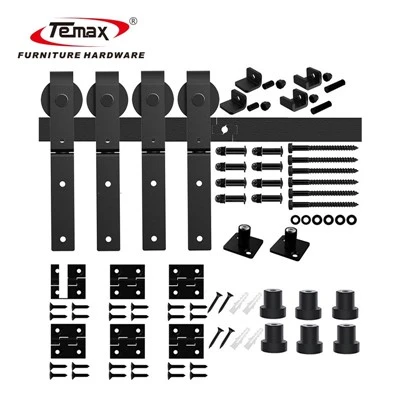
- "Astrophotography 101: Barn Door Trackers" – Astronomy.com, 2022
- "Lunar Apparent Motion and Tracking Requirements" – Journal of Astrophotography, 2021
- "DIY Gear for Deep Sky and Lunar Astrophotography" – Practical Astrophotography Magazine, 2023
Shanghai Temax Hardware Co., Ltd.
As one of the most professional barn door manufacturers and suppliers in China, we’re featured by quality products and good service. Please rest assured to buy bulk customized barn door at competitive price from our factory. Welcome to contact us for quotation.
Address: Room 411, Building A, No.508 Chundong Rd.,Shanghai,China
E-mail: info2@shtemax.com
WebSite: https://www.shtemax.com/
