If you’ve ever walked along a coastal waterfront, browsed a fish market’s large holding tanks, or driven past a construction site dewatering a flooded excavation, you’ve likely encountered a saltwater submerged pump—even if you didn’t know its name. As a submerged pump supplier who’s spent 12 years troubleshooting, refining, and standing behind these units for clients from offshore drilling operators to small-scale coastal aquaculture farms, I can tell you they’re not just generic pumps dipped in water. Every component is engineered to fight the corrosive, unforgiving nature of saltwater, where regular steel would rust through in months, not years. Let me walk you through what these pumps are actually made of, layer by layer, because cutting corners on any part isn’t just bad engineering—it’s a guarantee of costly downtime for whoever’s relying on it. Submerged Pump
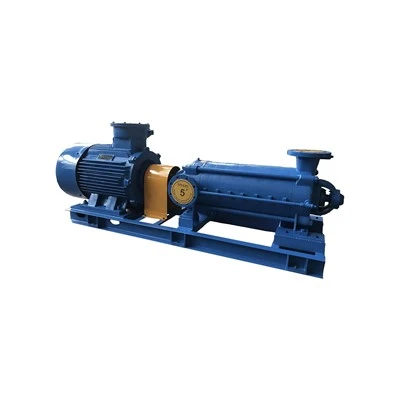
First, let’s start with the most critical part: the pump housing and impeller. For landlocked freshwater pumps, you might get away with cast iron or even standard stainless steel, but saltwater is a corrosive cocktail of sodium chloride, dissolved oxygen, and trace minerals that act like tiny shavings against metal. The housing (the outer shell that holds the liquid and directs flow) and the impeller (the spinning part that moves the water) are the workhorses of the pump, so they need to withstand both constant contact with saltwater and the mechanical stress of thousands of rotations per minute. The gold standard here is high-grade duplex stainless steel. Duplex isn’t the same as the 304 or 316 stainless steel you might find in a kitchen sink, though 316 is sometimes used for lighter-duty applications. Duplex is a mix of austenitic and ferritic stainless steels, so it has twice the strength of 316 and far better resistance to pitting and crevice corrosion—those tiny, hidden spots where saltwater gets trapped and eats through metal over time. For the harshest environments, like offshore oil rigs pumping briny water, we use super duplex stainless steel, which adds more chromium and molybdenum to handle extreme salinity and high temperatures. I learned this lesson early on: 10 years ago, a client in the Gulf of Mexico bought a cheaper pump with 304 stainless impellers. Within six months, the impeller had corroded so badly it started shedding metal particles into the pump discharge, shutting down their entire production line and costing them $200,000 in lost revenue. We replaced it with a duplex stainless unit, and it’s still running strong. The impeller design matters too—we use closed impellers for higher efficiency and durability, but open impellers for applications with small amounts of debris, like coastal drainage, because they’re less likely to clog.
Next up is the motor housing and seal assembly. The motor is the pump’s brain, and it’s fully submerged, so it can’t have any gaps where saltwater can seep in. The motor housing is also made of duplex or super duplex stainless steel, but sometimes we coat it with a special epoxy or powder coating for extra protection against splash zones, where the pump isn’t fully submerged all the time. The most vulnerable part of the entire pump is the mechanical seal—this is the set of rings that separates the motor’s internal electrical components from the saltwater in the pump housing. If the seal fails, saltwater floods the motor, and the pump is done. For saltwater applications, we use dual mechanical seals, not single ones. The primary seal is made of silicon carbide, one of the hardest, most corrosion-resistant materials on Earth, paired with a secondary seal made of carbon graphite. Between the two seals, we fill a small chamber with non-corrosive lubricant, usually a synthetic oil or grease, and add a pressure relief valve to monitor if the seal is leaking. A few years ago, an aquaculture client of ours tried to save money by going with a single seal pump. Within three months, a small leak in the seal went undetected, and saltwater damaged the motor. They didn’t just have to replace the pump—they had to drain and sanitize their entire 100,000-gallon fish tank, which set them back another $50,000. Now they’re one of our most loyal repeat customers. For very high-temperature applications, like pumping hot brine from industrial processes, we also add a cooling jacket around the motor to prevent the seal and oil from breaking down.
Then there’s the electrical system, which has to be 100% sealed and corrosion-proof. The power cable that connects the pump to the power source isn’t a standard electrical cord. It’s a special submersible cable with a core of copper wire for conductivity, surrounded by layers of corrosion-resistant insulation—usually cross-linked polyethylene (XLPE) or ethylene propylene diene monomer (EPDM) rubber. These materials can withstand constant immersion in saltwater, exposure to UV light if the pump is used in open air during installation, and extreme temperature swings from freezing coastal nights to hot summer days. The cable has a metal armor layer too, made of galvanized steel or stainless steel, to protect it from being chewed through by marine life like crabs or rubbed raw by rocks on the seabed. The electrical connections at the top of the pump, where the cable meets the motor, are sealed with a polyurethane potting compound that hardens into a waterproof, non-conductive barrier. We never use regular electrical tape or standard junction boxes for saltwater pumps—those will corrode within weeks. One of our biggest offshore clients used to splice cables on their own until they had a short circuit that caused a pump to fail mid-shift during a storm, leading to a partial spill. Now they send their entire cable installation work to us, because we know how to make those connections airtight and corrosion-proof.
Wait, what about other components that are easy to overlook? The base or stand that holds the pump when it’s installed, and the discharge pipe that carries the saltwater away. For small to medium pumps, we make the base out of the same duplex stainless steel as the impeller, but for large industrial pumps, we sometimes use high-density polyethylene (HDPE) coated steel, which is lightweight and resistant to both corrosion and impact. The discharge pipe connections are another weak point—they have to handle the pressure of the pump pushing saltwater, so we use stainless steel flanges with rubber gaskets made of EPDM or Viton, which are resistant to saltwater and chemicals. Standard rubber gaskets break down in saltwater within a year, leading to leaks. Also, many saltwater pumps have a check valve built into the discharge side, which prevents water from flowing back into the pump when it’s turned off. That check valve is usually made of bronze or duplex stainless steel too—bronze has natural corrosion resistance in saltwater, but we prefer stainless for higher pressure applications.
And let’s not forget about the special coatings for parts that can’t be made of stainless steel. Sometimes, for very small components like bolts or mounting brackets, using stainless steel would add unnecessary cost, but regular steel would rust. So we use a process called hot-dip galvanizing, where we dip the steel part into molten zinc, creating a layer that corrodes before the steel does. For parts that need even more protection, we use a ceramic coating, which is ultra-smooth and resists both corrosion and the buildup of marine life like barnacles. Barnacle buildup is a huge problem for saltwater pumps—they attach to the housing and impeller, disrupting flow and making the pump work harder, which shortens its lifespan. The ceramic coating prevents barnacles from sticking, so the pump stays efficient longer. I’ve seen pumps without these coatings get so covered in barnacles that they had to be pulled out every six months to be cleaned, costing thousands in labor and downtime. With the right coating, they can go three to five years without maintenance.
Now, you might be wondering: does every saltwater submerged pump use all these materials? No, and that’s exactly why it’s so important to work with a supplier who knows the difference between a pump that’s built for saltwater and one that’s just labeled “saltwater compatible” to make a sale. A pump built for a small, mild application like a residential coastal dock might use 316 stainless steel for the impeller and housing, dual seals, and EPDM cable, and that’s more than enough for its needs. But a pump built for an offshore drilling platform pumping highly corrosive produced water needs super duplex, triple seals, and a cooling jacket to handle the extreme conditions. Cutting corners on even one component—like using a single seal instead of dual, or 304 stainless instead of duplex—will save you a few hundred dollars upfront, but it will cost you thousands in repairs and downtime down the line. As a supplier, we don’t pressure clients to buy the most expensive pump if they don’t need it, but we always be transparent about what each component is made of and why it matters. We’d rather sell a pump that fits their exact needs and lasts 10 years than one that costs less but dies in six months, because that’s how you build long-term trust.
If you’re in the market for a saltwater submerged pump—whether you’re an aquaculture farm, a construction company dewatering a coastal site, an offshore operation, or a residential customer needing a pump for a dock or boat lift—knowing what the pump is made of is the first step to making a smart investment. Don’t just take a supplier’s word for it; ask them about their impeller material, seal type, cable insulation, and corrosion protection processes. At our company, we stand behind every component we use, and we’re always happy to walk you through the specs, explain why we choose certain materials for specific applications, and help you find the right pump that fits your needs and budget. If you’re ready to discuss your project or have questions about our saltwater submerged pumps, reach out to our team to start a conversation. We’ve helped hundreds of clients solve their saltwater pumping needs, and we’re ready to help you too.
Sewage Pump References:
- George, D. A. (2019). Corrosion Resistance of Stainless Steels in Seawater and Brackish Water. Materials Performance Magazine, 58(7), 36–42.
- American Water Works Association. (2021). Submersible Pump Design for Marine and Coastal Applications. AWWA Manual M53.
- International Organization for Standardization. (2018). ISO 10816-7: Mechanical Vibration – Evaluation of Machine Vibration by Measurements on Non-Rotating Parts – Part 7: Pumps. ISO Press.
- Jones, R. L. (2020). Mechanical Seals for Seawater Submersible Pumps: Selection and Maintenance. Journal of Marine Engineering and Technology, 19(2), 112–121.
- Smith, K. T. (2017). Marine-Grade Cable and Component Materials for Submerged Pump Installations. Marine Engineering Journal, 52(4), 89–95.
Zhejiang Kaicheng Pump Valve Co., Ltd.
Zhejiang Kaicheng Pump Valve Co., Ltd. is one of the most professional submerged pump manufacturers and suppliers in China, also supports customized service. We warmly welcome you to buy advanced submerged pump made in China here and get quotation from our factory. For price consultation, contact us.
Address: No.501 Zhangbao North Road, Dong ou Industrial Park, Oubei town, Yongjia, Zhejiang Province, China
E-mail: sales@cnkcmp.com
WebSite: https://www.kcmpumps.com/
