If you’ve ever managed a production line that relies on conveyor and straightening table parts, you know how frustrating it is when components like rollers, idlers, chain links, or guide rails wear out far faster than expected. As a supplier who’s worked directly with manufacturing and warehouse teams for over 12 years, I’ve seen everything from a $500 idler assembly failing in 2 weeks to a straightening roller giving out mid-shift and halting a line for 8 hours. It’s not just bad luck—most premature wear boils down to avoidable mistakes, environmental factors, and misaligned part specifications. Let’s break down the most common causes, how to spot them, and what we recommend to extend component life. Conveying and Straightening Table Parts
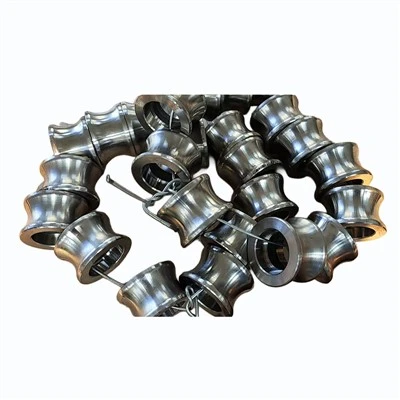
First, let’s talk about load mismatch. This is the single biggest culprit I see, and it’s almost always a case of choosing the wrong part for the job. Conveyor and straightening table parts are rated for specific load capacities, and many teams treat those ratings as a “minimum” instead of a baseline. For example, a standard straightening roller rated for 1,000 pounds per linear foot might seem fine for moving pallets of packaged electronics at 800 pounds per foot—but add in occasional uneven loading (like a pallet shifted 6 inches off-center) or sudden stops and starts, and that roller is constantly absorbing 20-30% more force than it was designed for. The bearing inside the roller, which is supposed to distribute load evenly, will overheat and seize within a few weeks instead of lasting 2-3 years. Another load-related mistake: uneven weight distribution across a conveyor. If you’re running small parts on a table designed for full pallets, the components might be undersized to handle the concentrated pressure from small, dense loads stacking up in one spot. I worked with a small electronics assembly plant last year that was using 1.5-inch rollers for 2-inch PCB trays holding 15 pounds each; the concentrated weight at the tray’s edges caused the rollers to warp at their shaft seats in 18 days. Upgrading to 2-inch heavy-duty rollers fixed the issue immediately, and their part costs dropped by 40% because they didn’t have to replace rollers every month.
Next, environmental contamination and operating conditions that degrade components over time. Conveyor lines are everywhere—from food processing facilities with grease and food debris to steel mills with metal shavings and heat, to warehouse docks with dust and moisture. Many standard parts aren’t engineered for these environments. Grease, for example, might seem like a lubricant, but in a food processing line where lard and flour get into idler bearings, it turns into a thick paste that traps debris and prevents the bearing from spinning. We’ve seen idlers in bakeries that were supposed to last 3 years fail in 3 months because flour clogged the bearing seals. Steel mills have it even worse: hot metal shavings fly onto straightening tables, stick to chain links, and act like tiny abrasives that grind away at the chain’s metal links with every rotation. Moisture is another silent killer. Outdoor conveyor lines or facilities with high humidity will cause rust on uncoated steel rollers or chain components, and rust creates rough surfaces that catch debris and accelerate wear. I had a customer in a coastal port who was using standard hot-dipped galvanized idlers on a dock conveyor; salt air corroded the galvanization in 6 months, leading to pitting that caused the idler shafts to snap. We switched them to stainless steel idlers with sealed bearings, and their wear rate dropped by 85%. Even temperature extremes matter: parts in ovens or freezers need specialized lubricants and materials. A standard bearing grease will thicken in cold temperatures or thin and break down in high heat, leading to friction and premature failure.
Poor alignment and improper installation are two more avoidable causes of quick wear, and they’re often overlooked until a line goes down. Conveyor and straightening tables require precise alignment to function correctly, and even a slight misalignment can cause unnecessary stress on parts. For straightening tables, which are designed to flatten curved or warped material, misaligned rollers or guide rails mean the table isn’t applying even pressure across the material. This causes the material to rub against one side of the rail or roller, creating constant friction that wears down the component 2-3 times faster than normal. I’ve seen teams install a straightening table with rollers off by just 1/8 of an inch along the length; over a month, that misalignment created a groove 1/4 inch deep in a steel guide rail. On conveyor lines, incorrect installation of idlers or chain links can lead to side loading, where the part is pushed to one side instead of spinning evenly. Side loading puts extreme pressure on bearings and shafts, causing them to wear out from fatigue. Another installation mistake: skipping regular tension adjustments for chain-driven conveyors. A chain that’s too loose will jump off sprockets and cause the links to bend, while a chain that’s too tight puts constant stress on the sprockets and bearings. We recommend inspecting chain tension monthly for lines running 24/7, but many teams skip that step, leading to parts failing in weeks instead of years.
Material incompatibility is a less talked-about cause, especially for custom conveying applications. When the material being conveyed isn’t matching the part’s material, you can get galvanic corrosion or excessive friction. For example, if you’re conveying aluminum parts on steel rollers, the two metals will react in the presence of moisture, causing galvanic corrosion that eats away at the roller’s surface. I had a customer in a automotive parts plant that was using steel rollers to move aluminum engine blocks; after 6 months, the rollers had deep pits from corrosion, and the aluminum parts had scratches from the rough roller surfaces. We switched them to aluminum-coated rollers, and both part wear and product damage stopped. Friction from material interaction is another issue: for parts that move against soft materials like rubber or plastic, uncoated steel can create enough friction to wear down both the part and the conveyed material. We often recommend polyurethane coating for rollers in food packaging or textile applications, where plastic bags or fabric would stick to uncoated steel and cause drag.
Now, let’s talk about what you can do to prevent this premature wear, and why working with a supplier who understands your specific needs matters. First, always match part specifications to your application’s load, environment, and material. Don’t just grab the cheapest part you find—ask for a part rated for 15-20% more than your maximum load to account for uneven distribution and unexpected stops. Second, choose parts engineered for your environment: if you’re in a food processing plant, go for sealed bearings with food-grade lubricant and corrosion-resistant coatings; if you’re in a steel mill, opt for heat-treated steel parts with heavy-duty seals to keep out metal shavings. Third, prioritize proper installation and regular maintenance. Even the best parts will wear out quickly if they’re misaligned or not lubricated on schedule. We offer quick installation checks for new conveyor and straightening tables, and we provide free maintenance checklists tailored to your line’s usage.
Over the years, I’ve learned that the best solution to premature wear isn’t just replacing parts when they fail—it’s addressing the root cause. I once worked with a manufacturing team that was going through 20 straightening rollers a month because their line was running 24/7 with heavy steel coils. After testing, we realized their original rollers were rated for 500 pounds per linear foot, but their coils were 1,200 pounds per linear foot, and they had no sealed bearings to keep out metal dust. We replaced them with heavy-duty heat-treated rollers with sealed bearings, and their roller replacement rate dropped to 2 every 6 months. That’s the difference between choosing a generic part and a supplier who takes the time to understand your operation.

If you’re tired of replacing conveyor and straightening table parts every few weeks, or if you’re dealing with frequent line downtime from component failure, we can help. Our team will walk through your line, review your current parts and application conditions, and recommend custom solutions that fit your budget and needs. Whether you need a single replacement idler or a full upgrade for your straightening table, we’re here to provide durable, reliable parts that stand up to your environment. Contact us to discuss your requirements and find the right solution for your operation.
Shear Blade References
- Conveyor Equipment Manufacturers Association (CEMA). (2022). CEMA Standard for Conveyor Components and Design.
- American Society of Mechanical Engineers (ASME). (2021). Design and Application of Rolling Element Bearings.
- Food and Drug Administration (FDA). (2020). Guidance for Components Used in Food Processing Equipment.
- Society of Manufacturing Engineers (SME). (2019). Preventive Maintenance Practices for Conveyor Systems in Manufacturing Facilities.
Jingjiang Jingyi Metallurgical Technology Co., Ltd.
With abundant experience, we are one of the most reliable conveying and straightening table parts manufacturers and suppliers in China. We warmly welcome you to wholesale customized conveying and straightening table parts made in China here from our factory. If you have any enquiry about quotation, please feel free to email us.
Address: No.5 Jianghe Road, Xinqiao Town, Jingjiang City, Jiangsu Province
E-mail: Lcbin1974@163.com
WebSite: https://www.jymetallurgical.com/
