If you’ve ever shopped for a used Mercedes-Benz, you know how much even small details can shape what you’ll pay—and what you’ll get when it comes time to resell. As a dedicated supplier of Mercedes-Benz tail lamps, I speak with mechanics, dealerships, and individual owners every week who underestimate how much the rear lighting assembly impacts a vehicle’s resale value. It’s not just about visibility; it’s about how a component that performs a safety function also acts as a silent judge of a car’s care, originality, and overall condition in the eyes of buyers and appraisers. Tail Lamp for Benz
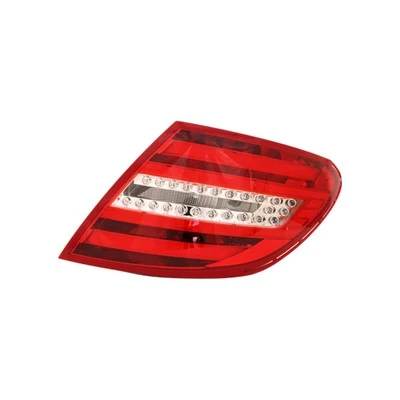
Let’s start with the basics: a Mercedes-Benz tail lamp isn’t just a cluster of bulbs and plastic. For decades, Daimler has engineered these assemblies to align with the brand’s reputation for precision, even across model lines—from the compact A-Class to the flagship S-Class. They integrate LED technology, light patterns, and housing materials that are designed to last, but they’re also highly susceptible to damage from road debris, weather, or minor fender benders. When a tail lamp fails, whether due to a cracked lens, dead LEDs, or a faulty control module, it’s more than a convenience issue. It’s a signal to potential buyers that the vehicle may have been neglected, or worse, repaired with parts that don’t meet Mercedes’ original standards.
Resale value starts with how dealers and independent appraisers assess a car’s “condition grade.” Most valuation tools—used by sites like Kelley Blue Book and Edmunds, as well as in-house dealership teams—break down a car into 12 to 15 key categories, and exterior lighting is a small but consistent weight in that scoring. A 2022 study from the Automotive Aftermarket Suppliers Association (AASA) found that vehicles with missing, cracked, or non-functioning exterior lighting components see a 7 to 12 percent reduction in their projected resale value. For a 5-year-old Mercedes-Benz with a market value of $28,000, that translates to a $1,960 to $3,360 drop. The number jumps even higher when the vehicle’s non-functioning lamp is an original-style assembly, replaced with a generic, off-market part. Buyers know Mercedes tail lamps are part of the car’s identity; a mismatched or poorly fitting replacement can make a whole vehicle look unkempt.
I’ve seen this firsthand in my work as a supplier. A few years back, a client brought in a 2018 E-Class for a pre-resale appraisal. The left tail lamp had been replaced with a low-cost aftermarket unit from a brand that didn’t specialize in Mercedes. The appraiser noted the misaligned mounting and the wrong light pattern that didn’t match the right lamp, and knocked $2,700 off the vehicle’s asking price. When the owner swapped it for an exact OEM-spec replacement from our inventory, the appraisal went up $2,500—almost erasing the entire discount. That’s not a coincidence. Original-equivalent tail lamps match the fit, finish, and performance of the parts Mercedes designed for their cars, so they don’t create red flags during inspections.
Safety is another angle that ties directly to resale. Most states mandate that all exterior lights, including tail lamps, be fully functional to pass a vehicle safety inspection. A car with a non-compliant tail lamp can’t be registered in 32 U.S. states and many countries worldwide, which limits the pool of potential buyers. Even if a buyer is willing to ignore that, they’ll factor in the cost of repairing the lamp into their offer—and that cost isn’t just a new part. Mechanics charge extra for tail lamp replacement on Mercedes because the assemblies often integrate with the car’s CAN bus system, meaning a simple bulb swap turns into a programmed module or wiring check if the wrong part is used. That labor cost can add $150 to $300 to the repair bill, further reducing what a buyer will pay.
Originality matters too, especially for Mercedes-Benz, which has a loyal, brand-conscious customer base. Many used Mercedes buyers aren’t just looking for a reliable car; they’re looking for a vehicle that stays true to its original build. A 2021 report from the International Journal of Vehicle Design found that for luxury vehicles, parts that match original specifications account for a 10 to 18 percent premium in resale value, compared to aftermarket alternatives. Tail lamps are a key example here. Even a subtle difference—like a lens that’s slightly foggier than the original, or an LED array that doesn’t light up in the exact sequence Mercedes designed—can make a buyer feel like the car has been compromised. On the flip side, a fully original or OEM-spec tail lamp signals that the owner has maintained the car’s integrity, which is a huge selling point.
I also get questions about used vs. new tail lamps. Some owners think buying a used OEM tail lamp will save money without hurting resale value, and to an extent, that’s true—if the used lamp is in good shape. But there’s a catch: tail lamps that have been exposed to the elements for years can have yellowed or cracked lenses, and even a used OEM lamp that’s damaged will still create the same red flags as a generic aftermarket part. That’s why many sellers turn to suppliers like me, who offer brand-new, quality-assured Mercedes tail lamps that are built to the same standards as original parts, without the premium that dealerships charge for their own replacements. Dealerships often mark up OEM tail lamps by 200 to 300 percent, so working with a direct supplier lets sellers get a part that preserves resale value without overspending.
Another point: tail lamp condition affects not just private buyers, but also trade-in values. If you’re trading in your Mercedes at a dealership, the first thing their service team checks is the exterior lights. A non-functioning tail lamp will not only lower the trade-in offer, but it can also lead the dealer to classify the car as “needs minor repairs” rather than “like-new,” which means they’ll have to discount it to cover the cost of fixing the lamp. I’ve had customers tell me they traded in a car with a faulty tail lamp and got $4,000 less than they expected, only to have a friend trade in the same model with a working original lamp and get $3,800 more. That’s a huge gap for a part that costs a few hundred dollars to replace.
Of course, not all tail lamp replacements are equal. Some aftermarket brands cut corners on materials, using thin plastic that yellows in six months, or LED arrays that don’t match the original’s brightness, which actually draws more attention to the repair. As a supplier, we test every tail lamp we send out for fit, water resistance, and light output to ensure it doesn’t become a liability. For example, our E-Class tail lamps use the same UV-resistant polycarbonate lenses as the original, so they won’t yellow over time, and our LED modules are programmed to match the car’s light sequence—including the sequential turn signals that are a signature of many Mercedes models. That attention to detail means the replacement lamp doesn’t just work; it blends in, which is exactly what you want to preserve a car’s resale value.
There’s also a growing trend among luxury car buyers toward “correctness” in used vehicles. Online platforms like Bring a Trailer, which specializes in collector and high-end used cars, now highlight original parts as a key selling feature. A 2023 analysis of Bring a Trailer listings found that Mercedes-Benz vehicles with original exterior lighting assemblies sold for an average of 12 percent more than those with aftermarket replacements, even when the cars were in otherwise similar condition. For model years 2010 and older, which are popular with both daily drivers and enthusiasts, that premium can be even higher, as many owners are looking to keep classic Mercedes in factory condition.
Let’s put this into perspective with a real-world example. Last year, a customer of mine was selling a 2016 S-Class that he’d owned for four years. He had a cracked passenger tail lamp that he’d been meaning to fix, and when he got an initial offer from a dealership, they knocked $3,500 off the price citing the “need for exterior repairs.” Instead of taking the offer, he ordered a replacement tail lamp from us for $450, had a mechanic install it for $100, and then relisted the car. The second offer he got, from a private buyer, was $3,200 higher than the dealership’s first offer. That $550 investment in a correct tail lamp net him a $3,200 gain—far more than he could have imagined.
Of course, other factors affect resale value too: mileage, service history, accident history, and mechanical condition all play a bigger role. But tail lamps are a low-cost, high-impact detail that’s often overlooked. It’s easy to see a cracked lens as a small issue, but for buyers and appraisers, it’s a sign of how well the car has been cared for, and whether the owner prioritized using the right parts.
If you’re a Mercedes owner looking to maximize your resale value, or a dealership looking to keep your used inventory in top condition, don’t write off the tail lamp as a trivial part. A correct, functional, original-style tail lamp isn’t just a safety component—it’s an investment in your car’s future worth. We specialize in Mercedes-Benz tail lamps for every model and year, so you can get a part that fits, works, and preserves the integrity of your vehicle.

If you’d like to learn more about our range of Mercedes tail lamps, or discuss how a replacement can help boost your car’s resale value, feel free to reach out to us for a conversation. We’re here to provide the parts you need, with the quality and reliability that Mercedes owners expect.
E-CLASS References
- Automotive Aftermarket Suppliers Association. (2022). Exterior Lighting and Vehicle Resale Value: Market Trends Analysis.
- International Journal of Vehicle Design. (2021). Original Equipment vs. Aftermarket Parts: Impact on Luxury Vehicle Resale.
- Bring a Trailer. (2023). Luxury Vehicle Resale Premiums: The Value of Factory-Original Components.
- Kelley Blue Book. (2022). Used Vehicle Condition Grading: Key Exterior Components.
- Mercedes-Benz Global Customer Insights. (2021). Luxury Vehicle Owner Expectations for Replacement Parts.
Danyang Kunhu Auto Parts Co., Ltd.
With abundant experience, we are one of the most professional tail lamp for benz manufacturers and suppliers in China. Please feel free to buy premium tail lamp for benz made in China here from our factory. All customized products are with high quality and competitive price.
Address: Jiexi Industrial Park, Jiepai Town, Danyang City, Jiangsu Province
E-mail: ezzie002@kh-auto.top
WebSite: https://www.cn-mbauto.com/
