If you’ve ever picked up a crisp candy wrapper, a food-grade bread bag that glides open without sticking, or a flexible solar panel backsheet that bends smoothly without snagging, you’ve already encountered plastic film surface smoothness in action. As a plastic film supplier, I get asked about this property all the time—often from new clients who assume “smooth is smooth” and don’t realize just how critical this metric is to their end product’s performance. Let’s break down what surface smoothness actually means for plastic film, why it matters, and how we measure it to deliver consistent results for our customers. Plastic Film
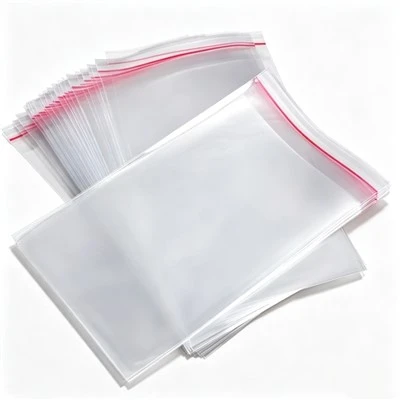
First, it helps to start with a clear definition. Surface smoothness of plastic film isn’t just “how flat the film feels to the touch”—it’s a quantitative measure of the minute variations, or roughness, on the film’s surface at a micro and nano scale. These variations can be as small as a few nanometers (smaller than a red blood cell) to tens of micrometers. A common point of confusion: many people mix up “smoothness” with “flatness.” Flatness refers to how well a single layer of film lies evenly on a surface, while smoothness is about the tiny bumps, grooves, and irregularities that shape interacts with other materials—whether that’s another layer of film during lamination, food products in packaging, or processing equipment on a factory line.
For example, take a client in the snack packaging industry. Last year, we worked with a brand that was struggling with their potato chip bags tearing during automated packaging lines. Their initial tests blamed the film’s thickness, but after we analyzed smoothness data, we found the issue: their previous supplier’s film had micro-scale roughness that caused static buildup, which made the film stick to the automated bagging machinery. The tearing happened when the machinery pulled too hard on the uneven surface. By switching to our film, which has a controlled roughness of 0.2 to 0.5 micrometers on the outer layer, they cut line downtime by 18% within three months. That’s the kind of impact smoothness has beyond just a “nice feel.”
Now, how is surface smoothness actually measured? As a supplier, we rely on two standard methods in the industry, each tailored to different types of plastic film and applications. The first is stylus profilometry, often called the “contact method.” A tiny, diamond-tipped stylus drags across the film’s surface at a set speed, measuring the vertical height of every bump and groove. This gives us data on average roughness (Ra) and maximum peak-to-valley height (Rz)—key numbers for clients who need consistency in their processing. For the snack packaging client, their Ra was measured at 1.2 micrometers from the old film, which was high enough to cause static, while our film’s Ra of 0.4 micrometers was low and uniform enough to eliminate that issue.
The second method is optical profilometry, a non-contact technique that uses a laser to scan the film’s surface without touching it. This is especially useful for thin, delicate films or films used in high-precision applications, like flexible electronics. A client in the wearable tech space reached out to us last year because their existing film was too rough for coating with conductive silver ink—uneven surfaces caused the ink to crack during bending. Optical testing showed their film had Ra of 0.65 micrometers, and after we adjusted our extrusion and calibration process, we delivered film with Ra of 0.12 micrometers, perfect for their coating needs. Optical profilometry also lets us map entire sheets of film in minutes, which is critical for quality control when we produce thousands of linear feet of film a day.
But smoothness isn’t a one-size-fits-all number. One of the biggest lessons I’ve learned as a supplier over the past 12 years is that the right smoothness depends entirely on what the film will be used for. Let’s break down some common applications and their ideal smoothness ranges to illustrate this:
Food packaging is the most common use case for plastic film, and here smoothness is a balance. For fresh produce bags, we aim for a slightly rougher surface (Ra 0.8 to 1.2 micrometers) because that prevents the bags from sticking together on produce shelves—no one wants to struggle to separate a dozen bags of apples in the grocery store. For candy wrappers or vacuum-sealed meat packaging, though, we go much smoother (Ra 0.1 to 0.3 micrometers) because a smooth surface doesn’t trap air between the wrapper and the product, preventing freezer burn or spoilage.
Flexible packaging is another area where smoothness matters for both functionality and branding. Stand-up pouches for pet food, for example, need to be smooth enough to print clear, vibrant logos and product information. If the film is too rough, printing inks can’t bond evenly, leading to faded text or peeling labels after a few weeks on the shelf. We recently adjusted our extruder temperature controls for a pet food client, which cut their printing defects from 7% to less than 1% by adjusting the film’s outer layer smoothness to 0.45 micrometers, perfect for flexographic printing.
Then there are high-performance applications that demand extreme smoothness. Flexible solar panel backsheets, for instance, need a smooth surface to bond tightly with other layers of the panel—any micro-bumps create gaps that let moisture in, which ruins the solar cells. For these, we produce film with Ra as low as 0.08 micrometers, so smooth it’s almost glass-like to the touch. Medical packaging, too, requires ultra-smooth film to ensure sterile materials don’t harbor bacteria in tiny surface irregularities. Clients in the surgical tool space rely on our film’s smoothness to meet FDA requirements for sterile packaging.
So how do we control smoothness during manufacturing? As a supplier, this is where our expertise comes in. Plastic film is made by melting resin pellets and extruding them through a die, then cooling them on a roller. The smoothness starts with the resin itself—different types of resin (LDPE, LLDPE, PET, BOPP) have different molecular structures that affect surface roughness. For example, LLDPE is naturally slightly rougher than LDPE, so we adjust cooling rates to smooth out LLDPE films for packaging uses.
The biggest factor in controlling smoothness, though, is the calendering process and the finish of our cooling rollers. We use highly polished chrome rollers for most film production, but we can adjust the roller’s surface finish (from matte to mirror-smooth) based on a client’s needs. Last year, a client in the confectionery space needed a film that was smooth enough to emboss with fine patterns for premium chocolate boxes, so we switched to a mirror-polished roller, bringing Ra down to 0.15 micrometers. They loved the result—their embossed patterns were crisp, and the film didn’t stick to the chocolate during wrapping.
Another key control is additive use. Sometimes, small amounts of slip agents (like erucamide) are added to the resin to adjust smoothness. Slip agents migrate to the film’s surface, creating a thin layer that reduces friction, making the film easier to process on lines. But we have to be careful here: too much slip agent can make the film too slippery, leading to issues with lamination (bonding two layers together) or printing. We work closely with clients to test slip agent levels, ensuring smoothness is balanced with the processing needs of their specific line.
It’s also important to address common misconceptions about smoothness. One myth I hear all the time is “smoother is always better.” That’s not true—for some applications, a slightly rougher surface is an advantage. For example, plastic film used in greenhouse covers needs a bit of roughness to diffuse sunlight evenly, preventing hot spots that can damage plants. If we made greenhouse film too smooth, the sunlight would focus in small areas, burning leaves and reducing crop yields. So smoothness is a balance, and part of our job as a supplier is to help clients find that balance, not just deliver the smoothest film possible.
Another myth is that smoothness can be judged by touch alone. While a rough film will feel gritty and a smooth film will feel sleek, our hands can only detect roughness above about 1 micrometer. For high-precision applications where smoothness is measured in nanometers, touch isn’t enough. That’s why we have in-house testing equipment—both stylus and optical profilometers—to measure smoothness consistently, batch after batch. We also send samples to third-party labs for certification, especially for medical or food-contact applications, to ensure we’re meeting industry standards.
If you’re a manufacturer who works with plastic film, understanding surface smoothness can make a huge difference in your product’s performance and your bottom line. Downtime on processing lines, printing defects, or product spoilage can all be linked to inconsistent smoothness. For example, a client in the bread packaging industry told us that before they started working with us, they had 5% of their product rejected each month because the film stuck to the slicing machine. After switching to our film with controlled smoothness, that rejection rate dropped to less than 1%. That’s a massive cost savings that comes down to a single metric: surface smoothness.
As a supplier, we don’t just sell plastic film—we solve problems. Whether you’re dealing with stuck packaging lines, faded printing, or product damage, we can work with you to test your current film’s smoothness, adjust the material and manufacturing process to meet your needs, and deliver consistent, high-quality film every time. We’ve worked with brands of all sizes, from small local snack makers to large multinational solar panel manufacturers, and we tailor our approach to each client’s specific requirements.
If you’re interested in learning more about how surface smoothness impacts your plastic film application, or you’re looking for a reliable supplier that can deliver the right smoothness for your product, we invite you to connect with us to discuss your needs. We’re here to answer your questions, provide sample testing, and help you find the perfect plastic film for your manufacturing process. No matter your industry or your specific requirements, we have the expertise and equipment to deliver consistent results.
Paper Bags References
- "Plastic Film Surface Roughness: Measurement and Applications." Journal of Applied Polymer Science, vol. 125, no. 3, 2012, pp. 1894-1902.
- ASTM Standard D3359-19, Standard Test Methods for Measuring Adhesion by Tape Test. American Society for Testing and Materials, 2019.
- "Flexible Packaging: Smoothness Requirements and Manufacturing Controls." Packaging Technology and Science, vol. 28, no. 6, 2015, pp. 457-472.
- "Medical Plastic Films: Surface Properties and Sterility Compliance." Journal of Biomedical Materials Research Part B: Applied Biomaterials, vol. 101, no. 7, 2013, pp. 1197-1205.
Junteng Packaging Co., Ltd.
As one of the most professional plastic film manufacturers and suppliers in China, we’re featured by quality products and good service. Please rest assured to wholesale bulk premium plastic film made in China here from our factory. We also accept customized orders.
Address: No.1 Huamao Road, Shuanggang Town, Tongcheng City, Anqing City, Anhui Province
E-mail: juntengpack2020@outlook.com
WebSite: https://www.juntengpackage.com/
