If you’ve ever sat down to design a custom woven patch or label for your brand, team, or product, there’s one question that pops up almost immediately after picking thread colors and finalizing your logo: What’s the minimum order quantity? As someone who’s spent the last 12 years running a small, family-owned woven patch and label business—we’ve worked with everything from local youth sports teams to major clothing brands, theater troupes, and even small-batch handmade candle makers—I can tell you this isn’t a one-size-fits-all answer. It’s a question that requires balancing a few moving parts, all of which go into making sure you get a product you love, without paying for more than you need. Let’s break this down like we’re sitting at my workshop table, sipping bad office coffee and flipping through a stack of sample swatches. Woven Patch/label
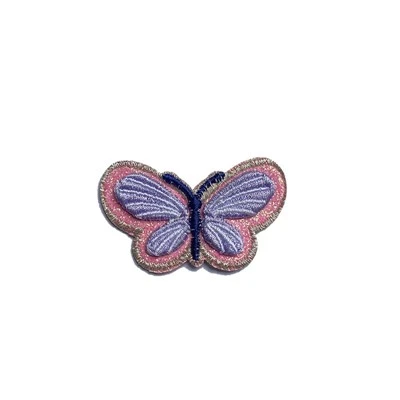
First, let’s get one thing straight: there’s no universal MOQ (that’s “minimum order quantity” for anyone new to the term) for custom woven patches or labels. Most suppliers will give you a number between 50 and 1000, but that range is so wide because it’s tied directly to the type of patch you want, the complexity of your design, the thread count, and even how you’re attaching it. I’ve had clients walk in with a design for a tiny, 1-inch woven patch with a simple team name and ask for 30 of them—we can do that, but it comes with a little extra cost per piece. I’ve also had a client come to us last month with a 4-inch, 12-thread color custom patch with a detailed, hand-drawn logo and ask for 5000—we can do that too, and the per-piece cost drops way lower than the tiny patch, just because of how our machines run.
Let’s start with the core reason MOQs exist for woven products, not just any custom item. Woven patches and labels aren’t printed, where you can run off a dozen pieces in 10 minutes. We use jacquard looms—big, heavy machines that run on a program of punch cards (or digital files, these days) that control how each thread is woven. Each time you load a new design into the loom, there’s a setup cost: we have to adjust the tension on every thread, test the design for snags, fix any misweaves, and run through a 20-piece sample batch to make sure the colors match and the text is readable. That setup takes about an hour, no matter how many pieces you make after that. If you only order 50 pieces, that setup cost gets divided by 50, so each patch costs more to cover that time. If you order 500, that same setup cost is divided by 500, so each piece is cheaper. It’s basic math, but it’s the backbone of why MOQs work the way they do.
Now, let’s talk about the MOQs you’ll actually see, broken down by the most common types of custom woven patches and labels, since that’s what most of our clients care about.
First, the most popular for small businesses, new brands, or one-off projects: iron-on woven patches, standard size (1 to 2.5 inches wide/ tall, simple designs with 3 to 6 thread colors, no extra details like glitter, metallic thread, or custom shapes). For these, our MOQ is 50 pieces. Wait, I know some big suppliers will tell you 100 for these, but we’ve found that 50 is a sweet spot for our small clients—most new small brands don’t need 1000 patches to test their line, and 50 gives them enough to put on their first run of hoodies, hats, or tote bags without overspending. The catch here? If your design is super simple—like just a single initial, a small heart, or a basic text logo—we can even drop that a little, down to 30 pieces, as long as it’s under 2 inches. We do have to charge a tiny extra per piece for 30, but if you just need a set for a small group of friends or a pop-up shop, that works. I remember a graphic designer named Mia who came to me two years ago with a line of pet bandanas, each with a tiny custom patch of her clients’ dogs. She only needed 40 total, split between 8 different dogs, and we adjusted our process to make that work for her. It’s not for every supplier, but we’ve built our business on being flexible for people who don’t need bulk.
Next, moving up to the most common for teams, larger small businesses, and brands that are growing: embroidered woven patches, woven labels (the ones you sew into clothing tags, not just iron-on), and patches with a little more detail. That means designs with 7 to 12 thread colors, custom shapes (not just circles or squares—like a logo with a curved edge, or a team mascot with a unique outline), or metallic thread (gold, silver, bronze) accents. For these, our MOQ is 100 pieces. The reason it’s higher is two-fold: first, detailed designs take a little extra setup time on the loom—we have to adjust the thread count to make sure the fine lines don’t get lost in the weave, and metallic thread is a little trickier to work with, so the test batch takes a few extra minutes. Second, most clients ordering these are buying for a consistent run of products—like a high school soccer team ordering patches for their game jerseys, or a clothing brand adding woven labels to their line of t-shirts. 100 is enough for a full team of 25 players, with spares, and enough for a small clothing line test run without breaking the bank. I had a local cross country team come to me last year with a custom woven patch that had a tiny runner silhouette, their team name, and a metallic orange number “1” for their conference championship. They ordered 105 patches (they added 5 extra just in case a few got lost or sewn wrong) and that MOQ worked perfectly for their budget, without them having to order 500 they’d never use.
Now, the bulk MOQ, for large brands, retailers, or projects that need consistent, high volumes: patches with extra special details—glitter thread, 15+ thread colors, 3D woven patches, or full woven label sets (main label, size label, care label, all matching a design). For these, our MOQ is 500 pieces, and honestly, most big brands will order 1000 or more at a time. The reason the per-piece cost drops so much here is that the setup cost is spread over way more pieces, and the loom runs more efficiently when it’s making a large, consistent batch. We worked with a major outdoor apparel brand two years ago that needed custom woven labels for their winter jacket line—they had a main label with their logo, a size label, and a care label, all matching their brand’s color palette, and they ordered 10,000 total. That might sound like a huge number, but for them, it’s enough for two full production runs of jackets, and the per-label cost was so low that it fit right into their manufacturing budget. I’ll be honest, this MOQ isn’t for everyone—if you’re just starting out or have a small project, 500 might feel like too much—but it’s worth mentioning because it’s where most of our long-term clients land once their brand is growing.
Wait, but here’s a part most suppliers won’t tell you: MOQs aren’t set in stone, and there are ways to lower them even if you have a small budget. Let me share a few tricks we use with our clients that don’t involve cutting corners on quality. First, combine orders. If two people you work with or two projects of yours have similar size or thread count designs, you can combine them into one loom run. For example, if I have a client making patches for their dog walking business that needs 40 standard 1.5-inch patches, and another local coffee shop that needs 30 standard 1.5-inch patches for their takeaway cups, we can run both batches at the same time on the same loom. That cuts the setup cost in half for both, so they only need to order 35 total each, instead of their original 50 MOQ. I did this last month with a graphic designer and a yoga studio—they both wanted small woven patches for their merch, similar sizes, simple designs, and together they hit a low enough volume that each only paid for 35 pieces, no extra cost.
Second, standardize your design as much as possible. If you can use a simple shape, stick to fewer thread colors, and avoid custom special details like glitter or metallic thread, you’ll lower both the MOQ and the per-piece cost. I had a client who came to me wanting patches with a custom rounded shape, 8 thread colors, and silver metallic thread accents—his initial order idea was 50, but because of the shape, colors, and metallic thread, we couldn’t run that. We worked with him to simplify the shape to a square, cut the thread count to 5, and remove the metallic accents, and suddenly we could do his patch for an MOQ of 50, with a per-piece cost that was 30% lower than his original quote. He ended up loving the simpler design more, and it fit his budget way better.
Third, consider woven labels vs. patches if you have a small order. If you’re ordering for clothing, woven labels are often more affordable for small runs, and they have a lower MOQ than custom patches because they’re smaller. A standard woven main label is about 1.5 inches wide, and we can do up to 50 of them for the same low cost as 50 small iron-on patches. They also sew on more neatly than iron-on patches, so if you’re making t-shirts, hoodies, or tote bags, labels might be a better pick for small orders.
Now, let’s talk about the myths that go around MOQs for woven patches, because I hear these all the time. First myth: “A lower MOQ means lower quality.” That’s not true at all. The quality of a woven patch is based on the thread count and the tightness of the weave, not how many you order. We make every patch the same way, no matter if it’s 30 or 10,000—we run a test batch, then inspect every piece for loose threads, misweaves, or color inconsistencies, regardless of the quantity. I’ve had clients order 30 patches and come back a year later saying they still look as good as the day they got them, so that myth is just that.
Second myth: “All suppliers have the same MOQ.” That’s not right either. Small, local suppliers like us often have lower MOQs because we don’t have the same overhead as big, overseas factories—big factories might have minimums of 500 or 1000 because it’s not worth their time to set up a loom for smaller batches. But for a small shop like mine, with 3 looms in a 1000 square foot workshop, a 1-hour setup for a small batch is totally doable, so we can pass that flexibility on to our clients. That’s why working with a smaller, specialty woven patch supplier is often better for small brands or first-time orders, instead of a big bulk supplier that only cares about 1000+ piece runs.
Third myth: “You have to order more than you need to get a good price.” That’s only true if you don’t plan for your inventory. If you know you’re going to need patches or labels for future runs, order them in bulk when the per-piece cost is lower, and store them in a cool, dry place. But if you’re not sure how much you’ll need, or you’re testing a new product, ordering the exact quantity you need (plus 5 or 10 extra for mistakes) is way better than ordering 500 and having them sitting in a box for two years, going out of style. I have a whole shelf in my workshop of old sample batches from clients who ordered more than they needed, and most of them are never used.
Let’s wrap this up with a real example, because numbers make it easier. Last quarter, I worked with a small bakery owner named Lila who wanted woven patches for her custom apron line, and woven labels for her takeaway bread bags. She didn’t know what MOQ she needed, so we walked through it step by step. Her apron patch was 2 inches, square, with her bakery name and a small bread illustration—simple, 4 thread colors, iron-on. We told her we could do that for a 50 MOQ, at $1.20 per patch. Her woven labels were 1.5 inches, with the same bakery name and a small wheat design, also 4 thread colors—we could do 50 of those for $0.80 each. She ended up ordering 50 patches and 50 labels, total cost under $100, and that was exactly enough for her first run of 50 aprons and 50 bread bags. A big supplier would have told her she needed 200 patches and 200 labels for their minimum, so she would have paid twice as much, and ended up with extra she didn’t need. That’s the kind of flexibility we’re built for.
At the end of the day, the minimum order quantity for custom woven patches and labels isn’t a arbitrary number we pull out of thin air—it’s a balance between our setup time, the type of product you want, and your budget. It’s designed to make sure you get a high-quality product that fits your needs, without paying for more than you require. If you’re not sure what MOQ works for your project, the best thing you can do is send over your design ideas, whether it’s a sketch, a logo file, or even just a description of what you want to use the patch or label for, and we can walk through the numbers together. We’re not here to pressure you into ordering more than you need—we’re here to help you get exactly what you want, at a price that works for you.
If you have questions about your specific project, want to get a custom quote, or just browse sample swatches of our woven patches and labels, don’t hesitate to reach out. We love working with new brands, small teams, and anyone who wants a custom, high-quality woven product that stands out.
Printing Patch References:
- The Jacquard Loom: History, Operation, and Modern Applications, Textile Institute, 2021
- Small Business Custom Merchandising: Cost-Effective Strategies for Woven Labels and Patches, Small Business Administration, 2022
- Textile Quality Standards for Woven Emblems and Labels, International Organization for Standardization, 2019
Yiwu Lanying Garment Accessories Co., Ltd.
As one of the most professional woven patch/label manufacturers and suppliers in China, we’re featured by quality products and good service. Please rest assured to wholesale premium woven patch/label at competitive price from our factory. Customized orders are welcome.
Address: F1,NO.448, Majiaotang Village, Houzhai Street, Yiwu City, Zhejiang Province, China 322000
E-mail: zhangchunyingzi@126.com
WebSite: https://www.embroideredpatchfactory.com/
