Alright, let’s talk industrial gas transport—stuff I’ve been dealing with since I started in the industrial gases game 12 years back, and let’s be real: this isn’t just loading a tank and hitting the highway. If you screw this up, you’re not just wasting money, you’re putting people, equipment, and even whole production lines at risk. I’m a gas supplier, so I’ve messed up a few times (hey, that’s how you learn), worked through countless kinks with drivers, techs, and plant managers, and let’s break down the real best practices that actually work—not the stuff some textbook spits out. Industrial Gases
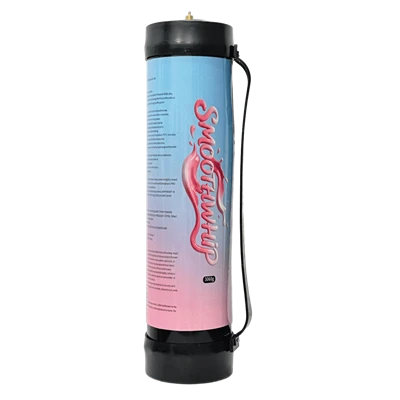
First off, let’s start with pre-transport checks, and I don’t mean the quick once-over before pulling out the yard. I see so many companies skimp here because drivers are chomping at the bit to hit the road, but 90% of the problems I’ve dealt with—small leaks, valve issues, even pressure spikes—get caught right here. Let’s get specific: we supply stuff like nitrogen, oxygen, argon, CO2, and specialty mixes to everything from food processing plants to steel mills, so each gas has its own quirks. For high-pressure cylinders (the steel ones you see stacked at job sites), we don’t just check valve caps—we test for micro-leaks with that soapy water mix (the stuff that foams up if there’s even a pinhole) because a tiny nitrogen leak might not be deadly, but a small oxygen leak near a welder’s spark is a recipe for disaster. For cryogenic tankers—those big insulated ones for liquid nitrogen or liquid argon—we don’t skip the vacuum jacket check. If the insulation vacuum drops, the liquid warms up way too fast, you get pressure build-up, and you’re either hauling wasted gas or risking a tank rupture. Also, we track every cylinder’s hydro test date like it’s a gold coin—those steel cylinders need testing every 5 or 10 years depending on the gas, and we flag any that’s even a month past that. No exceptions. I’ve had a driver almost get a ticket for a cylinder that was 12 days out of test, and trust me, that’s a close call we don’t repeat.
Next up, route planning, and this is where a lot of suppliers drop the ball because they just use Google Maps and call it a day. Let’s be clear: industrial gases aren’t groceries. If you’re hauling high-pressure oxygen, you can’t be routed through downtown areas during rush hour if there’s a 3-mile detour through a residential neighborhood. Our team uses route planning software that’s customized for hazardous materials (HAZMAT) loads—we input the gas type, pressure, quantity, and the tanker’s size, and it avoids bridges that can’t handle the weight (cryo tankers are 80k lbs fully loaded, for real), tunnels that restrict HAZMAT, and areas with heavy foot traffic. Also, we factor in transit time and temperature, especially for cryogenics. In the summer, if we’re hauling liquid CO2 to a food plant in Phoenix, we add 2 hours of buffer time because the 110°F heat speeds up evaporation—if we hit a slow construction zone and get delayed, we might arrive with 15% less CO2 than promised, which is a big deal for a plant that uses it for carbonating soda or freezing food. On the flip side, in the winter, we avoid mountain passes when it’s icy for high-pressure cylinders—ice makes the roads slippery, a driver hits a pothole, and a valve breaks, that’s not good.
Then there’s driver training, and I swear this is the most underrated part of all. You can have the best tanks and route plan, but if the guy behind the wheel doesn’t know what he’s dealing with, you’re toast. Our drivers don’t just get a CDL (commercial driver’s license)—they go through 4 weeks of specialized gas training, and it’s not just online modules. We do hands-on training in our yard: how to connect and disconnect hoses for liquid transfers, what to do if a small valve leaks (turn it off, use the soapy water, call the team, no panic), how to use a gas detector (we equip every truck with a portable one that beeps if there’s an oxygen or CO2 build-up), and even basic first aid for gas-related exposures. Last year, a new driver was hauling liquid argon and his detector went off—he didn’t just keep driving, he pulled over to a safe, open area, called us, and we found a faulty valve before it became a problem. If he’d frozen up or kept going, that could have been dangerous. Also, we do monthly refreshers—we bring in local fire marshals to walk through emergency scenarios, and we share real-time stuff, like a recent HAZMAT incident on a nearby highway so everyone knows what to watch for. No cutting corners here—our drivers are part of our team, not just people who move stuff.
Storage during transport, too. For high-pressure cylinders, we secure them properly in the truck bed—chains, brackets, no rolling around. We’ve seen a cylinder tip over and crack a valve, and that’s a mess. For cryo tankers, we monitor the pressure and temperature every 2 hours via a telematics system we installed—we can check from the office if a tanker’s pressure is spiking, and call the driver to have him pull over to a safe spot. Also, we never haul flammable gases (like acetylene) with oxidizers (like oxygen) in the same load—even if they’re in separate trucks, wait no, actually we don’t mix them at all. Acetylene can explode if it gets too much heat, and oxygen feeds that fire, so we keep them separate and make sure drivers know never to park near any open flames or welding equipment.
Emergency response is another big one. We have a 24/7 call center—no voicemail, no automated system, just a gas specialist who knows every load we’re moving that day. If a driver has a problem, he calls that number, and we walk him through steps: if it’s a small leak, do X; if it’s a big leak, get to open space, call 911, and call us. We also have pre-approved emergency contacts for every area we deliver to—fire departments that are trained on HAZMAT gases, hospitals that know what to do for gas exposures, even local police. Last winter, a driver hit a patch of black ice on a mountain road and slid into a guardrail, denting the cryo tanker’s frame. He called us immediately, we dispatched a team of techs to meet him, inspected the tank, and he was able to continue to the plant with no issues—if we’d tried to fix it over the phone, that could have gone way wrong. Also, we keep digital records of every load, so if there’s an incident, we can pull up exactly what gas, how much, pressure, everything in 10 seconds, no fumbling around with paperwork.
Wait, let’s talk about communication with customers too, because that’s part of the whole process. Our plant managers don’t want to wait around for a gas delivery, so we send them a text or an email 2 hours before we arrive—no surprises. If there’s a delay (traffic, weather), we tell them right away, not 20 minutes before we’re supposed to show up. Last month, a snowstorm closed a major highway, we let a soda plant know 6 hours early that their CO2 delivery would be 4 hours late, and they were able to adjust their production schedule, no rush, no stress. Also, we check in after delivery—make sure the customer is happy, no leaks on their end, if they need help connecting the tank, our techs can swing by.
A lot of people ask me, “Why don’t you just outsource transport to some random trucking company?” The answer is simple: when you outsource, you lose control. You don’t know if they checked the tank, if the driver is trained, if the route is safe. We keep all transport in-house, for now anyway (we did try outsourcing once, and it was a disaster—had a load of liquid oxygen delayed 8 hours, customer’s line shut down, cost us way more than we saved). Yeah, it’s more work, more overhead, but when you’re dealing with gases that can shut down a $10M production line, it’s worth it.
Another thing: tracking and documentation. We use a cloud-based system that logs every single thing—pre-transport checks, route, driver, temperature, pressure, delivery time, customer signature. That’s not just for compliance (OSHA, DOT, all that stuff), but it’s how we improve. If a route has a lot of delays, we adjust it next time. If a driver’s pre-checks are missing something, we train him more. Last quarter, we noticed a batch of cylinders had small leaks on the valve stems—we fixed the valve seal process in our warehouse, no more leaks. Documentation isn’t red tape—it’s how we stay on top of our game.
Wait, let’s not forget the little stuff, like driver breaks and rest periods. DOT has rules, but we go above and beyond—drivers don’t just take a 30-minute break, we make sure they’re resting in safe, well-lit areas, not pulling over in a remote spot where something could happen. A tired driver makes mistakes, so we prioritize that too.
Now, let’s get real—we’re not perfect. We had a incident two years ago where a cryo tanker’s vacuum failed, we didn’t catch it during the pre-check, and the liquid argon evaporated 20% in transit. We lost $1,200 in gas, and the customer had to adjust their schedule. We fixed that by adding a second vacuum check before every long-haul delivery, and now that stuff never happens again. Mistakes teach you what to do better, right?
At the end of the day, industrial gas transport is all about safety, communication, and control. You can’t cut corners on pre-checks, you can’t skip driver training, you can’t just wing routes. That’s how you keep drivers, customers, and everyone on the road safe, and that’s how you deliver on promises.

If your plant needs reliable, on-time, safe industrial gas deliveries—whether it’s oxygen for your medical center, nitrogen for your food packaging, argon for your welding shop, or even specialty mixes for your lab—hit us up. We’re here to make sure your gas arrives when you need it, no surprises, no delays, and totally safe.
Small Cream Chargers References:
- Occupational Safety and Health Administration (OSHA). Hazardous Materials Transportation Guidelines for Industrial Gases.
- U.S. Department of Transportation (DOT). Federal Motor Carrier Safety Regulations for HAZMAT Loads.
- Compressed Gas Association (CGA). Recommended Practices for the Transportation and Storage of Compressed and Cryogenic Gases.
- National Fire Protection Association (NFPA). 55A: Standard for the Storage, Handling, and Use of Compressed Gases in Non-Industrial Occupancies.
Smoothwhip Industrial Co., Ltd.
Address: Room 1306, Building 4, U-Tiandi, No. 178 Puhui Road, Jiuting Town, Songjiang District, Shanghai
E-mail: info@safety-plus.cn
WebSite: https://www.smwhip.com/
