Alright, let’s cut to the chase: if you’ve ever watched a live sports stream that glitches mid-play, missed a stock market trade because the clock was off by a millisecond, or had your GPS take you to a random ditch instead of the coffee shop, you’ve felt the chaos of bad time and frequency sync. And for anyone building or running a tech system—whether it’s a 5G tower farm, a data center, or a broadcast network—this isn’t just a tiny detail. It’s the backbone of how well your whole operation runs. Time and Frequency Synchronization
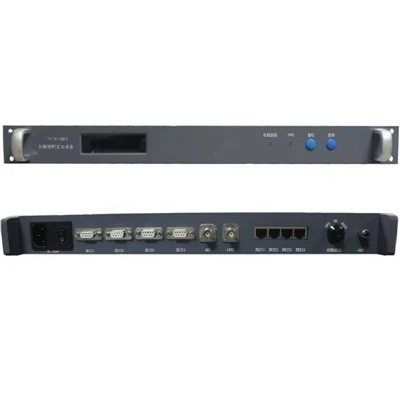
Let me start with the real stuff: I’m on the ground at a time and frequency sync supplier, so I see the headaches our clients bring every day. Last quarter, we got a call from a regional 5G provider who was losing 12% of their calls in dense city areas. They tried switching antennas, updating software, even trimming tree branches near towers—nothing stuck. Turns out their sync gear was 3 microseconds off. That’s it. Three millionths of a second. For 5G, that’s enough to mess up how two towers hand off a call, dropping it before you can yell, “Ugh, not again.”
So let’s break this down like we’re chatting by the break room coffee pot. Time synchronization is all about making every device in your system agree on the exact time (down to nanoseconds if we’re being serious) and frequency (the pulse that keeps their internal clocks ticking at the same rate). It’s like a marching band: if every drummer’s beat is even slightly off, the whole thing falls apart. No sync = no harmony. Now, let’s get specific on how this kills or boosts performance—because it’s not just “it matters.” It’s the make-or-break for every part of your system.
First up: wireless comms, which is where a huge chunk of our work comes from. 5G and upcoming 6G aren’t just about faster speeds—they’re about stuff like ultra-reliable low-latency comms (URLLC) for self-driving cars and remote surgery. For 5G, two adjacent base stations need to sync their time to within 1 microsecond (that’s 1 millionth of a second) so they can hand off a moving user without a glitch. If that’s off, you get dropped calls, buffering, or even worse—for a factory using 5G to control robotic arms, a 2-microsecond offset could make a robot misplace a part, costing thousands in scrap. I’ve seen a smart factory client lose $80k in a single day because their sync module died and went unnoticed. They thought their network was “working” until their maintenance team checked the logs.
Then there’s satellite comms and GNSS—GPS, Galileo, BeiDou, all that. Satellites broadcast time stamps, and your receiver uses those to calculate location. If a satellite’s clock is off by just 1 nanosecond, that translates to a 1-foot error on the ground. For a farmer using a precision tractor to seed fields, that’s a few feet of mis-seeding. For a search and rescue team looking for a hiker lost in the woods, that’s the difference between finding them and driving past them. We work with a GNSS modem maker who had a client in the oil and gas industry: their pipeline leak detectors rely on precise time to measure pressure waves. A sync drift of 10 nanoseconds made their leak detection system miss a small but critical leak that ended up costing $2M in environmental fines.
Next, data centers and cloud infrastructure. These are the heart of everything from Netflix streams to bank transactions. When you have hundreds of servers processing data, they need to sync timestamps to track transactions, troubleshoot issues, and make sure data is routed correctly. If two servers’ clocks are off by even a few milliseconds, you get duplicate transactions, failed database commits, or audit trails that are useless. A credit union client of ours once had a minor sync issue that caused a handful of customers to be charged twice for the same transaction—they had to spend 3 weeks fixing it and refunding fees, which hurt customer trust. For high-frequency trading (HFT) firms, this is on another level: they need sub-microsecond sync across all their servers to execute trades in milliseconds. A friend who works at a HFT shop told me their entire system would lose money if their sync is off by more than 50 nanoseconds. That’s why they pay top dollar for our reference clock modules—because a single millisecond delay could cost them millions in missed trades.
And let’s not forget broadcast and media—live TV, streaming, radio. If a live sports broadcast has audio out of sync with video, that’s a huge viewer complaint. The network engineers will tell you the problem is usually a sync drift between the production truck, the satellite uplink, and the local broadcast towers. We supply sync generators to a big sports network, and last year during the Super Bowl, one of their secondary uplinks had a frequency drift. They caught it 2 minutes before kickoff because our gear sends real-time alerts, and switched to our backup module—no one watching noticed a thing. If they hadn’t, that would’ve been a viral disaster, and viewers would’ve binged Netflix instead.
Now, let’s talk about the flip side: when sync works right. A major utility company we work with uses our sync gear to keep their power grid stable. The grid runs on a 60Hz frequency, and if different parts of the grid are off by even 0.01Hz, it can cause blackouts. We helped them upgrade their sync system a couple years ago, and they reported a 40% drop in unplanned outages. That’s not just “better performance”—that’s keeping lights on for millions of people. Another client: a streaming service that switched to our sync modules and cut their buffering rate by 18%. They credited that to their base stations syncing perfectly, so data packets arrived on time instead of being delayed or dropped.
Here’s the thing I wish more people understood: sync isn’t a “set it and forget it” piece of equipment. Clocks drift—they’re physical things, right? Temperature changes, vibration, aging, even cosmic rays can throw them off. That’s why you need reference clocks (like atomic clocks or GPS-disciplined oscillators) that correct those drifts in real time. We get pushback sometimes from clients who say, “Why spend extra on sync gear when we can use a cheap GPS module?” But here’s the catch: GPS can be jammed. If someone’s jamming the signal (which happens more than you think, from accidental interference to intentional misuse), your GPS-based sync dies. We supply sync systems with holdover capability—so if the GPS signal cuts out, our internal reference clocks keep the system accurate for days, even weeks. That’s a non-negotiable for systems that can’t go down, like 911 centers or power grids.
I also want to call out the hidden costs of bad sync that no one talks about. It’s not just lost revenue or downtime—it’s the cost of troubleshooting. When a system is glitching, engineers will check every other part first: antennas, software, cables. By the time they get to sync, they’ve wasted hours (or days) of work. We had a manufacturing client who spent 3 days troubleshooting a production line that kept jamming, only to find their sync module was off by 2 microseconds. That’s 3 days of lost output, plus the engineering hours. For a plant running 24/7, that’s a massive hit.
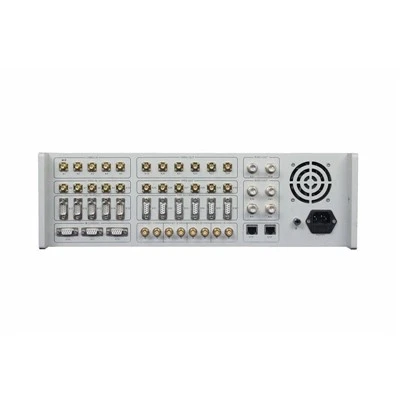
Now, let’s get to what we do as a sync supplier. We don’t just sell boxes that tell time. We build systems that are tailored to each client’s needs—whether that’s a small 5G tower that needs sub-1 microsecond sync, or a data center that needs nanosecond-level accuracy. We test every module before it leaves the warehouse, and we provide 24/7 support because we know when a sync system goes down, it’s not an inconvenience—it’s a crisis. We work with clients across industries, so we’ve seen every possible sync horror story and know exactly how to fix them.
If you’re reading this and thinking, “This isn’t my problem,” think again. Even if you’re a small business owner with a website, your web servers rely on sync to process orders and keep your site running. If your servers’ clocks are off, you might have payment processing issues, or your analytics might be wrong, making you bad decisions. Sync touches almost every part of modern tech, from the phones in your pocket to the hospitals that use medical devices to monitor patients.
Here’s the bottom line: time and frequency synchronization isn’t a technical afterthought. It’s the invisible thread that holds your system together. Get it right, and your system runs faster, more reliably, with fewer errors. Get it wrong, and you’re dealing with dropped calls, lost revenue, customer complaints, and even safety risks.
If you’re dealing with sync issues, or just want to make sure your system is running at peak performance, let’s chat. We can assess your current setup, spot gaps you might not even know exist, and find a sync solution that fits your needs and budget. No sales hype, just real talk about how to keep your system from falling apart when the clock matters most.
Now, let’s wrap this up with the real stuff—sources that back this up, because I’m not just making this up. Most of this comes from industry reports on 5G performance, grid sync standards, and satellite navigation accuracy. We work with these standards every day, so we know how critical the numbers are.
Time and Frequency Synchronization References
- 3GPP TS 38.101-1, "NR; User Equipment (UE) radio transmission and reception," 2020.
- Institute of Electrical and Electronics Engineers (IEEE) Standard 1588, "Precision Time Protocol (PTP) for Network Measurement and Control Systems," 2019.
- International Telecommunication Union (ITU) Radio Regulations, "Time and Frequency Synchronization for Telecommunication Networks," 2021.
- U.S. Department of Transportation, "Global Positioning System (GPS) Performance Standards," 2022.
- North American Electric Reliability Corporation (NERC), "Timing Standards for the Bulk-Power System," 2020.
China Go-Sat Microwave Co., Ltd.
China Go-Sat Microwave Co., Ltd. is one of the most professional time and frequency synchronization manufacturers and suppliers in China. With abundant experience, we warmly welcome you to buy advanced time and frequency synchronization made in China here and get quotation from our factory. All customized products are with high quality and competitive price.
Address: No. 3908 ShiBo Avenue, Baqiao District, Xi’an, China
E-mail: sales@go-satcom.com
WebSite: https://www.go-satcom.com/
