Hey everyone, let’s cut to the chase – if you’re running a seed company, garden center, or even just a small-scale urban farm, you’ve definitely stared at a blank seed packaging bag and wondered: how the hell do I figure out exactly how many seeds will fit in here? I’m not a rocket scientist, but as someone who’s been a seed packaging bag supplier for way too many years (let’s just say I’ve got a few thousand bag runs under my belt), I’ve perfected this process. And yeah, it’s way less complicated than it sounds – no fancy lab equipment needed, just some basic math and a whole lot of trial and error (okay, a little error, because nobody’s perfect). Seed Packaging Bags

First off, let’s get one thing straight: seeds aren’t marbles. They’re weird little uneven shapes – some are round like peas, some are flat like lettuce seeds, some are tiny dust specks like petunias, and a few are downright spiky like sunflower seeds. If you try to calculate this like you’re filling a bucket with bowling balls, you’re gonna be off by a mile. That’s the biggest mistake I see new seed brands make – they assume volume equals seed count, and then they end up with bags that are either way too empty (wasting packaging space, which cuts into profits) or bursting at the seams (seeds getting crushed, or the bag ripping mid-shipment). Not good. So let’s break this down step by step, no jargon, just stuff you can actually do today.
Step 1: Measure your bag – the right way
First, grab one of your empty seed packaging bags. Don’t use a ruler that only measures inches, don’t guess – get a soft tailor’s tape (they’re like $2 at any craft store, worth every penny) and measure the internal dimensions. Wait, internal, not external. Because the plastic thickness is like 2-5 millimeters, and if you measure the outside, you’ll be off by a ton. Let’s say you’ve got a standard 4×6 inch seed bag that’s gusseted (those side folds that let it expand – super important for seeds, duh). So internal dimensions: width when flat is 4 inches, height is 6 inches, and gusset depth is 1.5 inches. Got that down? Write those numbers down, and convert everything to the same unit – I use inches, but you can use centimeters, just be consistent.
Now, calculate the internal volume of the bag. For gusseted bags, the formula is super simple: (width when flat) × (height) × (gusset depth). So for that example bag, that’s 4 × 6 × 1.5 = 36 cubic inches. If you’ve got a flat bag (no gusset, just a regular pouch), it’s (width × height × plastic thickness? No, wait, flat bag volume is just width × height, because it’s thin – but honestly, almost all seed bags are gusseted, so we can stick with that. If you’re confused, just fill it with water (shoutout to my dad’s old trick) and see how much it holds – pour that into a measuring cup, and you’ve got the actual volume. Way less math, way more fun.
Step 2: Factor in seed “bulk density” – this is the secret sauce
Okay, so now you’ve got your bag’s volume, but seeds don’t fill every single space in that bag. There are gaps between them, right? That’s called bulk density – basically, how tightly seeds pack together. And it’s different for every single seed type. Let’s test this: take a cup of sunflower seeds vs. a cup of lettuce seeds. Sunflower seeds are big, round, and leave way more gaps – they’ll take up a lot less actual seed per cup. Lettuce seeds are tiny, flat, and fit way tighter – more seeds per cup, less space wasted. I’ve got a little cheat sheet I keep in my office for the most common seeds, but let’s do it yourself to get accurate numbers for whatever seed you’re using.
Grab a standard measuring cup (the ones that are 1 cup, ½ cup, etc.), and a bunch of your actual seeds. Pour them into the cup, tap the bottom on the counter a few times to settle them (no packing super tight, just natural settling), and count how many seeds are in that 1 cup. That’s your baseline. For example, if you do this and you get 120 sunflower seeds per cup, and 12,000 lettuce seeds per cup, that’s exactly the kind of difference we’re talking about. Now, let’s convert that to volume. 1 cup is 14.4375 cubic inches, right? So if you have 120 sunflower seeds in 14.4375 cubic inches, that’s 120 ÷ 14.4375 = ~8.3 seeds per cubic inch. For lettuce seeds, that’s 12,000 ÷ 14.4375 = ~831 seeds per cubic inch. Wild, right?
Here’s the thing: I always recommend settling the seeds 2-3 times. Because when you pour them in, the top layer might be loose, but tapping them settles them to their actual, natural packing. If you overpack them, you’ll get a higher count, but that’s unrealistic because seeds shift in the bag during shipping, and you don’t want them crushed. So natural settling is key – this is the number that will get you the most accurate, real-world count.
Step 3: Calculate, then add a buffer (don’t skip this!)
Okay, let’s do the math with our example numbers. Our bag is 36 cubic inches. Sunflower seeds are ~8.3 per cubic inch. So 36 × 8.3 = ~299 sunflower seeds. Wait, almost 300. That’s perfect. But wait – let’s test this out. Pour 300 sunflower seeds into a sample bag. Does it fit? Is it too tight? Is there any room left at the top to seal it? Because if you fill it right to the brim, the seal won’t work, seeds will spill out, and you’ll have unhappy customers. So here’s my rule of thumb: once you calculate the raw number, knock off 5-10% to leave headspace. For sunflower seeds, that would be ~270 seeds, which fits perfectly, leaves a little room at the top, seals easy. For tiny lettuce seeds? 36 × 831 = ~29,916 seeds. Knock off 5% to ~28,400, which is still a ton, and leaves enough room to not overstuff.
Wait, but what if you’re blending seeds? Like, a wildflower mix with different types? That’s a little trickier. Because some seeds are bigger than others, so they’ll mess up the packing density. For that, I just take 3 different samples of the mixed seeds, count how many are in each, average them, then use that average number per cup to calculate. No need to overcomplicate it – mixing a little trial and error with that average works every time. I had a client last year who did a mix of poppy, cosmos, and zinnia seeds, and they tried to do the bulk density calculation once, then tested it, and adjusted by 12% because the bigger cosmos seeds left more gaps than they expected. That’s why testing is non-negotiable.
Step 4: Test, test, test (I can’t say this enough)
Math is great, but real-world testing is where it actually works. I’ve had so many clients come to me with a number they calculated, and it’s way off because they used a measuring cup that was slightly off, or they didn’t account for how the gusset expands. Here’s my process for any new order: send the client a sample bag, a small bag of their actual seeds, and tell them to do this: 1) Count out 100 seeds, pour into the sample bag, seal it, see how it fits. 2) If it’s loose, add 10 more, if it’s tight, take out 5. Do that 2-3 times, and you’ve got your exact count per bag. It takes 15 minutes, saves you from wasting hundreds of bags and seeds. Win-win.
Also, don’t forget to account for seed weight if you have weight limits. Some brands have a maximum weight per bag for shipping, right? If your sunflower seeds are 250 per ounce, and your bag holds 8 ounces, that’s 2000 seeds, but wait – that’s if you go by weight. But maybe you want to put a specific number on the bag, like “Approx. 300 sunflower seeds”. So you’ll have to adjust between count and weight, which is where that testing comes in. Don’t rely on weight alone – because if a seed is a little bigger, it’s heavier, so count per ounce shifts.
Common mistakes I see all the time (so you don’t make them)
- Using external bag dimensions: Dude, the plastic is not invisible. Measure internal, not external. I once had a new client who measured the outside of their bag, and their count was off by 20%, which meant they had to reorder 20% more bags – wasted money, wasted time.
- Not settling seeds when counting: If you just dump seeds in a cup and count, without tapping, you’ll get a higher number than actual. I’ve had a client who did this and ended up with bags that were so overstuffed they ripped during transit. Oops.
- Forgetting headspace: I can’t tell you how many people try to fill the bag to 100% capacity. Seeds shift, especially during shipping and storage. Leave that 5-10% headspace, your bags will last way longer, no broken seals, no spilled seeds.
- Using a generic bulk density: The internet has a bunch of generic numbers for seed count per cup, but they’re averages. Your specific seed batch might be a little different – if it’s been dried more, it’s smaller, if it’s been stored longer, it might clump a little. Test with your actual seeds, not Google’s numbers.
Wait, a quick example from my own experience to make this real. Last year, I worked with a small herb brand that wanted bags for basil seeds. They calculated generic numbers and said they needed 5,000 seeds per bag. We did the test, and their actual settled count was 6,200 seeds per cup, so their bag fit 7,000. They were so happy – they ended up adding that to their product description, which made their herb line way more popular. If I’d just gone with their initial number, they would have had half the seeds in each bag they wanted, and lost sales. That’s why testing is non-negotiable.
Also, if you’re using specialty bags – like stand-up pouches, or resealable bags, or compostable bags (which are super popular now) – the dimensions might be a tiny bit different, but the process is exactly the same. Internal dimensions, settled seed count, headspace. Compostable plastic is a little thicker sometimes, so just measure that extra thickness to get internal dimensions right. No big deal.
What about if you’re doing bulk seed packaging, like 1-pound bags for a nursery? Same process, just scaled up. Measure the bag, get the bulk density for whatever seed, add headspace, test a sample run. I’ve helped clients with bulk runs of 10,000 bags, and this process never fails. It’s consistent, it’s accurate, it’s way less stressful than guessing.
At the end of the day, this is all about saving you money and making your customers happy. If your seed bags fit the right number of seeds, they look professional, they don’t have seals breaking, and customers know exactly what they’re getting. No more vague “approx. 100 seeds” that ends up being 80 or 120. That’s the goal.
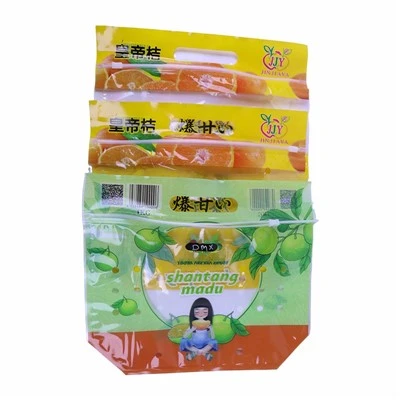
Now, if you’re gearing up for a new seed line, or you’re tired of dealing with bad seed packaging that’s messing up your counts, hit me up. I’ve got years of experience working with all types of seed brands, from small homegrown startups to big national distributors, and I can help you pick the right bag, walk you through this counting process, or even help you test sample runs to make sure everything lines up. No sales pitch, just real advice for anyone in the seed game. Just reach out to start the conversation.
Pet Supplement Foil Bags References
- Agricultural Seed Packaging Technology and Design Guidelines, USDA National Agricultural Library
- Bulk Density Calculations for Small Seed Crops, American Society of Agricultural and Biological Engineers
- Consumer Packaging Standards for Seed Products, International Seed Federation
Shenzhen Xinhuaye Packaging Products Co., Ltd.
Shenzhen Xinhuaye Packaging Products Co., Ltd. is one of the most reliable seed packaging bags manufacturers and suppliers in China, featured by quality products and good price. If you’re going to wholesale bulk durable seed packaging bags, welcome to get quotation from our factory. Customized orders are welcome.
Address: No. 168, Changshan Industrial Zone, Liulian Community, Pingdi Street, Longgang District, Shenzhen, China
E-mail: cici@xinhuayepacking.com
WebSite: https://www.xinhuayepacking.com/
