If you’ve ever bought hot rolled carbon steel for a project—whether you’re fabricating farm equipment, building a backyard deck framework, or making custom automotive parts—you’ve probably asked this question at some point: Does hot rolled carbon steel have a scale? The short answer is yes, and it’s not just a random side effect of the manufacturing process. As a hot rolled carbon steel supplier who’s worked with this material for over 12 years, I see scale as both a fact of production and something that buyers often overlook until it causes headaches later. Let’s break this down like I would chat with a regular client at the metal yard, no stuffy jargon, just straight talk. Hot Rolled Carbon Steel
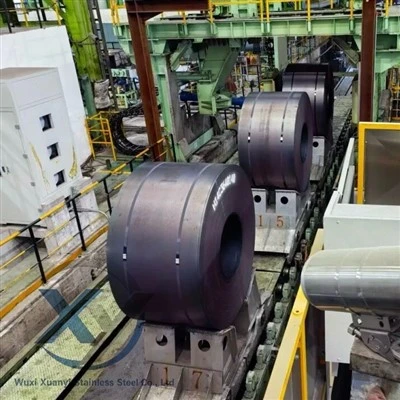
First, let’s start with the basics: what is hot rolled carbon steel, anyway? When we make it, we heat solid steel slabs (usually 8-12 inches thick) to temperatures over 1700°F—hot enough to bend and shape easily without cracking. That’s way hotter than room temp, and when metal is that hot, it reacts with oxygen in the air. The reaction forms a layer of iron oxide, which we call “scale.” It’s not rust, by the way—big difference. Rust is iron oxide that forms after the metal is exposed to moisture and oxygen at room temperature; scale forms at high heat, right while we’re rolling the steel into sheets, bars, or plates. That’s why every piece of hot rolled carbon steel leaves our mill with a thin, dark gray (sometimes almost black) flaky layer on the surface. You can scrape it off with a nail or a wire brush, and it’ll look like fine, powdery gray dust when it comes off.
I know a lot of new buyers think this scale is a flaw, but it’s actually unavoidable. Cold rolled steel, the smoother, shinier stuff used for car body panels or precision parts, gets its smooth finish because we remove the scale before rolling it. Hot rolled? We leave it on because removing scale mid-process would add a ton of time and cost to every shipment. For most common uses—like structural steel for buildings, agricultural machinery parts, or general fabrication—that extra step just isn’t worth it. The scale is durable enough to stick around until you’re ready to work with the steel, but it’s also thin enough that it doesn’t affect the steel’s core strength or integrity. That’s a key point I make to people who hesitate at first: the scale is a surface layer, not something that weakens the metal itself.
Now, let’s talk about what scale does, for better or worse. The big pro? That layer of iron oxide actually acts as a temporary shield. If you’re storing hot rolled carbon steel outdoors for a few months before you use it, the scale slows down the formation of regular surface rust. If there was no scale, the raw hot rolled steel would start rusting within days, especially if it’s exposed to rain or humidity. That’s a small win, but it’s saved a lot of clients from unexpected rust on their stock. The con, though, comes when you go to weld, paint, or machine the steel. Scale is porous and flaky, so if you weld over it, you’ll get porosity in the weld—little air pockets that weaken the joint. If you try to paint over it, the scale will eventually flake off, taking the paint with it. And machining? The scale is hard and abrasive, so it’ll wear out your cutting tools way faster than working with clean steel would.
That’s why I always tell clients to plan ahead: if you need a finished surface, or you’re doing welding/painting, strip the scale first. We offer pickled and oiled hot rolled carbon steel as an option for exactly that—we run the steel through a mild acid bath to remove the scale, rinse it, and add a thin oil layer to prevent rust while it’s in your shop. It’s a bit more expensive than standard hot rolled, but it saves you the time and hassle of stripping scale on your own. For guys who are just cutting bars to make a fence post or a bracket, though, standard hot rolled with scale is perfect. Scrape off a little bit where you’re going to weld or drill, and you’re good to go.
I’ve seen so many mix-ups with scale, too. Last year, a small construction company ordered 20 tons of 4-inch hot rolled carbon steel bars for a warehouse frame. They came in with that dark scale, and their foreman thought we’d sent the wrong material—he kept complaining that the steel was “too dirty” and demanded a replacement with no scale. We sent someone over to the job site to show him what scale looked like, and he scraped a piece off with his pocket knife. He realized right away that we’d sent the correct product; he’d just confused hot rolled’s natural scale with a manufacturing defect. That’s why I never skip explaining this to new clients—especially if they’re working with hot rolled for the first time.
Another common question: does the amount of scale change? Yeah, a little. The type of carbon in the steel, the exact rolling temperature, and even the humidity at the mill that day can affect how thick the scale layer is. For low-carbon hot rolled (the most common type we sell, with 0.05% to 0.3% carbon), the scale is thinner and easier to scrape off than it is for medium or high-carbon hot rolled. High-carbon steel, used for things like springs or tools, gets a slightly thicker scale, but it still strips off easily with a wire wheel or sandblasting.
What about long-term storage? If you leave hot rolled carbon steel with scale outdoors for a year, what happens? The scale will eventually break down, and regular surface rust will start forming underneath it. But that’s a slow process—much slower than if the steel had no scale at all. We recommend storing steel off the ground, under a covered area if possible, but if you have to leave it outside, a few layers of tarps will keep it in good shape for 6+ months even with the scale on. I had a farmer client who stored a pile of hot rolled plates for 18 months before using them for a grain bin; the scale was mostly intact, and the only rust was a tiny bit on the edges where he’d cut the plates. That’s exactly what you want for long-term storage.
I also want to clear up a myth: some people think scale is toxic or harmful to work with. If you’re machining or grinding hot rolled steel, the scale creates fine metal dust. That dust isn’t good to breathe in, same as any metal dust—so just wear a mask when you’re cutting, grinding, or sanding it, and you’re fine. The scale itself, when dry, isn’t toxic, and it doesn’t transfer to food or anything like that, so it’s totally safe for most applications, including food processing equipment (as long as you strip the scale and clean it properly).
As a supplier, we always make sure to label every shipment clearly, noting that it’s standard hot rolled with natural scale, and offering pickled and oiled as an add-on. We get a lot of repeat business from guys who’ve learned the difference—they know that for basic structural work, standard hot rolled with scale is the most cost-effective, and when they need a finish, they’ll order pickled and oiled instead.

At the end of the day, scale isn’t a flaw. It’s a natural part of making hot rolled carbon steel, and it’s designed to be there. The key is knowing how to work with it, or when to remove it. If you’re not sure what kind of hot rolled carbon steel you need, or you have questions about scale for your specific project, reach out to our team. We can walk you through the pros and cons, give you a quote, and even share tips for handling the steel once it arrives. Don’t let the dark gray layer turn you off—hot rolled carbon steel is one of the most versatile materials out there, and that scale is just proof it’s made the right way.
Hot Rolled Stainless Steel Coil References
- ASM International. (2019). Hot Rolled Carbon Steels: Processing, Properties, and Applications. ASM Handbook, Volume 04: Materials Characterization.
- The Fabricator. (2021). “Understanding Scale on Hot Rolled Steel: Pros, Cons, and Handling Tips.”
- World Steel Association. (2020). Manufacturing Processes for Carbon Steel: Hot Rolling and Surface Characteristics.
Wuxi Xuanyi Stainless Steel Co., Ltd.
Wuxi Xuanyi Stainless Steel Co., Ltd. is one of the most professional hot rolled carbon steel manufacturers and suppliers in China. With abundant experience, we warmly welcome you to wholesale bulk durable hot rolled carbon steel made in China here from our factory. If you have any enquiry about cooperation, please feel free to email us.
Address: 1207-1208, Building 11, Shengang Metropolis Plaza, No. 299 Fangcheng Avenue, Xinwu District, Wuxi City,China.
E-mail: jscherryxy@163.com
WebSite: https://www.xuanyisteel.com/
