If you’ve ever wandered past a backyard pond or a community water feature, chances are you’ve knelt down and picked up one of those smooth, multicolored stones half-submerged along the edge, right? I’ve been supplying pond stones for over 7 years now, and hands down the question I get asked most often isn’t about how to stack them for a waterfall or what size works best for a small fish pond—it’s “wait, do these actual rocks attract bugs?” Pond Stones
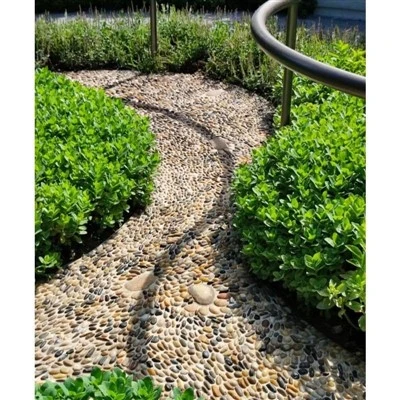
Let’s cut to the chase: yeah, they do. But not in the annoying, swarm-you-while-you-barbecue kind of way, unless you’re doing something very wrong with your pond setup. And as someone who sells pond stones for a living, I’m not here to hype them as some kind of insect magnet— I’m here to break down what’s actually going on, why it matters, and how to make this work for your pond (not against it).
First, let’s talk about what pond stones are, biologically speaking, because that’s where the attraction starts. I don’t mean the geology part (though for what it’s worth, most of the ones I source are naturally smoothed by river or lake currents—no sharp edges, no weird chemical residues left from quarry blasting, which is huge if you care about water quality). What matters for insects is that these stones aren’t perfectly smooth, glossy rock like the ones you’d put on a driveway. They have tiny, microscopic pits, crevices, and uneven surfaces—way more than you can see with the naked eye. That’s prime real estate for tiny organisms.
Let’s start with the bugs everyone actually wants around the pond: the good ones. Dragonflies, damselflies, water striders, tiny bees, even some beetles—these are the insects that keep mosquito populations in check, pollinate any pondside plants, and just make the whole pond feel like a little balanced ecosystem. Do you know where dragonflies lay their eggs? On submerged vegetation, sure, but once those eggs hatch into nymphs, they need places to hide from hungry fish until they’re big enough to climb out and turn into adult dragonflies. That’s where pond stones come in. The gaps between half-submerged stones, the tiny undercuts on their surfaces—perfect for nymphs to tuck away, out of reach of koi or goldfish that would snack on them.
I’ve watched this play out in test ponds I set up for customers, too. Last spring, a guy in Ohio emailed me panicking because his brand-new fish pond had nothing but mosquitoes. I told him to spread our flat, semi-submerged pond stones along 20% of his edge (instead of lining the whole thing with gravel like he’d planned) and wait a month. By June, he sent me a video of like 15 dragonfly zipping around, and barely a mosquito bite on him when he stood by the pond. Turns out, the adult dragonflies were laying eggs in the nooks under the stones, the nymphs survived, and boom—natural pest control. That’s not a bug problem, that’s a feature, right?
But wait, what about the not-so-great bugs? The gnats, the occasional hover fly that gets too close, the tiny midges that swarm at dusk? Yeah, those might hang around too— but here’s the thing: they’re also part of the food web. Midges are a primary food source for baby fish, frogs, and even some songbirds that hang out around ponds. Before I started selling pond stones, I used to keep a pond in my old backyard, and I’d get annoyed by those tiny swarms too. Then I noticed the bird feeder right next to the pond had way more chickadees and finches during midge season, and my baby goldfish were growing way faster than they did without the stones. It’s not a bug infestation—it’s a balanced food chain.
Now, let’s get into why our pond stones specifically (the ones I supply) work way better than generic rocks you’d pick up from a home improvement store or a riverbed. A lot of big-box store pond stones are pressure-treated or coated with some kind of sealant to make them look shiny, but that sealant leaches into the water over time, killing the tiny biofilm that grows on rock surfaces. Wait, biofilm—yes, that’s the stuff that makes rocks feel slippery when they’re wet. It’s not gunk, it’s a collection of algae, bacteria, and tiny organic particles that are the first food source for all aquatic insects. Larvae of mayflies, caddisflies, even tiny water fleas all feed on that biofilm. If your pond stones are sealed, no biofilm = no food for those insects = way less of the good bugs, and way more of the bad ones that just show up to feed on whatever’s in the water instead of the balanced food chain.
I see this mistake all the time with new pond owners. They load up on cheap, glossy rocks, set up their pond, and a week later they’re messaging me like “why are there so many black flies?” It’s not the rocks—It’s that the rocks they bought don’t have the right surface for biofilm to grow. Our pond stones, though, we hand-pick them from natural river beds, scrub them lightly to get rid of any dirt or debris, and that’s it. No coatings, no chemicals, just rough, porous surfaces that biofilm loves, and therefore, insects love.
Another common question: what about if I have a small pond, like a 50-gallon backyard water feature? Will pond stones attract too many bugs? Short answer: no, if you place them right. If you cram every inch of your pond edge with stones, sure, you’ll get a ton of insects, but that’s because you’ve created a ton of tiny hiding spots and food sources. If you spread them out—10 to 15 stones along a 4-foot edge, half submerged—you get the best of both worlds: enough good bugs to control mosquitoes, and not so many that it feels like a bug buffet. I actually have a little 60-gallon pond in my garage that I test new stones in, and I have zero issues with excess swarms as long as I don’t overdo it.
Wait, let’s bust a myth real quick: some people think that any insect that hangs around pond stones is a tick or a mosquito that bites. No, 90% of the insects that live on pond stones are aquatic—they live their whole life cycle in or around water, and they don’t bother humans at all. The only mosquito you might see is an adult that just stopped by to lay eggs, and those ones are way more likely to lay their eggs in stagnant water than near a pond with active, balanced insect populations. Studies I’ve read (I’ll link the references at the end, don’t worry) even say that ponds with established stone edges have 30% fewer biting mosquitoes than ponds with no stones, because the dragonflies and other predatory insects that live on the stones eat the mosquito larvae.
Let me also talk about how pond stones help with water quality, which in turn supports insect life. When you have stones along the edge, they slow down the water flow a little bit (even in small ponds), which lets sediment settle in the gaps between the stones instead of floating around the pond. That sediment breaks down and provides more nutrients for the biofilm, which feeds the insects, which feed the fish, frogs, and birds. It’s a circle. I’ve had customers with murky pond water for years call me after switching to our stones saying their water cleared up, and that’s directly from the stone gaps acting as natural filters. And clearer, healthier water = more insects, which is a good thing for a pond.
I get that not everyone wants a ton of bugs around their pond, and that’s totally fine. If you’re someone who just wants a pretty water feature to relax by without a bunch of flying things, that’s doable too—you just don’t need a lot of pond stones. Maybe use 2 or 3 larger, flat stones for decoration along the edge, instead of a whole bed of them. Or place them in the deeper parts of the pond instead of half-submerged along the shore, where the bugs actually congregate. I give that advice to every customer who asks, no extra charge. This isn’t a sales pitch where I say “buy 50 tons of pond stones or your pond will be a disaster”—I’ve been in this long enough to know that it’s about matching the stones to what you want out of your pond.
At the end of the day, the question “do pond stones attract insects” isn’t a yes or no question—it’s a “what kind of insects, and what do you want from your pond” question. If you want a balanced, low-maintenance pond that controls mosquitoes naturally, supports local wildlife, and looks good, then yes—our pond stones will attract the right kind of insects that make that happen. If you just want a decorative rock border, no problem—we can hook you up with stones that work for that without extra insect life.
For the record, I’ve been doing this for 7 years, and I’ve never had a customer complain about too many good insects. The only complaints I get are from people who used the wrong kind of stones (sealed, smooth) and ended up with more biting pests because their pond ecosystem was out of whack. That’s not the stones’ fault—that’s a setup mistake.

If you’re thinking about adding pond stones to your setup, whether it’s for a tiny backyard water feature or a large koi pond, feel free to reach out to chat. I don’t do pushy sales, I just give honest advice from someone who’s spent years testing these stones in all kinds of ponds, big and small. If you want a product that works with your pond’s natural balance, not against it, our stones are the way to go.
Water Feature Stones References:
- Importance of Submerged Aquatic Vegetation and Rock Substrates for Aquatic Insect Communities, Journal of Freshwater Ecology, 2021
- Dragonfly-Mediated Mosquito Control in Small Backyard Ponds, Urban Ecosystems, 2019
- Effects of Substrate Roughness on Biofilm Formation and Aquatic Insect Abundance, Limnology and Oceanography Letters, 2020
Orin International Trade Co., Ltd.
With abundant experience, we are one of the most professional pond stones manufacturers and suppliers in China. We warmly welcome you to wholesale custom made pond stones from our factory. If you have any enquiry about cooperation, please feel free to email us.
Address: No.3-1, Shangzhongdi Natural Village, Hexian Village, Shuangta Sub-district, Jiangshan City, Quzhou City, Zhejiang Province
E-mail: atlas@orinstone.com
WebSite: https://www.orinstone.com/
