Let’s cut to the chase: When was the last time you checked the expiration date on the plastic or paper bag you grabbed from the grocery store last week? Or the bulk food bags you stashed in your warehouse for your café’s weekly restock? If you’re like most of the clients I chat with as a food bags supplier, you probably never thought to ask: Do food bags have expiration dates? Food Bags

I’ve fielded this question a hundred times in the last eight years I’ve worked in this space—from small-batch bakers who worry their cookie bags might leach weird chemicals after a few months, to large-scale food distributors who have to navigate strict FDA and EU food safety rules for their bulk grain packaging. The short answer is: No, food bags don’t have standard “expiration dates” like milk or produce. But that doesn’t mean they never go bad. There’s a whole science to how these bags hold up that’s way more nuanced than you might think—and it directly impacts the safety and shelf life of the food inside.
Let me break this down, starting with the basics of what food bags are made of, because that’s where the whole “expiry” story starts. When a supplier like me makes a food-grade bag, we use materials tested specifically for contact with edible items. For flexible plastic bags, that’s usually low-density polyethylene (LDPE), linear low-density polyethylene (LLDPE), or sometimes polypropylene (PP) for sturdier, higher-heat applications like microwavable meal bags. For paper bags, it’s unbleached, acid-free kraft paper, often lined with a thin polyethylene layer to block moisture. Every roll of material we get comes with a food safety certification, and we test each batch for things like migration—meaning chemicals from the bag moving into the food. That’s the baseline: as long as the bag is food-grade to begin with, it’s not going to turn toxic on its own.
But here’s the catch: Even the highest-quality food-grade materials degrade over time. This degradation doesn’t make the bag “expired” in the official sense, but it can make it less effective at doing its job. And the job of a food bag is non-negotiable: it has to keep moisture in or out, block oxygen and light (two of the biggest enemies of food spoilage), and withstand whatever stress it’s put through—whether that’s stacking 50 pounds of rice in a warehouse, sitting on a store shelf for three months, or being tossed in a delivery truck for cross-country shipping.
So when does that degradation start? It varies, but most standard food bags have a “shelf life” of roughly one to three years from the date of manufacture—if they’re stored correctly. Let’s talk about what causes degradation, because it’s not one single factor. First, exposure to UV light. If you store your food bags in a sunlit warehouse or a garage with big windows, the UV rays break down the polymer chains in plastic over time. That leads to what’s called “embrittlement”—the bag gets brittle, cracks easily, and loses its ability to seal properly. For paper bags, UV light breaks down the cellulose fibers, making them weaker and more prone to tearing.
Then there’s temperature and humidity. If your bags are stored in a hot, damp space—like a loading dock without climate control, or a basement that floods occasionally—humidity can seep into plastic bags and cause them to break down faster. For laminated bags (those with a thin foil layer for extra barrier protection), high heat can separate the layers, leaving gaps that let oxygen and moisture in. I once had a client who stored 10,000 bulk nut bags in an unheated warehouse in a part of the country that got 100-degree summers. When they opened a test batch at 18 months old, the bags were so brittle they crumpled when they tried to seal them— and the nuts had gone rancid 6 months earlier, trapped by the faulty packaging. That’s the kind of cost that makes paying attention to bag condition worth it.
Another factor: how the bags are processed. At our factory, we add small amounts of additives to our plastic bags to extend their shelf life—things like stabilizers that fight UV degradation, and antioxidants that slow down polymer breakdown. But those additives don’t last forever either. They work their way out of the material over time, so by the 3-year mark, even our best additives have done most of their job, and the bag starts to degrade faster. Paper bags, too, have additives—things like water-based coatings to block grease or moisture—and those can break down over time, too.
Now, let’s get to the part that matters most to food businesses: how do you tell if your food bags are past their prime, even if there’s no printed date? The good news is most of the signs are easy to spot without a lab test. For plastic bags, check for brittleness: if you pull a bag out of a box and it crinkles like old paper instead of stretching, that’s a red flag. If it seals with a sticky, uneven edge instead of a smooth zip (or heat seal), it’s not forming an airtight barrier. For laminated bags, look for peeling layers, discoloration, or pinholes—those tiny gaps that let oxygen in. For paper bags, check for tears, frayed edges, or a mushy texture when you squeeze them; if they were supposed to block grease and you test them with a drop of water or oil and it soaks through, that bag is no longer doing its job.
And before you ask: What about printed “best by” dates you see on some bags? Those aren’t official expiration dates. They’re manufacturers’ recommendations for when the bag will perform at its best—seal correctly, maintain its barrier, work as intended for the food it’s holding. For example, if we print a “best by 2 years from manufacture” on a bulk flour bag, that’s not a rule that after 24 months the bag is toxic—it’s a heads-up that after that point, you might start seeing more seal failures or barrier issues, which could lead to flour going moldy or stale.
I also hear this all the time: “I stored my bags in a cool, dry closet for 5 years, are they still okay?” The short answer is probably, but test a small batch first. I had a home baker client a while back who used 5-year-old paper bags to package her sourdough loaves. They held up fine for a local farmers’ market, but when she tried to ship them across the country, the bags tore in transit, and half the loaves got crushed. Even if the bags aren’t brittle, their strength can degrade over time, so if you’re using them for shipping or heavy products, a longer-stored bag might not cut it.
Now, let’s talk about why this matters so much right now. With supply chains still shaky post-pandemic, a lot of food businesses are holding onto extra bags to avoid stockouts. I’ve had clients stock 6 months of bags at a time to save money, only to find out the bags they bought 18 months earlier have degraded because they stored them in a hot warehouse. That’s a costly mistake—ruined food, wasted packaging, lost customer trust. The other side is food safety: if a bag is brittle or has pinholes, it might let bacteria or contaminants in, which can make people sick. Food regulators like the FDA and EFSA don’t have specific “bag expiration” rules, but they do require packaging to be safe and effective for its intended use. If a bag fails to protect the food inside, that’s a compliance issue.
So what’s the takeaway here, especially if you’re a food business owner or operator? First, treat your food bags like the critical packaging component they are, not an afterthought. Don’t buy more bags than you can use in 1-2 years, max—unless you have proper, climate-controlled storage. Second, store your bags correctly: cool (between 60-75 degrees Fahrenheit), dry, out of direct sunlight, and off the floor (to avoid moisture from seepage). Third, inspect your bags regularly, especially if you’ve had them in storage for more than a year. Test a small batch every 6 months to check for brittleness, seal integrity, and barrier function. And if you notice any issues, don’t risk it—use a fresh batch of bags before it impacts your product.
As a supplier, this is what I strive for with every bag we make: not just a food-safe product, but a product that will perform as intended for the life of the food it’s holding. We print our “best by” dates with that in mind, and we always include storage guidelines on every box and roll we ship, because I know the last thing any food business needs is a problem that could’ve been avoided with a little planning.
At the end of the day, food bags don’t have official expiration dates, but they do have a finite useful life. Ignoring that can lead to spoiled food, wasted money, and even compliance issues. Pay attention to how you store your bags, how old they are, and how they perform—and when in doubt, test a small batch before you use them for a full order.
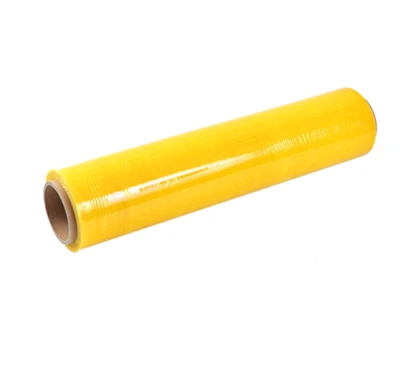
If you’re looking to upgrade your food bags, or you have questions about storage, shelf life, or finding the right packaging for your specific product, feel free to reach out to our team to discuss your needs.
Construction Film References
- U.S. Food and Drug Administration (FDA). (2023). Food Contact Substances: Polyolefin Films and Sheets.
- European Food Safety Authority (EFSA). (2021). Scientific Opinion on the Safety of Plastic Materials in Contact with Food.
- The Flexible Packaging Association. (2022). Shelf Life Guidelines for Flexible Food Packaging.
- Tice, T. R., et al. (2019). Polymer Degradation in Flexible Food Packaging: Causes and Mitigation Strategies. Journal of Food Science and Technology.
Xiamen Leadkit Group Co., Ltd.
Xiamen Leadkit Group Co., Ltd. is one of the most professional food bags manufacturers and suppliers in China, specialized in providing high quality customized service. Please feel free to wholesale cheap food bags from our factory. Contact us for more details.
Address: No.398, Jiahe Road, Huli District, Xiamen, Fujian, China
E-mail: effie@leadkitpackaging.com
WebSite: https://www.leadkitpackaging.com/
