Hey there, chemical enthusiasts! As a supplier of guanidine salts, I’ve spent a ton of time diving deep into the world of these compounds. Guanidine salts are super versatile and find their way into all sorts of industries, from pharmaceuticals to agriculture. But here’s the thing – sometimes, their default properties just don’t cut it for specific applications. That’s where modifying their properties comes in. In this blog, I’m gonna share some tips and tricks on how to modify the properties of guanidine salts. Guanidine Salts
Understanding Guanidine Salts
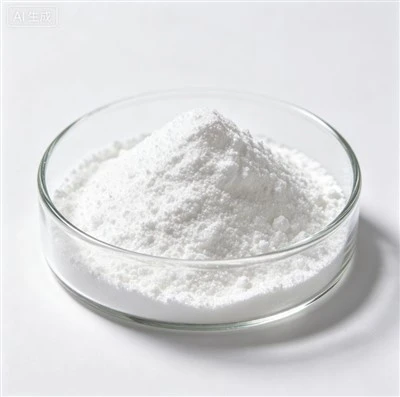
Before we jump into the modification process, let’s quickly go over what guanidine salts are. Guanidine is a small molecule with a unique structure that consists of a central carbon atom bonded to three nitrogen atoms. When it reacts with an acid, it forms a guanidine salt. The most common guanidine salts are guanidine hydrochloride, guanidine nitrate, and guanidine carbonate.
These salts have different properties depending on the acid they’re paired with and the conditions under which they’re formed. For example, guanidine hydrochloride is highly soluble in water and is often used as a protein denaturant in biochemical research. On the other hand, guanidine nitrate is a powerful oxidizer and is used in explosives and propellants.
Why Modify Guanidine Salts?
There are several reasons why you might want to modify the properties of guanidine salts. Maybe you need a salt with a different solubility profile, or you’re looking for a salt that’s more stable under certain conditions. Or perhaps you’re trying to develop a new application for guanidine salts and need to fine-tune their properties to fit the requirements of that application.
Whatever the reason, modifying guanidine salts can open up a whole new world of possibilities. You can create salts with unique properties that are tailored to your specific needs, which can give you a competitive edge in the market.
Methods of Modifying Guanidine Salts
Now, let’s get into the nitty-gritty of how to modify the properties of guanidine salts. There are several methods you can use, and I’ll go over some of the most common ones below.
1. Changing the Counterion
One of the simplest ways to modify the properties of guanidine salts is to change the counterion. The counterion is the negatively charged ion that’s paired with the positively charged guanidine ion in the salt. Different counterions can have a significant impact on the solubility, stability, and reactivity of the salt.
For example, if you want to increase the solubility of a guanidine salt in water, you might try using a counterion that’s more hydrophilic, such as chloride or sulfate. On the other hand, if you need a salt that’s more stable under acidic conditions, you could use a counterion that’s less reactive with acids, such as nitrate or perchlorate.
To change the counterion, you can simply react the guanidine salt with a different acid or salt that contains the desired counterion. The reaction will typically involve an exchange of ions, resulting in the formation of a new guanidine salt with the desired counterion.
2. Modifying the Guanidine Structure
Another way to modify the properties of guanidine salts is to modify the structure of the guanidine molecule itself. This can be done by introducing different functional groups onto the guanidine molecule, which can change its electronic properties, steric hindrance, and hydrogen bonding capabilities.
For example, if you want to increase the basicity of a guanidine salt, you might try introducing electron-donating groups onto the guanidine molecule, such as alkyl or aryl groups. On the other hand, if you need a salt that’s more selective towards certain substrates, you could introduce functional groups that can interact with those substrates through hydrogen bonding or other non-covalent interactions.
Modifying the guanidine structure typically involves a series of chemical reactions, such as substitution, addition, or elimination reactions. These reactions can be complex and require careful control of reaction conditions, such as temperature, pressure, and reaction time.
3. Forming Complexes with Other Molecules
Guanidine salts can also form complexes with other molecules, such as metal ions, organic ligands, or polymers. These complexes can have different properties than the original guanidine salt, depending on the nature of the complexing agent and the stoichiometry of the complex.
For example, if you want to increase the stability of a guanidine salt under certain conditions, you might try forming a complex with a metal ion that can act as a stabilizer. On the other hand, if you need a salt that can interact with specific biomolecules, you could form a complex with an organic ligand that has a high affinity for those biomolecules.
To form a complex with a guanidine salt, you typically mix the salt with the complexing agent in a suitable solvent and allow the reaction to proceed under appropriate conditions. The resulting complex can then be isolated and characterized using various analytical techniques.
4. Changing the Physical State
Finally, you can also modify the properties of guanidine salts by changing their physical state. For example, you can convert a guanidine salt from a solid to a liquid or a gas by changing the temperature and pressure conditions. This can have a significant impact on the solubility, reactivity, and other properties of the salt.
In addition, you can also prepare guanidine salts in different forms, such as nanoparticles, microparticles, or thin films. These different forms can have unique properties that are not present in the bulk salt, such as increased surface area, enhanced reactivity, or improved solubility.
To change the physical state or form of a guanidine salt, you typically use techniques such as heating, cooling, evaporation, precipitation, or deposition. These techniques require careful control of the process parameters to ensure that the desired physical state or form is obtained.
Considerations and Challenges
While modifying the properties of guanidine salts can be a powerful tool for developing new materials and applications, it’s not without its challenges. Here are some considerations and challenges you should keep in mind when modifying guanidine salts:
- Safety: Many of the chemicals and reactions involved in modifying guanidine salts can be hazardous. It’s important to take appropriate safety precautions, such as wearing protective clothing and equipment, working in a well-ventilated area, and following proper handling procedures.
- Cost: Modifying guanidine salts can be expensive, especially if you’re using complex synthetic methods or high-purity starting materials. It’s important to consider the cost-benefit ratio of the modification process and to look for ways to reduce costs without sacrificing quality.
- Scalability: If you’re planning to use the modified guanidine salts in large-scale applications, it’s important to ensure that the modification process is scalable. This means that the process should be able to produce the desired quantity of the modified salt in a consistent and reproducible manner.
- Regulatory compliance: Depending on the application of the modified guanidine salts, you may need to comply with various regulations and standards. It’s important to research the relevant regulations and to ensure that your modification process and the resulting products meet all the necessary requirements.
Conclusion
In conclusion, modifying the properties of guanidine salts can be a powerful way to develop new materials and applications. By changing the counterion, modifying the guanidine structure, forming complexes with other molecules, or changing the physical state, you can create salts with unique properties that are tailored to your specific needs.
However, it’s important to keep in mind the considerations and challenges involved in the modification process, such as safety, cost, scalability, and regulatory compliance. With careful planning and execution, you can overcome these challenges and successfully modify the properties of guanidine salts to achieve your desired goals.
Aldehydes If you’re interested in learning more about guanidine salts or if you’re looking for a reliable supplier of high-quality guanidine salts, please don’t hesitate to reach out. We’re here to help you find the right guanidine salts for your application and to provide you with the support and expertise you need to succeed.
References
- Smith, J. K. (2018). Chemistry of Guanidine Derivatives. Wiley-VCH.
- Zhang, Y., & Wang, L. (2020). Recent Advances in the Synthesis and Applications of Guanidine Compounds. Chemical Reviews, 120(12), 5783-5832.
- Li, X., & Chen, Y. (2019). Guanidine Salts: From Synthesis to Applications. Chemical Communications, 55(63), 9333-9351.
Shandong Xima Supply Chain Management Co., Ltd.
As one of the most professional guanidine salts manufacturers in China, we offer a wide range of products with superior quality. Please feel free to buy bulk guanidine salts in stock here and get free sample from our factory. We also accept customized orders.
Address: No. 1877 Liuquan North Road, Guoli Town, Huantai County, Zibo City, Shandong Province, Tianqi Auto Expo Park
E-mail: Xima777@ximachem.com
WebSite: https://www.ximachemical.com/
