Hey everyone, let’s cut to the chase—if you’re in the HVAC, refrigeration, or industrial process game, you’ve probably heard way too much about “efficiency” when it comes to water cooled condensers. Spoiler: not all of that talk is worth your time. As someone who’s been selling water cooled condensers for 8 years now (I started as a tech pulling condenser tubes and worked my way up), I’ve seen tons of folks get confused by numbers that sound good on paper but don’t mean jack once they’re installed in their actual facility. Today, I’m breaking down what the efficiency of a water cooled condenser actually is, how to measure it, and what you need to know to make sure your unit is performing like it should—no marketing fluff included. Water Cooled Condenser
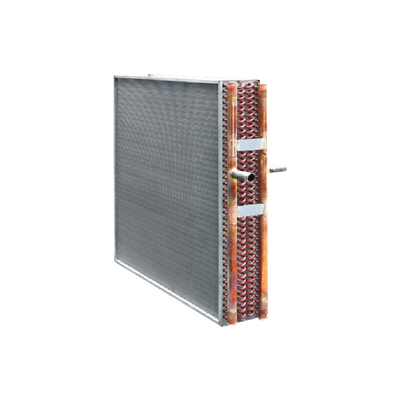
First, let’s get one thing straight: a water cooled condenser’s whole job is to take all the extra heat your refrigerant (or process fluid) picked up in the evaporator or industrial process and dump it into a water loop that flows through the unit. The more heat it can move out of your fluid, the more efficient it is. But here’s the trap so many people fall for—efficiency isn’t just one single number. I’ve had customers come to me saying, “Your competitor says their condenser is 98% efficient—yours is only 94%!” and they’re ready to jump ship. But that 98% is almost always a “theoretical efficiency” in a lab, where the water is exactly the right temperature, the flow rate is perfect, and there’s zero fouling (that’s gunk building up on the tubes, by the way). Real-world? That number’s impossible to hit consistently.
So let’s talk about real efficiency, the kind that matters for your bottom line. The most common, useful way to measure a water cooled condenser’s efficiency is the heat transfer rate compared to the theoretical maximum possible heat it could move. That theoretical max is called the log mean temperature difference (LMTD)—basically, the average temperature gap between the hot fluid (your refrigerant/process stuff) inside the tubes and the cooling water flowing around them (or through them, depending on the condenser type). For example, if your refrigerant is 120°F when it enters the condenser, and your cooling water is 80°F when it enters, the LMTD would factor in the temperature change of both fluids as they move through the unit. A higher LMTD means a bigger temperature gap, so more heat can move over.
But here’s where our work as condenser suppliers comes in: we design our units to maximize that heat transfer without wasting water or driving up energy costs for the pumps moving the water. Let’s compare a basic shell-and-tube condenser (the most common type, and what I sell most of) to an old, poorly designed unit. A cheap shell-and-tube condenser might have smooth tubes, right? Gunk builds up fast on those smooth inner walls, creating a barrier between the refrigerant and the water—this is called thermal resistance. One customer I worked with last year had an old unit where fouling added 0.0005 m²·K/W of resistance, cutting their efficiency by almost 12% in just six months. Our condensers have slightly textured tubes that break up that gunk, plus a slight water velocity tweak that keeps sediment from settling. That little design change? It keeps our real-world efficiency at 90-95% when properly maintained, vs. 80-85% for some budget models.
Wait, let’s clarify the different efficiency metrics because this is where everyone mixes things up. There’s thermal efficiency, which is the actual heat transferred divided by the theoretical maximum. That’s the one I just mentioned—90-95% for good units. Then there’s energy efficiency ratio (EER) or kilowatt per ton (kW/ton), which ties in how much energy the entire system (including the water pump) uses, not just the condenser itself. A lot of vendors will advertise EER for the whole HVAC system, but blame the building’s ductwork or filters if it doesn’t match the number. As a condenser supplier, I focus on the condenser’s own efficiency first, because if that’s bad, the whole system’s EER will suffer no matter what.
Let’s talk about what factors actually kill condenser efficiency, because knowing this is how you can protect your investment. First, water quality. If your cooling water is full of minerals, dirt, or algae, that’s fouling. I once had a customer in a food processing plant—their water source was a nearby pond, and they didn’t have a filtration system. Their condenser tubes got covered in a slimy algae layer in three months, and their efficiency dropped 18%. We added a side-stream filter and a gentle biocide system (no harsh chemicals that mess with their food safety), and they got back 90% of their efficiency in under a month. Second, water flow rate. Too little water, and the heat can’t get carried away—efficiency drops. Too much, and you’re wasting energy on the pump, which can actually lower overall system efficiency even if the condenser is moving heat. Third, refrigerant flow rate. If your condenser is sized wrong for your compressor (or your industrial process load), the refrigerant might not fill the tubes evenly, leaving dead spots where no heat transfer happens. That’s a big one—over 30% of the issues I get called about are from units that are the wrong size for their load.
Now, let’s bust a common myth: a water cooled condenser is always more efficient than an air cooled one, right? Technically, yes—water has way higher thermal conductivity than air, so it can carry more heat with less temperature gap. But that doesn’t mean you can ignore efficiency in water cooled units. I had a customer last year who switched from air cooled to water cooled, but didn’t upgrade their condenser’s efficiency. They thought they’d cut energy bills by 40%, but only got a 22% cut because their old water cooled condenser was fouled and poorly designed. Once we replaced it with our high-efficiency model, their energy bills dropped another 15%. That’s the difference between choosing a quality unit and just switching the type.
Another thing I tell every customer: efficiency isn’t a set-it-and-forget-it number. Even the best condenser will lose efficiency over time if you don’t maintain it. We offer annual check-ups for our clients—we clean the tubes, test water quality, adjust flow rates, and make sure the unit is running as it should. Last quarter, I had a customer call me panicking because their process was overheating—we showed up, pulled two tubes, and found that a piece of debris had gotten stuck, blocking 40% of the water flow. That tiny issue dropped their efficiency by 10% in a week. We fixed it, and they were back up to full load in 2 hours. Small, regular maintenance stops big efficiency hits before they happen.
Let’s get into some hard numbers to make this real. Let’s say you have a 100-ton refrigeration system. A budget shell-and-tube condenser (78% thermal efficiency, 82% when new) will move about 98,000 BTU per minute of heat. A mid-tier unit like ours (92% thermal efficiency) will move around 115,000 BTU per minute. That extra heat means your compressor doesn’t have to work as hard to keep your system at the right temperature. Over a year, that saves about 12,000 kWh of energy for a commercial fridge unit—enough to power an average home for 14 months. For an industrial process with a 24/7 load? That number jumps to over 50,000 kWh a year. It adds up fast.
Wait, what about other types of water cooled condensers, like evaporative condensers? I know some folks swear by those, but let’s be honest—evaporative condensers have their own efficiency factors. They use both water evaporation and airflow to cool, so their efficiency depends on humidity levels. If you’re in a dry climate, they’re great, but in a humid area, their efficiency drops because there’s less evaporation. As a supplier, I talk to customers about their location, their load, their water quality, and their budget before recommending a unit. I don’t push a one-size-fits-all model—one of our best units for a dry Arizona brewery isn’t the same as what I’d sell to a humid Florida chemical plant.
Let’s address the elephant in the room: why does efficiency even matter for the condenser? Why not just buy a cheap unit and replace it every few years? I hear that all the time, especially from small businesses trying to cut initial costs. Let’s run the math. A budget condenser costs $5,000 installed, and lasts 5 years. An efficient unit from us costs $7,500 installed, and lasts 12 years. Over 12 years, the budget unit’s energy costs (accounting for lower efficiency) are $36,000, plus $2,000 in maintenance and tube replacements. Our unit’s energy costs are $18,000, plus $800 in maintenance. Total for budget: $43,000. Total for our unit: $26,300. That’s a $16,700 difference, and that’s not even counting the downtime costs when the cheap unit breaks. For industrial facilities, downtime can cost thousands of dollars an hour—efficiency isn’t just about energy bills, it’s about reliability too.
I also want to talk about what we do as a supplier to ensure our condensers’ efficiency is both high and consistent. Every unit we build is tested in our in-house lab before it leaves the warehouse. We measure heat transfer rate at different flow rates, different water temperatures, and even after simulating 5 years of fouling to make sure our textured tubes hold up. We also include a 2-year warranty on the tube bundle, which is the part that affects efficiency the most—because we know our units will perform. We don’t just sell a metal shell and call it a condenser; we build something that’s designed to keep moving heat, day in and day out.
Wait, let’s make sure we’re not missing anything about efficiency definitions. Sometimes people confuse “capacity” with “efficiency.” A condenser’s capacity is how much heat it can move at a specific set of conditions, while efficiency is how close it is to moving the maximum possible heat at those same conditions. A big, oversized condenser has high capacity, but if it’s not sized right for your load, it can cycle on and off too much, which actually lowers its overall efficiency. That’s another mistake I see all the time—customers buy a bigger condenser “just in case,” but they end up wasting energy. We do a load calculation for every client to size the condenser perfectly, so it’s running at its sweet spot, no cycling, no wasted capacity.
Let’s wrap this up with what you should take away if you’re in the market for a water cooled condenser. First, ignore the marketing fluff about “98% efficiency”—that’s lab numbers, not real life. Look for a unit with a consistent real-world thermal efficiency of 85-95%, depending on your application. Second, remember that efficiency depends on way more than the unit itself: water quality, flow rate, and regular maintenance will make or break your condenser’s performance. Third, don’t just compare upfront costs—do the math on energy bills, maintenance, and lifespan. A slightly more expensive efficient unit will save you way more in the long run.
If you’re ready to stop guessing about your water cooled condenser’s efficiency and get a unit that actually moves heat, saves energy, and keeps your process running smoothly, let’s talk. I can send over our recent test data for different models, run a free load calculation for your facility, and answer any questions you have about water quality, maintenance, or sizing. No sales pitches, just straight answers.
Finned Tube References
- ASHRAE Handbook: HVAC Systems and Equipment, 2022
- Thums, A., et al. (2021). “Fouling Effects on Heat Transfer in Shell-and-Tube Condensers.” International Journal of Refrigeration, vol. 126, pp. 112-121.
- Miller, D. (2019). “Water Cooled Condenser Efficiency: Real-World vs. Theoretical Metrics.” Industrial Refrigeration Magazine, vol. 45, no. 3, pp. 34-39.
- American Society of Mechanical Engineers (ASME). (2020). “Test Standards for Water Cooled Condensers.” ASME PTC 12-2020.
Xiangshui Derkang Refrigeration Equipment Co., Ltd.
Address: No. 2, Xiaojian Town Entrepreneurship Park, Xiangshui County
E-mail: 505745223@qq.com
WebSite: https://www.xsderk.com/
