If you’ve ever held a power tool that doesn’t overheat mid-job, or listened to a speaker that delivers crisp, consistent sound without crackling, you’ve benefitted from enameled flat wire—though you probably didn’t know it. As someone who’s spent 12 years running an enameled flat wire manufacturing facility, talking to engineers, contractors, and product designers every week, one question comes up more than any other: How exactly does the purity of the conductor material affect how well this wire works? It’s not a trivial question. For us, it’s the difference between a wire that lasts 10 years in a commercial transformer and one that fails in two, or between a motor that runs at peak efficiency and one that wastes energy every time it’s used. Let’s break this down, plain and simple, from the shop floor where I’ve tested thousands of wire spools to the data sheets engineers rely on. Enameled Flat Wire
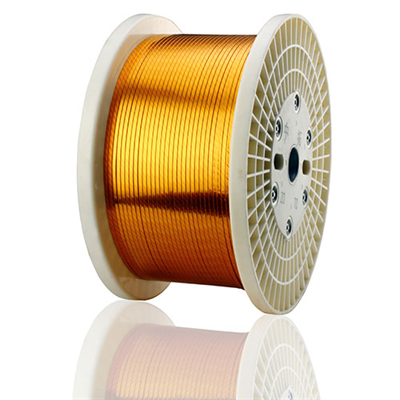
First, let’s get one basic fact straight: enameled flat wire’s core job is to carry electricity. Whether it’s winding a stator for an electric car, a coil for a medical imaging machine, or a relay in a home appliance, the conductor inside that thin enamel coating is where the current flows. Most of these conductors are made of copper, and that’s for good reason. Silver has better conductivity, but it’s way too expensive for mass production, and it’s soft, so it doesn’t hold its shape well when wound tight into coils. Aluminum is cheaper, but its conductivity is lower and it corrodes faster when exposed to the small amount of moisture or heat that normal wire deals with. Copper is the sweet spot—if it’s pure enough.
Now, what do we actually mean by “purity” here? When I first started, I thought purity was just how close the copper was to 100% elemental Cu. Back then, I learned the hard way that it’s more nuanced. Refined copper comes out of smelters at 99.95% purity, right? That’s called tough pitch copper, and it’s fine for most building wire. But for enameled flat wire—especially the flat kind, which is pressed into thin, uniform ribbons instead of round strands—we go up to 99.99% or higher. That’s oxygen-free high-conductivity (OFHC) copper, and sometimes we even use electrolytic tough pitch (ETP) with special processing to remove tiny impurities that seem too small to matter, until they do.
Let’s talk about conductivity first, because that’s the most obvious effect. Conductivity is a material’s ability to let electrons flow through it, and it’s measured in IACS (International Annealed Copper Standard), where pure copper is 100% IACS. If your copper is 99.9% pure, it’s around 99.5% IACS. If it’s 99.99% pure, that jumps to 101% IACS. Wait, that extra 1.5% might not sound like much, but when you’re running 100 amps through a 10-meter coil of wire, that difference adds up. Let’s do the math: for a 10-meter length of 2mm x 10mm flat wire, the resistance of 99.9% pure copper is about 0.00085 ohms. For 99.99% pure? 0.00084 ohms. That’s a 1.17% difference, but in real terms, that means less energy lost as heat. Every watt that doesn’t turn into heat is a watt that goes to doing the job—turning a motor, powering a sensor, amplifying sound. For a 100kW motor, that’s 1.17kW saved every hour it runs. Over a year, that’s thousands of dollars in energy costs for a factory or an EV fleet. And that’s just the start.
The impurities that drag conductivity down are tiny bits of other elements: oxygen, sulfur, iron, lead, even residual bits of other metals left from the smelting or refining process. These impurities create what engineers call “electron scattering centers.” Electrons moving through the copper collide with these foreign atoms, and instead of flowing smoothly, they bounce around, generating heat instead of current. I remember a job a few years back for a wind turbine manufacturer. They came to us with a set of stator coils that kept overheating after 18 months of operation, when the expected life was 20 years. We tested their wire, and their copper was 99.85% pure, with 0.1% sulfur impurities. The sulfur was forming tiny copper sulfide crystals at the grain boundaries of the copper. Those crystals scattered electrons so much that their resistance was 2% higher than it should have been. They were wasting energy, turning that extra energy into heat, and over time that heat broke down the enamel coating, leading to short circuits. We worked with them to switch to 99.99% pure copper enameled flat wire, and they haven’t had a failure in the three years since. That’s the kind of impact purity has—for a single project, for the long run.
But conductivity isn’t the only thing affected. Purity also ties directly to durability, and that’s where enameled flat wire really differs from round building wire. Flat wire is wound tightly into coils, often with thousands of turns. It’s bent, pressed, and squeezed into small spaces, so its mechanical strength matters as much as its electrical properties. Impurities make copper brittle. Let’s go back to that same sulfur impurity. Not only does it hurt conductivity, but those copper sulfide crystals at the grain boundaries make the copper more prone to cracking when bent. If you’re winding a coil for a medical MRI machine, which has to be precise and reliable, a cracked wire means downtime, and downtime in a hospital setting is costly and stressful. I’ve seen batches of wire that tested perfectly on resistance but had hidden impurities that caused cracking during winding. Our QA team changed our refining process to pull only OFHC copper for our flat wire production, and those cracking failures dropped by 90% within a year. That’s a direct result of higher purity.
Corrosion resistance is another big one, especially for enameled flat wire that’s used in harsh environments—like outdoor power equipment, EVs, or industrial motors in factories with high humidity or chemical exposure. Lower purity copper has more impurities that react with oxygen and moisture. Iron, for example, will rust, and that rust forms at the surface of the wire, under the enamel. Over time, that rust eats through the enamel, leading to short circuits. We had a customer who made marine power tools. They were using a lower-purity copper wire for their stator coils, and after two years of use in saltwater air, 15% of their units were failing due to corrosion. They switched to our 99.99% pure copper wire, which has almost no iron or sulfur impurities, and corrosion failures dropped to less than 1% in the same timeframe. The higher purity not only improves the base copper’s natural corrosion resistance, but it also helps the enamel bond better to the copper surface, creating a tighter seal against moisture and contaminants.
Wait, but is higher purity always better? That’s a question we get a lot, and it’s important to be honest here. For most general applications, like small home appliances or low-power transformers, 99.95% purity copper is more than enough. The extra cost of going to 99.99% purity would add 10-15% to the wire price, and for a $20 toaster, that’s not worth it. But for high-performance applications—EV motors, renewable energy inverters, medical devices, aerospace components— that extra purity is non-negotiable. It’s not just about performance; it’s about reliability. A motor in an electric car can’t fail on the highway. A medical device can’t fail during a procedure. In those cases, the cost of lower-purity wire is way higher than the cost of the wire itself, in repairs, lawsuits, or lost trust.
I’ve also seen cases where people confuse “purity” with just copper content, but that’s not the whole story. Even within the same purity grade, the way the wire is processed after refining matters. For example, when we draw the flat copper into its thin ribbon shape, we have to anneal it—heat it to a high temperature to make it soft and workable. If the copper has too many oxygen impurities, annealing can create tiny pores or bubbles in the copper, which weaken the wire and mess up its conductivity even more. That’s why we use oxygen-free copper for all our flat wire, no exceptions. It takes a bit more work to source and process, but it’s worth it for our customers.
Another common misconception: people think enamel is the most important part of the wire, and the conductor is just a basic part. That could not be further from the truth. The enamel is just insulation; if the conductor can’t carry current efficiently, the insulation doesn’t matter. A few months ago, a startup that makes electric bikes came to us with a prototype that had a range 10% lower than they needed. They were using a cheap round wire with low-purity copper. We suggested switching to our high-purity flat enameled wire, which had lower resistance. They redesigned their motor to use the flat wire, and their range jumped exactly 10%, hitting their target without adding weight (flat wire fits tighter, so the motor was smaller too). That’s the kind of impact that a seemingly small difference in conductor purity can make.
From my perspective, as someone who’s been in this industry for so long, the takeaway is simple: purity isn’t a marketing buzzword. It’s a functional requirement that shapes how a product works, how long it lasts, and how much energy it uses. As an enameled flat wire supplier, we don’t just sell wire—we sell reliability. We test every spool of wire for purity, for conductivity, for mechanical strength, because we know that our customers’ products depend on it. If you’re an engineer designing a new motor, a transformer, or a power component, don’t just look at the price of the wire. Ask about the purity of the conductor material. Ask what grade of copper they use, what impurities are present, and how those impurities will affect your application.
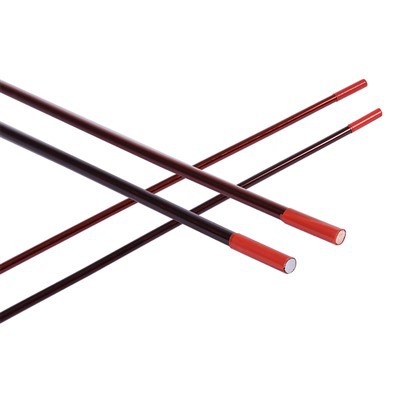
If you’re looking for enameled flat wire that balances high purity, consistent performance, and fair pricing, we’re here to help. We work with customers across industries, from small startups to large multinational manufacturers, to find the right wire for their specific needs, whether they need low-cost wire for consumer electronics or high-purity wire for medical and aerospace applications. Don’t hesitate to reach out to start a conversation about your project—we’d be happy to walk you through our materials, our testing process, and how our wire can help your product perform better, longer.
Enameled Flat Wire References:
- ASM International. (2006). Copper and Copper Alloys. ASM Handbook, Volume 2: Properties and Selection: Nonferrous Alloys and Special-Purpose Materials.
- Davis, J. R. (Ed.). (2001). Copper and Copper Alloys. ASM International.
- International Electrotechnical Commission. (2018). IEC 60317-1: Specifications for particular types of winding wires – Part 1: Enamelled round winding wires.
- Magnusson, N. H., & Papatheodorou, G. N. (1985). Electrical resistivity of copper alloys at low temperatures. Journal of Applied Physics, 57(10), 4619-4625.
Tianjin Jingwei Power Technology Co., Ltd.
As one of the most professional enameled flat wire manufacturers and suppliers in China, we’re featured by quality products and good service. Please rest assured to buy durable enameled flat wire made in China here from our factory. Contact us for more details.
Address: No.1 Chuangxin Rd. Xiaozhan Industrial Park, Jinnan District, Tianjin, China
E-mail: info@jwdc.cn
WebSite: https://www.jw-dcs.com/
