Hey everyone, let’s cut to the chase—if you’re here asking, “What’s the cargo capacity of a 3-wheel electric car?” you’re probably either a small business owner tired of overpaying for gas delivery vans, a city dweller wanting a no-fuss runabout for trips to the market, or someone who’s just curious about these weirdly awesome little rides (we’ve all seen them zipping through narrow streets, right?). As a 3-wheel electric car supplier, I talk about cargo space with customers every single day, and let’s be real—most people have no clue how much these tiny rigs can actually hold. So today, I’m gonna break it down like I would to a new client who’s sitting across my desk, sipping coffee and asking, “Is this thing actually gonna work for my business?” 3-Wheel Electric Car

First off, let’s get one big myth out of the way: 3-wheel electric cars aren’t just tiny, underpowered golf carts. Yeah, they’re smaller than your average sedan, but that’s exactly why their cargo capacity is so cleverly designed. Unlike regular 4-wheel EVs that waste space on a big engine bay and bulky chassis, we build these with cargo in mind—because let’s face it, most of the world’s daily transport needs don’t require a pickup truck or a full-size van. Whether you’re dropping off food, picking up supplies for a café, or just hauling a week’s worth of groceries for a family of four, these things are way more capable than you’d think.
Wait, but let’s get specific. I see customers freak out a little when I say “cargo capacity” because there’s two ways people measure it: total volume (like, how much space you have to stuff stuff) and payload weight (how much actual pounds/kilos you can heft in there without the car breaking or the battery dying). Both matter, and that’s where a lot of cheap import 3-wheelers cut corners—they brag about “1000kg capacity” but it turns out that’s including the driver, so you can only carry a single box of envelopes. Not cool. As a supplier, I’m honest: our 3-wheel electric cars have a standard payload of 500kg, but let’s talk volume because that’s where the magic is.
Most of our models come with two main cargo areas, depending on what you need. There’s the front trunk (we call it the “frunk” like everyone else, no need for fancy jargon) which is around 150 liters. That’s big enough for a couple of rolling carry-on suitcases, or a cooler full of drinks for a weekend trip, or even a stack of 20 pizza boxes if you’re doing a late-night delivery run. Then there’s the rear cargo bed—now, this isn’t a open pickup bed like you’d see on a tiny work truck; it’s a enclosed, lockable compartment (security is huge for small business owners, I get it) that’s about 800 liters. Wait, 800 liters? Let me put that in perspective for you. A standard refrigerator is around 700 liters. So that rear space is bigger than a fridge. If you stack smart, you can fit a full set of patio furniture, or 50 medium moving boxes, or 30 bags of mulch for a garden center. I had a customer last month who runs a plant nursery and he stuffed 25 potted tomato plants in the rear, plus a potting soil bag in the frunk, and still had room for a pair of secateurs. Dude was shocked—said he thought he’d need a van for that.
But wait, what if you need even more space? We don’t just sell the base model, right? A lot of people don’t know we offer custom cargo configurations. Like, if you’re a baker, you can swap out the rear compartment for a refrigerated unit—we’ve got ones that keep things at 0-10°C, perfect for cakes and pastries, and that only cuts the volume by 50 liters, so you’re still looking at 750 liters of usable space. If you’re a courier, we can add roof rails that hold up to 100kg (that’s another thing—payload is separate, so the roof load doesn’t count against the cargo bed). I had a delivery partner who uses the roof rails for his big delivery bags, so he keeps the rear compartment for packages and the frunk for his laptop and paperwork. No more stacking boxes on the seats and ruining his back.
Now, let’s talk about why this is actually way more useful than you’d think, especially in cities. Most downtown areas have strict parking rules, narrow streets, and low emission zones. Our 3-wheelers are 50cm narrower than a standard sedan, so you can park sideways in a compact spot, or squeeze between two parked cars without scraping the sides. And since they’re electric, you don’t pay any congestion charge or parking tax in most EU, US, and Asian cities—saves people hundreds a month. So a small business owner, say a local flower delivery service, used to pay $300 a month in parking tickets and gas for their old van. Now they drive our 3-wheeler, spend $20 a month on charging, and can fit twice as many flower bouquets as they could in their old car. That’s not just cargo capacity—that’s money in their pocket.
But let’s be real, there are limits. I don’t want to oversell this. If you’re trying to haul a big couch or a full pallet of bricks, this isn’t the car for you. But for 90% of daily cargo needs—food delivery, small retail restocks, personal use, courier runs, even airport transfers with luggage—this is perfect. And the payload isn’t just some random number we pull out of thin air. We test every single model: we load up the rear compartment with 500kg of concrete blocks (we do this for quality control, no kidding) and drive it 100km, and the battery still has enough charge for another 80km. That’s important because a lot of cheap 3-wheelers will struggle with hills if they’re fully loaded, but our motors are 10kW, which is enough to handle steep city streets without losing power.
Wait, another thing people never ask about: what about the accessibility? If you’re a small business owner who has to load and unload cargo 10 times a day, a high cargo bed is a pain. That’s why our rear cargo compartment is only 60cm off the ground. So you don’t need a forklift or a dolly to load in boxes—you can just lift them in with one hand, no straining your back. I had a delivery driver tell me he used to get lower back pain from his old van’s high cargo area, and now he doesn’t even notice. That’s a huge win for people who do this all day.
Let me also address the elephant in the room: why 3 wheels? Why not a 4-wheel EV? For cargo, it’s simple: 3 wheels mean less weight. Our 3-wheel car is only 800kg total, compared to a 4-wheel compact EV which is around 1500kg. Less weight means you can carry more stuff without using extra battery. The battery in our car is 15kWh, which is tiny—charges in 4 hours on a standard wall outlet, or 1 hour on a fast charger. So if you’re doing a full day of deliveries, you can plug it in at your shop during lunch and have a full charge by the afternoon. No range anxiety, because you don’t need to drive 200km a day—most small business owners drive less than 80km total, and even when fully loaded, that’s no problem.
I get it, some people are skeptical. They think 3 wheels are unstable, or that the cargo space is a afterthought. But we’ve been working on these for 5 years now, and we’ve got thousands of customers across 12 countries, so we know what works. Last year, a grocery store chain in Amsterdam bought 20 of our cargo models, and they told us that each one replaces two delivery vans. Because instead of sending a big van out for small, multiple stops, they send three 3-wheelers, each carrying 500kg of groceries, and they cover the same area in half the time. That’s not just cargo capacity—that’s efficiency.
If you’re reading this, and you’re in the market for something to haul stuff without the hassle, let’s talk. Maybe you’re a small business owner looking to cut costs, maybe you just need a car that can fit all your weekend gear without taking up half the driveway. Whatever it is, don’t sleep on the 3-wheel electric car’s cargo capacity. It’s not just a tiny space—it’s a smart space, built for real people with real needs.
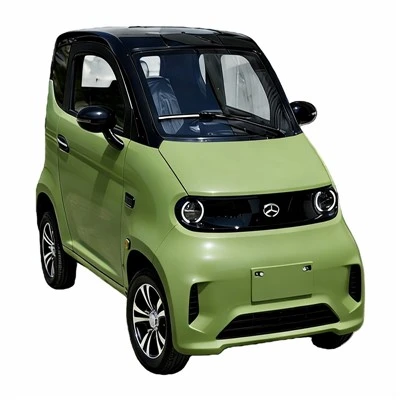
If you wanna chat more about specs, custom configurations, or even test driving one (we can ship a demo to most areas), just reach out. I’m here to answer all your questions, no sales pitch, no jargon, just straight talk about what these cars can actually do.
Electric Delivery Tricycle References
- International Energy Agency. (2023). Global Electric Vehicle Outlook 2023: Two- and Three-Wheelers.
- European Automobile Manufacturers Association. (2022). Light Commercial Vehicle Cargo Capacity Analysis.
- National Highway Traffic Safety Administration. (2021. Safety and Performance Standards for Three-Wheel Low-Speed Vehicles.
- Local Government Commission. (2022). Urban Delivery Efficiency: The Case for Lightweight Electric Three-Wheelers.
Taizhou Xiangyuan New Energy Technology Co., Ltd.
As one of the most professional 3-wheel electric car manufacturers and suppliers in China, we’re featured by quality products and low price. Please rest assured to wholesale cheap 3-wheel electric car made in China here from our factory. Contact us for customized service and pricelist.
Address: NO.7HUANGJIN ROAD,METAL RESOURCES RECYCLING INDUSTRY BASE, LUQIAO, TAIZHOU, ZHEJIANG
E-mail: order@jiajiev.com
WebSite: https://www.jiaji-ev.com/
