Hey there, let’s cut to the chase—when I was first starting out selling RO purified water equipment, every other lab tech or lab manager I met asked the same dumb question: “Wait, can your RO machine even be used in a lab? I thought labs need super pure water.” I get the confusion, honestly. Most people know RO from grocery store water coolers or home under-sink systems, so it’s easy to write it off as just “filtered tap water” for washing produce or filling pet water bowls. But let me tell you, after 7 years selling these units and fixing the occasional misused one, I’ve seen them work wonders in labs of all kinds—from high school bio labs to pharma R&D spaces, and even environmental testing facilities. It’s not a one-size-fits-all answer, but that’s the fun of it; it’s not that RO can’t work, it’s that you have to know what kind of lab water you actually need. RO Purified Water Equipment
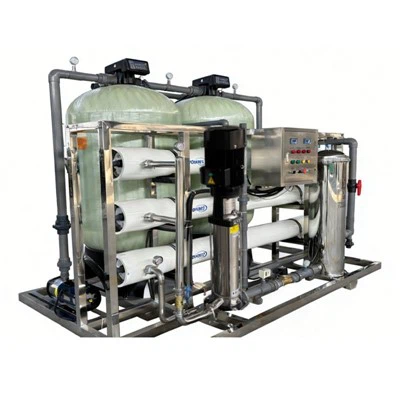
First, let’s recap what RO does, no textbook jargon I promise. Reverse osmosis is when you push water through a semipermeable membrane that’s so tiny, only H2O molecules can get through—all the bad stuff (dissolved salts, bacteria, heavy metals, even tiny organic molecules) gets blocked. Your standard lab tap water? That’s loaded with calcium, magnesium, silica, chlorine, and sometimes leftover pipe gunk. That stuff will mess up experiments fast—clog HPLC columns, throw off cell culture pH, or ruin sensitive test reagents. RO strips out 95-99% of those contaminants, way better than basic carbon filters or even distillation for day-to-day use. Distillation’s great but slow and energy-heavy, honestly. RO is steady, reliable, and doesn’t require you to wait hours for a jug of pure water to be ready.
Now, let’s get to the real question: when is RO a no-brainer for labs, and when do you need to step up? Let’s start with the labs that use RO daily, no exceptions. Take high school and community college teaching labs, for example—those kids are handling basic chemistry, microbiology, and biology projects. They’re making agar plates for bacteria, diluting stain solutions for microscopy, rinsing glassware before experiments that aren’t ultra-sensitive, or making simple buffer solutions that don’t need trace purity. I’ve had so many small lab directors tell me they used to buy jugs of pre-purified water for these tasks, which was a waste of money and plastic. A 5-gallon RO unit set up under a sink? That pays for itself in 6 months, easy. I had a teacher in Ohio message me last month saying his old glass-distilled water jugs were costing him $150 a month, and his RO system only uses $20 in electricity and water (we can adjust the reject ratio if you’re worried about water waste, by the way—half the people I sell to don’t even realize that feature exists). This year, his lab’s extra money went to buying new microscopes, not water jugs. That’s a win.
Then there’s environmental testing labs. These guys run tests for lead in drinking water, pesticide residue in soil, E. coli in river water—stuff where you need consistent, low-contaminant water but not the absolute highest grade. I work with a small environmental testing firm in Texas that does weekly tests for the state EPA. They used to use deionized (DI) water from bulk jugs, but the jugs would sometimes get contaminated if they sat on a loading dock too long, or they’d run out mid-test and have to rush to a local supply store. Now, they have an RO system hooked straight to their lab’s water line, and they run a DI polishing filter after the RO stage just to hit their exact specs. For them, RO is the foundation, no question. It’s not the final product, but it’s non-negotiable for keeping their testing accurate and their schedule on track. Even clinical labs—like ones that run routine blood work or urinalysis—use RO as their base water. The analyzers they use to test cholesterol, glucose, etc., all need water that’s free of minerals that would clog their tiny tubing or throw off the test calibrations. RO handles that base requirement perfectly.
Wait, but let’s address the elephant in the room—when is RO not enough? Because if someone tells you RO works for every lab task, they’re lying. If you’re doing cell culture for vaccine development, or HPLC testing for trace drug residues, or molecular biology work like PCR where you’re working with tiny amounts of DNA/RNA, you need ultra-pure water—Type 1 water, as the standards call it. Type 1 has resistivity of 18.2 MΩ·cm, almost zero organic content, and zero bacteria. RO alone doesn’t get you there, and that’s totally fine. RO is the pre-treatment step for Type 1 water. You run RO through a DI polish, then sometimes a UV sterilizer to kill any bacteria that grow in the DI tank, then a 0.22 micron filter to catch anything left. So even the most sensitive high-end labs use RO—they just add a couple extra steps after. I had a pharma R&D rep ask me two years ago if RO was “good enough” for their analytical lab, and I told him straight: “Your Type 1 water system starts with an RO membrane. It’s the core of it, and cutting that out would make the entire system useless.” He took that advice, bought my RO unit, and paired it with a higher-end DI and UV setup, and he’s never looked back. It’s way cheaper than buying a standalone Type 1 system, too—splitting the cost with the RO base saves them thousands a year.
Another big thing I see labs messing up: they buy an RO unit built for home or small office, not a lab-grade one. That’s where people get the wrong idea that RO is unreliable for labs. Home units are fine for filling a humidifier or drinking water, but they aren’t designed for 8+ hours a day of steady use, and their membranes get clogged fast if they’re exposed to lab water with high levels of chlorine or sediment. That’s why I only sell lab-grade RO systems. These have built-in pre-filters that protect the membrane—sediment filters to catch pipe gunk, carbon filters to strip chlorine that would eat through the RO membrane over time. They also have digital monitors that tell you when the pre-filters need changing, and when the RO membrane is nearing the end of its life, so you don’t get caught with empty water mid-experiment. I can’t tell you how many times a lab tech has called me panicking because their cheap home RO unit stopped working, only for me to tell them their pre-filter was clogged, and that’s why they needed a lab-grade unit in the first place.
Wait, let’s talk about maintenance, because that’s a big concern for lab managers who don’t have a dedicated facilities guy. Lab-grade RO systems are super low-effort. Pre-filters change every 6-12 months (you can get reminder alerts on the digital screen), the RO membrane lasts 2-3 years if you treat the water right, and the DI polish filter—well, that’s only if you’re adding that extra step for Type 1 water, and that changes every 6-12 months too. It’s not like a big distillation unit where you have to empty the boiling chamber every week and scrub it. I had a small biology lab in Wisconsin that runs on a grad student and a part-time lab tech. They bought my RO system two years ago, and the only maintenance they’ve done is change the pre-filters when the screen told them to. No extra work, no hassle. That’s a huge win for busy labs that don’t have time to deal with complicated equipment.
Let’s also get real about cost, because that’s what everyone cares about. Let’s say you’re a 10-person lab going through 50 gallons of pure water a day. Bulk pre-purified water costs about $0.50 per gallon, so that’s $25 a day, $750 a month, $9,000 a year. My lab-grade RO system costs around $2,500 upfront, plus about $50 a month in filter replacements and electricity. That’s a total of $3,100 the first year, then $600 a year after that. I’ll do the math: that’s a one-year payoff, and then you’re saving $8,400 a year after that. Even if you need the extra DI and UV for Type 1 water, that adds $1,000 to the upfront cost, and $20 a month to maintenance, and you still pay that off in 15 months. Compare that to buying Type 1 water jugs—those are like $3-$5 a gallon, so you’d be paying $150 a day, $4,500 a month, $54,000 a year. No contest, RO is way more cost-effective.
I know there are still folks out there who swear by distillation for labs, but let’s be honest: distillation is old tech. It works, but it’s slow, uses tons of energy, and the water can get re-contaminated as it cools and sits in the collection tank. RO is faster, uses way less energy (like 1/10th the electricity of distillation), and produces consistent, clean water non-stop. I’m not saying distillation is useless—some small specialty labs still use it, but for 90% of the labs that reach out to me, RO is the better, more practical option.
So to wrap this up: yes, RO purified water equipment is absolutely usable in labs. It works for teaching labs, environmental testing labs, clinical labs, and even as the base core for high-end analytical or research labs that need Type 1 water. The key is picking a lab-grade system, not a home one, and understanding that it might be the final product or the first step in a multi-stage purification process. It saves you money, saves you time, cuts down on plastic waste, and keeps your experiments or test results consistent.
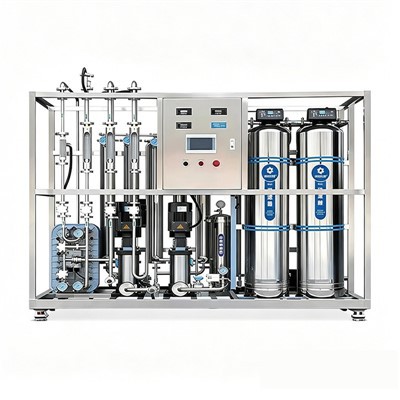
If you’re a lab manager, researcher, or teacher who’s been messing around with jugs of pre-purified water, or frustrated with an unreliable system that’s holding your work back, hit me up to chat through your specific needs. No pushy sales pitches, no hidden fees—just straight talk about what RO can do for your lab, and how to set it up so it works perfectly for your tasks. Don’t waste another month paying for overpriced, unreliable bulk water when there’s a better, cheaper option out there.
SWRO & BWRO Equipment References
- American Society for Testing and Materials. Standard Specification for Water for Laboratory Use. ASTM International, 2022.
- World Health Organization. Reverse Osmosis in Water Treatment for Laboratories. WHO Press, 2021.
- National Research Council. Pure Water for Scientific Research: A Guide to Purification Methods. National Academies Press, 2019.
- United States Environmental Protection Agency. Laboratory Water Quality Requirements for Environmental Testing. EPA Office of Water, 2020.
Shandong Yanuo Environmental Protection Equipment Co., Ltd.
We’re well-known as one of the leading ro purified water equipment manufacturers and suppliers in China, featured by quality products and good price. Please rest assured to buy bulk ro purified water equipment made in China here from our factory. Customized orders are welcome.
Address: North Side of the Road, 1,000 Meters West of the Intersection of Fenghuangshan West Road and Provincial Highway S102, Wangfu Subdistrict, Qingzhou City, Weifang City, Shandong Province.
E-mail: ynhb.499973983@gmail.com
WebSite: https://www.zkyaruo.com/
