If you’re reading this, chances are you work in an industry where a simple electrical spark could turn into a safety incident that halts operations, damages equipment, or puts teams at risk. As someone who’s spent 12 years as an industrial connector supplier, I’ve seen firsthand how many installation mistakes happen because crews focus on getting equipment up fast, not on the tiny, high-stakes details of hazardous area setups. These spaces—think oil and gas refineries, chemical processing plants, grain silos, or paint manufacturing facilities—aren’t just “regular factories.” They’re classified areas where flammable gases, vapors, dust, or fibers are present in quantities that could ignite if exposed to an electrical arc, excess heat, or even a loose connection. Installing connectors the wrong way here isn’t just a code violation; it’s a preventable danger. Let me walk you through what I’ve learned, from the planning phase to final checks, to get it right. Industrial Connector
First, before you ever pick up a screwdriver or open a connector package, you need to nail down the area classification that applies to your job. This is non-negotiable, and I’ve seen too many projects derail because teams skipped this step. Regulatory bodies like the National Electrical Code (NEC) in the U.S., IECEx standards globally, or ATEX in the EU split hazardous areas into classes, divisions, or zones that dictate exactly what equipment you can use and how to install it. Let me break this down simply: Class I areas are for flammable gases or vapors (like the ones in refineries or natural gas processing), Class II is for combustible dust (think grain silos, woodworking factories), and Class III is for easily ignitable fibers (textile mills, cotton processing). For each class, you have divisions or zones: Division 1 (Zone 1 in IEC terms) means flammable substances are present under normal operating conditions—this is the highest-risk spot. Division 2 (Zone 2) means they’re only present if something goes wrong, like a leak.
Why does this matter for connectors? Not every connector is rated for Zone 1. A standard industrial connector you might use in a warehouse will almost certainly spark under pressure that would be safe there, but in a Zone 1 area, that spark is enough to ignite the surrounding gases. As a connector supplier, I’ve worked with clients who showed up with general-purpose connectors because they “looked the same” as the hazardous area ones—big mistake. The rating isn’t just a sticker; it’s the result of rigorous testing: how well the connector seals against dust and gases, how it handles electrical arcing, how it withstands temperature fluctuations. Before you buy anything, pull the area’s official classification document—your plant’s safety manager should have this on file. If you don’t have it, stop and get it, don’t guess. I once had a client in a small chemical plant who skipped this, used standard connectors for a batch reactor upgrade, and had a small leak that caused a near-miss when a loose connection arced. We had to pull all the connectors and re-do the entire installation with rated parts, costing them three days of downtime and $20,000 in repairs. That’s the kind of mistake you can’t afford.
Next, choosing the right connector for the zone is only half the battle—you have to inspect every single part before installation, no exceptions. I know, inspection adds time to the job, but in hazardous areas, every piece of hardware is critical. Start with packaging: if a connector’s box is damaged, dented, or open, send it back. The seals, O-rings, and explosion-proof housings get their integrity from being intact; a tiny tear in an O-ring that’s invisible to the eye could let gas seep in during operation, turning a minor issue into a fire risk. When you open the package, check the rating label: make sure it matches the zone, class, and temperature rating of your area. For example, a connector rated for -20°C to +60°C will fail in a refinery where pipe temperatures can hit 120°C, even if it’s rated for Zone 1. As a supplier, we mark every connector with a clear, durable rating, but I still recommend cross-checking with the manufacturer’s data sheet—don’t just rely on the sticker.
Also, don’t mix and match parts. I’ve seen installers pair an explosion-proof connector housing from one brand with a terminal block from another because “they fit.” That’s a red flag. Hazardous area equipment is tested as a system, not individual parts. If you modify a connector’s internal parts or use third-party components, you void the rating, and that connector is no longer safe for the area. I had a client do this a few years ago to save $50 on a terminal block; within three months, the connection overheated and melted the housing, leading to a gas leak that shut down their entire plant for a week. The good news is we worked with them to replace all their connectors and set up a pre-order system so they never had to scramble for the right parts again.
Now, the actual installation steps—this is where most mistakes happen, even with the right parts. Let’s start with sealing, which is the single most important step for preventing gases or dust from entering the connector. For Class I (gas/vapor) areas, explosion-proof connectors rely on flame paths—those threaded spaces between the housing and the terminal chamber— that slow down any internal flame from escaping and igniting the surrounding area. If you don’t thread the connector properly, you shorten the flame path, and that flame can get out. I recommend hand-threading the connector until it’s snug, then tightening it with a wrench for only a quarter turn more—don’t over-tighten, which can strip the threads and damage the flame path, or under-tighten, which leaves a gap.
For Class II (dust) areas, sealing is about keeping combustible dust out of the connector itself. Dust can build up inside, create a layer that insulates connections, leading to overheating, or ignite if a spark is present. That’s why dust-tight connectors (rated IP66 or higher) use rubber gaskets and compression fittings. When installing, make sure the gasket is seated correctly and not twisted—even a small twist can break the seal. I always tell installers to run a finger around the gasket after tightening to check for gaps; if you feel any space, loosen and redo it.
Wiring is another big one. Hazardous area connectors have specific torque requirements for terminal screws to make sure wires are held tight, creating a low-resistance connection that won’t overheat or arc. Too loose, and you get a bad connection that can spark. Too tight, and you strip the wire or break the terminal, which creates a gap that lets in gas. Always use a torque screwdriver, not a standard one, and follow the exact torque value from the connector’s data sheet. I’ve seen installers guess torque, and while that might work in a regular building, in a grain silo, a loose connection can arc and ignite the dust cloud floating in the air.
Another step many people skip is grounding. Connectors need proper grounding to prevent static electricity buildup, which is a huge risk in areas with flammable gases or dust. Static can build up when wires move, or when the connector is handled, and a static spark is enough to ignite some substances. Make sure the connector has a dedicated ground pin that connects directly to the equipment’s grounding system, not just the chassis. Don’t paint over grounding points, and make sure the ground wire is the correct gauge for the current in the circuit—too thin, and it won’t carry the static safely.
Once the connectors are installed, you can’t just turn on the power and walk away. You need to test every single connection before the area goes back into operation. Start with a visual inspection: check all threads, gaskets, seals, and torque settings. Then, do a continuity test to make sure wires are connected correctly and no shorts are present. For explosion-proof connectors, some manufacturers recommend a pressure test—blowing dry, inert gas (like nitrogen) through the connector to make sure there are no leaks. For dust-tight connectors, you can do a dust ingress test if necessary, but a visual check of all seals is usually enough. I always suggest asking a third-party safety inspector to sign off on the installation, especially for new projects or after major repairs. Having a second set of eyes catch a loose thread or a twisted gasket could save you from a catastrophe.
Maintenance is just as important as the initial installation, and I see a lot of plants forget this. Hazardous area connectors degrade over time from temperature changes, vibration, dust, and chemicals. I recommend a quarterly inspection for high-risk zones (Zone 1) and semi-annual for lower-risk zones (Zone 2). During inspections, check for corrosion on terminals, worn gaskets, damaged threads, or loose connections. Replace any parts that show wear immediately—don’t wait until something breaks. I also tell clients to keep a stock of spare rated connectors on site; if a connector fails unexpectedly, you don’t have time to order a new one that fits the zone. One refinery I work with keeps 10 spare explosion-proof connectors for each zone they operate in, and that small stock has saved them from multiple shutdowns over the years.
Now, let’s talk about common myths I still hear in the industry. A lot of people think “if the connector fits, it’s fine.” No—fit is secondary to rating. Another myth is that you can use a standard connector if you add an external seal. That’s not true; the connector itself has to be rated for the hazardous area, and external seals don’t fix a connector’s internal design flaws. I also hear installers say “it’s just a small part, it won’t make a difference.” Every part—from the gasket to the terminal screw—matters in a hazardous area.
At the end of the day, installing industrial connectors in hazardous areas is about attention to detail, following standards, and not cutting corners. As a connector supplier, my job isn’t just to sell you parts—it’s to make sure those parts are installed safely, because I know the cost of getting it wrong. If you’re working on a project in a hazardous area and need help picking the right connectors, verifying ratings, or walking through installation steps, I’m here to help. We’ve supported hundreds of facilities with their hazardous area connector needs, from small grain silos to large refineries, and we can work with your team to make sure every installation meets safety standards. Reach out to our team to discuss your project, get technical support, or order the right rated connectors for your job.
References
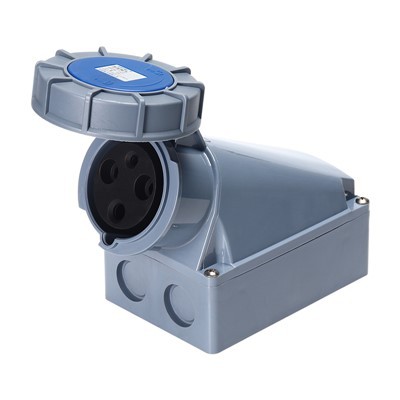
Wall Mount Industrial Socket National Electrical Code (NEC) Article 500: Hazardous (Classified) Locations.
IEC 60079 Series: Electrical apparatus for explosive gas atmospheres.
ATEX Directive 2014/34/EU: Equipment and protective systems intended for use in potentially explosive atmospheres.
OSHA 29 CFR 1910.307: Hazardous (classified) locations.
Zhejiang Hefeng Electric Co., Ltd.
Zhejiang Hefeng Electric Co., Ltd. is one of the most professional industrial connector manufacturers and suppliers in China, featured by quality products and low price. Please rest assured to buy durable industrial connector made in China here from our factory. Also, OEM service is available.
Address: Wenzhou Daqiao Industrail Park, Beibaixiang Town, Yueqing City, Zhejiang Province, China
E-mail: hefengplug@chinahfe.com
WebSite: https://www.hfcee.com/
